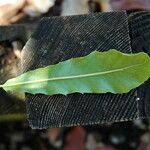
Macadamia integrifolia
Queenslandnut · Smooth-shell Queenslandnut · Macadamia-nut · Bopplenut · Poppelnut
Description
Source: leafsnapMacadamia integrifolia, commonly known as the Macadamia nut tree, is an evergreen species native to the eastern coast of Australia. As a member of the Proteaceae family, this tree can reach heights of up to 15 meters. Its leaves are dark green, leathery, and glossy, arranged alternately along the branches. The Macadamia nut tree produces highly prized edible nuts, celebrated for their rich flavor and nutritional content. These nuts are encased in a hard outer shell that must be cracked open to access the edible kernel. The kernel is rich in healthy fats, protein, fiber, vitamins B1 and B6, iron, magnesium, and potassium. The Macadamia nut tree thrives in well-drained soils and prefers subtropical or tropical climates with moderate rainfall. It can be propagated from seed or through grafting and cutting techniques. Due to their high demand, Macadamias have become an important crop in many countries worldwide. They are widely used as ingredients in confectionery products like chocolate bars and cookies, as well as in savory dishes such as salads and stir-fries. Overall, the Macadamia nut tree has gained popularity not only for its delicious nuts but also for the numerous health benefits they offer, making them both tasty and nutritious!
🌳 Macadamia nuts are well known for their rich, buttery taste and are viewed as a luxury snack worldwide. Besides being eaten by people, these nuts also form part of the diet of local wildlife, supplying essential nutrients. The shells, which are extremely tough, are crushed and used as biomass for sustainable energy or incorporated into engineered materials because of their high lignin content. Finally, the tree’s flowers provide bees with high-quality pollen and nectar, producing a premium macadamia honey.
Care Guide
💧 Water Every 7 days
Macadamia thrives in well-drained soils and is resistant to drought. It prefers consistent moisture, but not waterlogged conditions, and benefits from being watered twice a week. As an outdoor plant in subtropical climates, it requires careful irrigation during its active growth phase to ensure optimal nut production.
How should I water my Macademia tree in the best way?
When it comes to watering your Macademia, you have some flexibility in how you do it. You can use various watering tools like cans, hoses, or even cups. The key is to make sure you water directly onto the soil and evenly moisten all areas to provide water to the entire root system. Using filtered water is preferable as tap water may have harmful particles for the plant. Additionally, it's better to use water at or slightly above room temperature to avoid shocking the Macademia. However, in general, the Macademia is not too picky about the water you use and will usually respond well to any kind.
What should I do if I give my Macademia too much water or too little water?
When it comes to outdoor plants, especially newly planted ones or seedlings, it's common for them to suffer from lack of watering. That's why it's important to ensure sufficient watering for the first few months when the plant is small or newly planted. Once the roots are established, Macadamia trees can usually rely on rainfall. If you have a potted Macadamia plant, there is a higher risk of overwatering. If you accidentally overwater your Macadamia, there are steps you can take to remedy the situation. First, stop watering the plant immediately to minimize the effects of overwatering. Then, remove the Macadamia from its pot to inspect its roots. If no root rot is present, you can place the plant back into the pot. However, if you do find root rot, trim away any affected roots and consider applying a fungicide to prevent further damage. Finally, repot the Macadamia in well-draining soil. On the other hand, if your Macadamia is underwatered, simply increase the frequency of watering. You can easily spot underwatering by observing drooping, drying, and falling leaves. The leaves will return to their normal state once the plant receives sufficient water. Make sure to adjust your watering schedule as soon as you notice symptoms of underwatering.
How often do I need to water my Macademia plant?
If you are growing plants outdoors and your area doesn't get much rainfall, you may need to water them every 2 weeks in the spring and fall, and more often in the summer. In the winter, when plants grow slower and need less water, you can water them less frequently or not at all. However, if your Macadamia plant is young or newly planted, it may need more frequent watering to help it establish and become more drought tolerant. For potted Macadamia plants, there are two ways to determine how often to water them. The first is to have a set watering schedule, such as once a week or once every other week. However, this may not always be the best approach as it doesn't consider the specific conditions of your plant's environment. Another option is to water based on the moisture level of the soil. It's generally recommended to wait until the top 2 to 4 inches of soil, about ⅓ to ½ the depth of the pot, have completely dried out before giving more water. This method allows you to adjust your watering frequency based on the season, as the plant's water needs will be higher in the summer.
How much water is required for my Macademia?
When watering your Macademia, remember that it doesn't always require a lot of water. If only a few inches of soil have dried out, give it about five to ten ounces of water. You can also assess the moisture level of the soil to determine how much water to provide. If more than half of the soil is dry, give it extra water until excess water drains from the pot. If your Macademia is in a rainy location, it may not need additional watering. For young or newly established plants, provide 1-2 inches of rain per week. As the plant matures, it can rely solely on rainwater, unless there is a prolonged hot and dry period. In that case, give it a thorough watering to avoid stress.
How do I know if I'm giving enough water to my Macadamia plant?
Overwatering is a common problem for Macademia plants, and there are several signs to look for when this happens. An overwatered Macademia will generally have yellowing leaves and may even drop some of them. Additionally, overwatering can cause the plant's overall structure to shrink and may lead to root rot. On the other hand, an underwatered Macademia will also start to wilt and may have brown or brittle leaves. If you notice signs of either overwatering or underwatering, it's important to take action and restore the health of your Macademia plant.
☀️ Light Partial sun
Macademia prefers abundant light for healthy development, reflecting its origins in the wild where it had unrestricted access to sunlight. All stages of growth benefit from ample light. However, too much or too little light can harm its health, resulting in poor growth or burned leaves.
What are the sunlight requirements for Macadamia integrifolia?
Macadamia integrifolia requires more than 6 hours of sunlight daily to maintain its health and growth. It is essential to observe your garden's sunlight patterns and select areas that offer a good balance of light and shade, ensuring the plant's well-being by avoiding either excessive exposure or insufficient light.
What is essential for the healthy growth of Macademia?
For healthy growth, Macademia necessitates abundant exposure to light, mimicking its natural habitat where it enjoys open access to sunlight. Different stages of growth depend on sufficient light; however, inappropriate amounts, whether too much or too little, can adversely affect the plant, resulting in issues like poor growth or leaf burn. When natural sunlight is lacking, especially during winter or in darker indoor areas, artificial lighting such as indoor plant lights, particularly LED lights, becomes crucial. These lights should be selected based on the specific light requirements of your plants (30-50W/sq ft for full sun plants, etc.) and positioned 12-36 inches above the plant for 8-12 hours daily to simulate natural daylight conditions.
What are the symptoms of light deficiency in Macademia?
When Macademia is grown indoors or during winter with insufficient lighting, it may show several symptoms of light deficiency. These include smaller new leaves, leggy or sparse growth, accelerated leaf drop, slower or halted growth, pale new leaves, and conditions like chlorosis (yellowing leaves due to chlorophyll breakdown), sunscald, leaf curling, wilting, and leaf scorching. Each of these symptoms indicates that the plant is not receiving the optimal light levels needed for its growth and health.
How can I address insufficient sunlight exposure for Macademia?
To combat insufficient sunlight exposure for Macademia, gradual adaptation to more sunlight is key. For indoor plants, move them closer to a south-facing window where they can get at least 6 hours of direct sunlight, or use artificial lighting such as desk or ceiling lamps for at least 8 hours daily. For outdoor plants, move them weekly to progressively sunnier spots, avoiding abrupt exposure changes to prevent sunburn. Additionally, removing obstructions like trees or branches that block sunlight and transplanting smaller plants to sunnier locations with good drainage can help improve light exposure. It's important to note that parts of the plant already affected by low light may not recover, but new growth should be healthy with improved light conditions.
🌡️ Temperature 20–37.8°C
Macademia grows best in its native habitat where temperatures range from 68 to 100 °F (20 to 38 ℃). Its preferred temperatures fall within this span, taking seasonal variation into account. For optimal growth, adjust these temperatures as the seasons change when necessary.
What are the ideal growing conditions for Macadamia?
Macadamia thrives best in environments with temperatures ranging between 68 to 100 °F (20 to 38 °C), which are typical for its native habitat. To promote optimal growth, it's important to adapt these temperatures to seasonal changes. During colder months, especially in autumn, it's recommended to move outdoor-grown Macadamia indoors, placing it near a bright window but away from direct heat sources to avoid damage from cold temperatures. Ensuring the temperature stays above the minimum suitable growth temperature during winter is crucial for the plant's health.
How does low temperature affect Macadamia and what can be done?
Macadamia is susceptible to damage from low temperatures, as it prefers the warmth. When temperatures drop below the minimum limit for growth, the plant's leaves may lighten in color, which is an early sign of cold stress. Frost damage can cause the leaves to gradually turn brown or black, and the plant may exhibit symptoms such as wilting and drooping. To address this, trim off any frost-damaged parts of the plant and move it to a warmer indoor setting. Placing the plant near a south-facing window ensures it gets enough sunlight, but make sure it's not too close to heaters or air conditioning vents to avoid dry air, which could worsen the condition.
What steps should be taken if Macadamia is exposed to high temperatures?
When Macadamia is exposed to temperatures exceeding its maximum tolerance level during summer, it's at risk of sunburn, indicated by a lighter color of the leaves and an increased vulnerability. If this occurs, immediately trim away any sunburned or dried parts of the plant. To protect the Macadamia from further high-temperature stress, relocate it to a shaded area, especially shielding it from the harsh midday and afternoon sun. It's also beneficial to water the plant in the morning and evening to maintain soil moisture and help the plant recover.
💨 Humidity high (>60%)
This plant needs special care because it loves high humidity levels of 60-80% or more. The best way to achieve this is by placing a humidifier near the plant. Daily misting is also essential! Make sure the room has good ventilation.
🪴 Soil 5-6
🌱 Fertilizer Every 30 days
Use organic fertilizers (for example, fish emulsion or compost) instead of chemical fertilizers for Macademia. Give young plants higher levels of nitrogen and phosphorus in spring. Incorporate compost or fertilizer before or after planting. For mature plants, apply a balanced fertilizer or one targeted to specific deficiencies in spring. Nutrient deficiency produces small leaves, short branches, yellow or bronze foliage, acidic fruits, premature fruit drop, and splitting.
Why should I put fertilizer on my Macadamia tree?
Macademia trees require regular fertilization because their showy leaves need a lot of energy to grow and stay healthy. The challenge is that the tree needs enough energy not only for its leaves but also for its stems, branches, roots, and other important structures. If you don't fertilize the tree, two things are likely to happen. First, the leaves will lose their natural color and texture, making the tree look unhealthy and less attractive. Second, the tree's overall growth will slow down or produce weak growth that could easily break.
When should I fertilize my Macadamia tree?
To ensure the growth of your Macademia plant, it doesn't require a fixed feeding schedule. Instead, occasional feedings can be beneficial. You can conveniently fertilize the plant by applying fertilizer when watering it occasionally. Remember to also provide a sufficient amount of water during the growing season. Feeding the plant every two to three weeks should be maintained throughout its period of producing new growth.
When is it not a good idea to add fertilizer to my Macademia tree?
You can follow a regular fertilization schedule for your Macademia throughout most of the year, specifically during the active growing season of spring, summer, and early fall. However, it's important to note that during winter, it's best to avoid fertilizing the plant at all. This is because the Macademia enters a dormant growth phase during winter, where it either produces no new growth or very minimal growth. Since the plant is using less energy during this time, fertilization is unnecessary.
What kind of fertilizer does my Macadamia tree need?
Macademia trees require a fertilizer with a specific blend of nutrients, but each nutrient is needed in relatively low amounts. An ideal fertilizer for these trees has a ratio of 3 parts nitrogen (N), 1 part phosphorus (P), and 2 parts potassium (K), also known as an N-P-K ratio of 3-1-2. However, in some cases, a general-purpose fertilizer with an equal amount of each nutrient can also work well. Regardless of the fertilizer type, it is important that the ratio number representing the volume of each nutrient is 3 or lower. The fertilizer can come in either granular or liquid form. If you opt for liquid fertilizer, it is generally recommended to dilute its strength by half. Granular fertilizer has few disadvantages, but using liquid fertilizer is often more practical, especially when watering your Macademia tree at the same time.
How can I feed my Macademia plant?
One way to easily fertilize a Macadamia tree is to incorporate it into your regular watering routine. You can do this by gathering your chosen fertilizer and a container for water, like a watering can. Dilute the fertilizer by mixing it with water, and then pour the mixture onto the soil around the tree. Make sure the water and fertilizer soak down to the roots. Alternatively, you can opt for a granular fertilizer. Simply sprinkle the granules on the soil where your Macadamia tree grows. Granular fertilizers are typically slow-release, so you won't need to fertilize as frequently compared to using a liquid fertilizer. Regardless of which method you choose, it's important to water the tree while you fertilize it to ensure proper absorption and distribution of nutrients.
🪴 Pot & Repot
✂️ Pruning
The macadamia tree is an evergreen that produces edible nuts. To maintain its health and productivity, it's important to prune the tree from early to late winter. Focus on removing dead or crossing branches to improve airflow and light penetration. Regular thinning helps maintain a strong structure that supports heavy nut yields. Always use clean, sharp tools to prevent the spread of disease.
🌿 Propagating
🐛 Diseases & pets
☠️ Toxicity
Characteristics
- Plant Type
- Tree
- Life Cycle
- Perennial
- Genus
- Macadamia
- Family
- Proteaceae
- Hardiness Zone
- 9-11
- Mature Height
- 9.14 m to 15.24 m
- Mature Spread
- 6.1 m to 11.89 m
- Leaf Color
- Green
- Leaf Type
- Evergreen
- Flower Color
- White, Cream
- Flower Size
- 2.54 cm
- Bloom Time
- Mid spring, Late spring, Early summer, Mid summer
- Planting Time
- Autumn
- Harvest Time
- Mid summer, Late summer, Fall