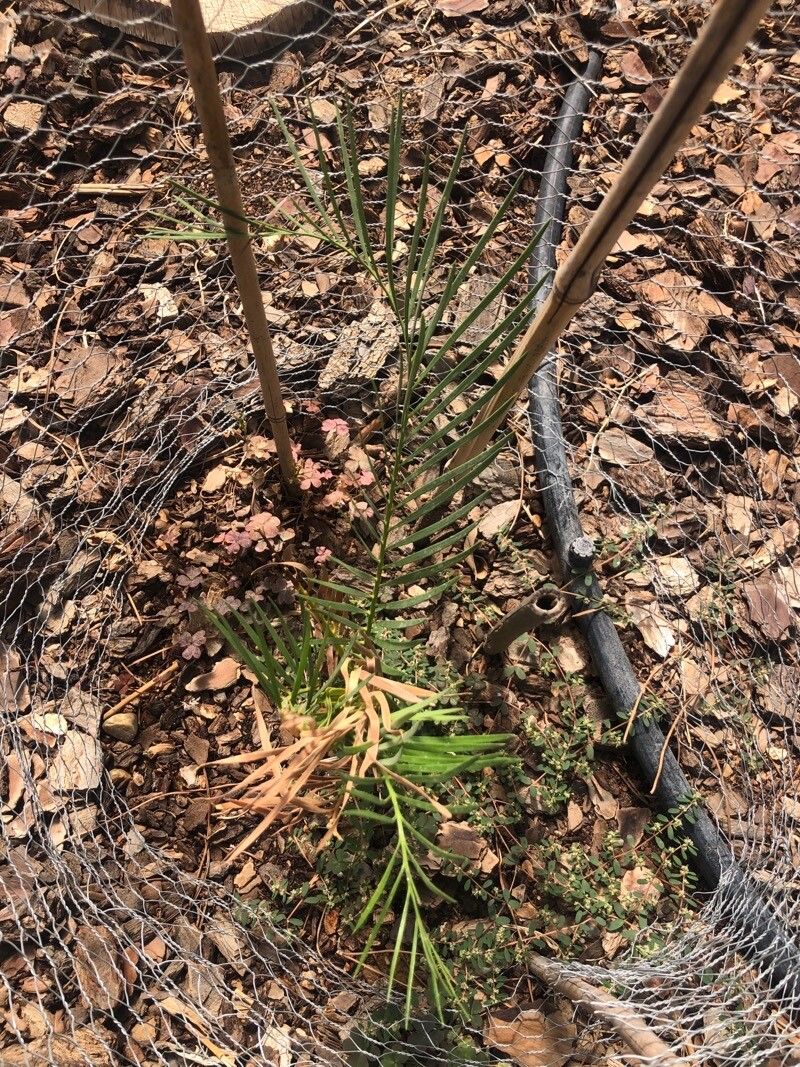
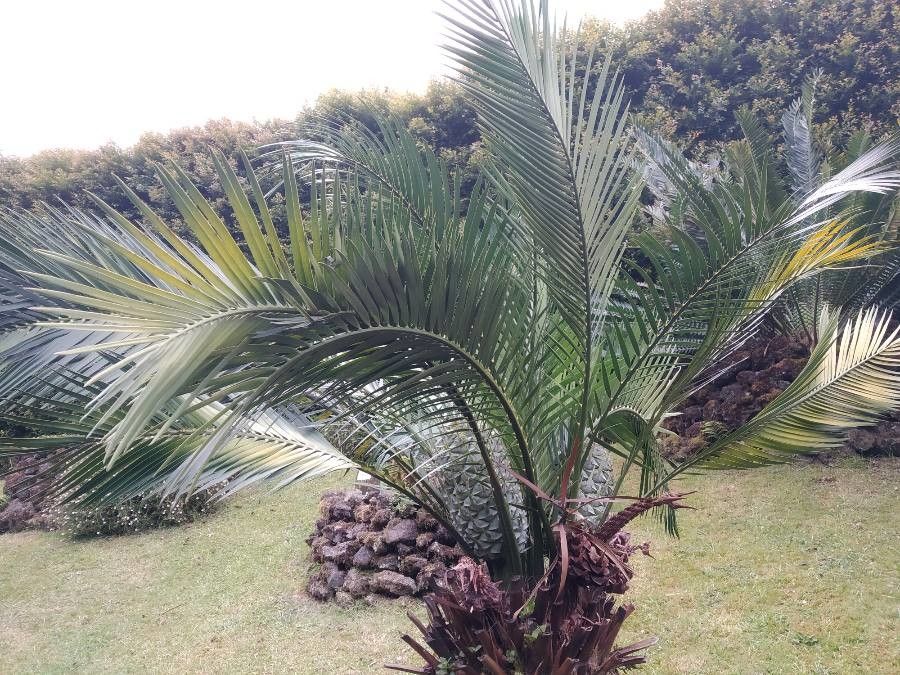
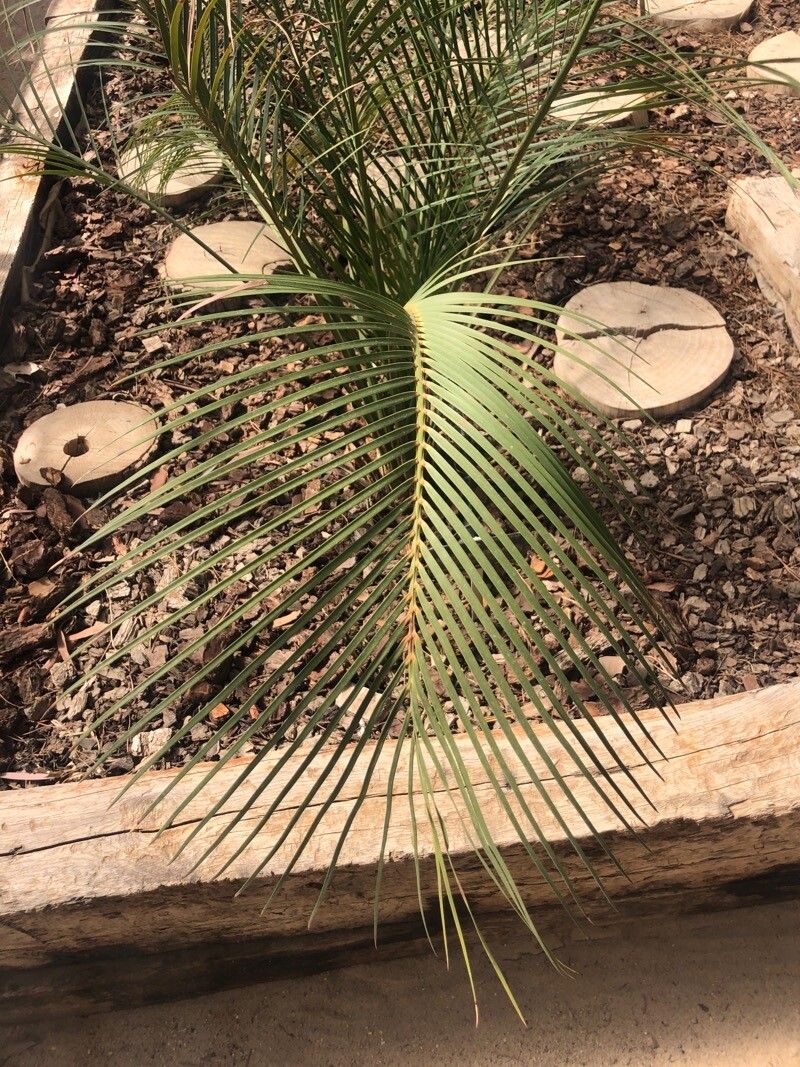
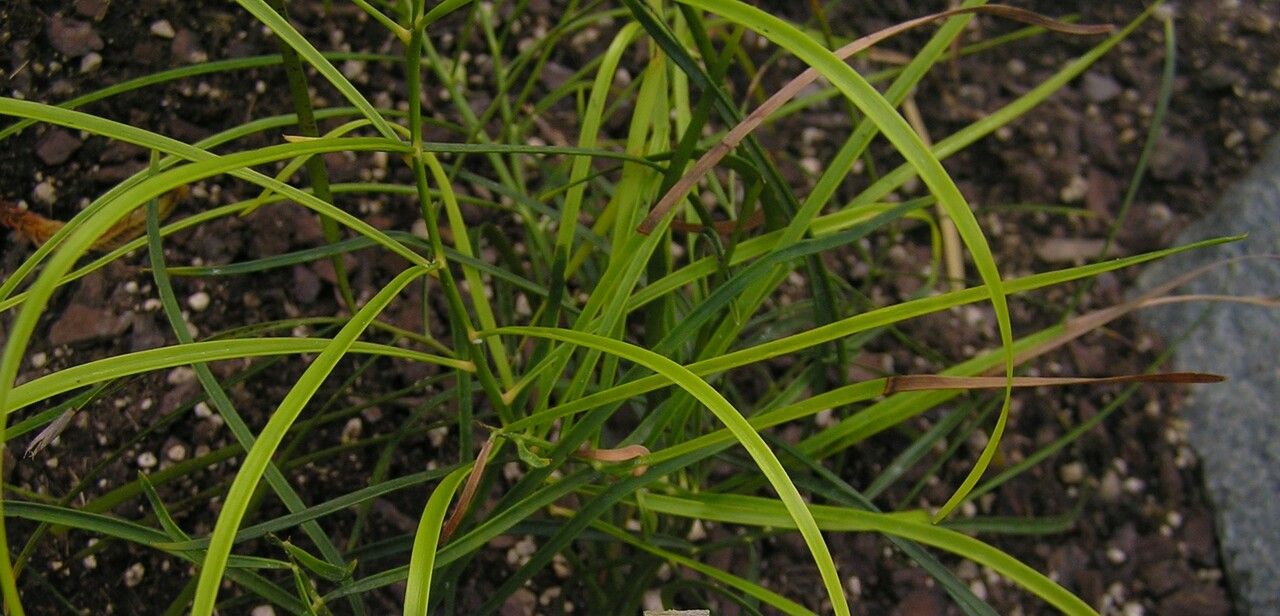
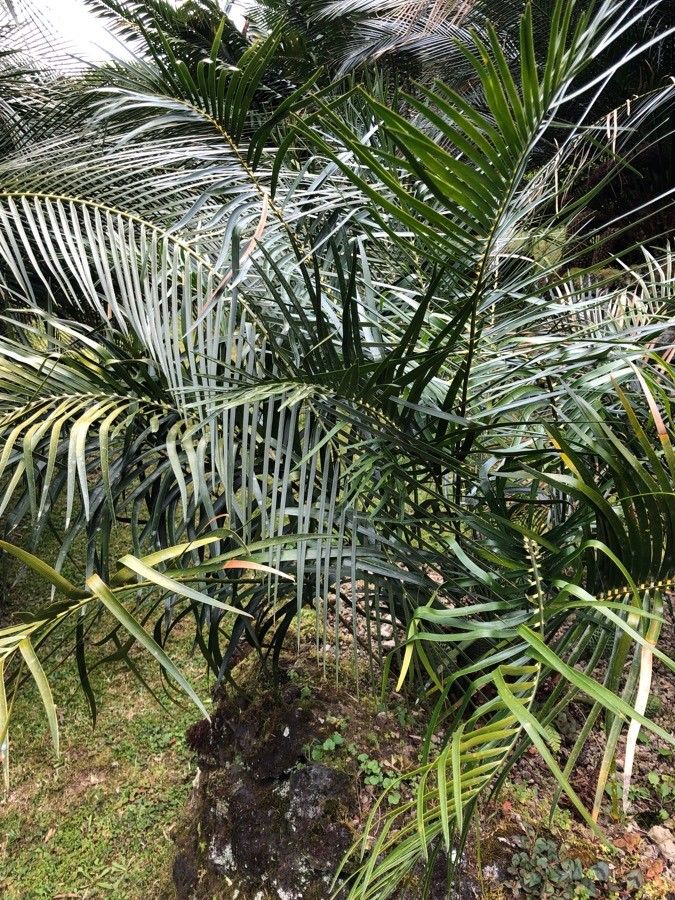
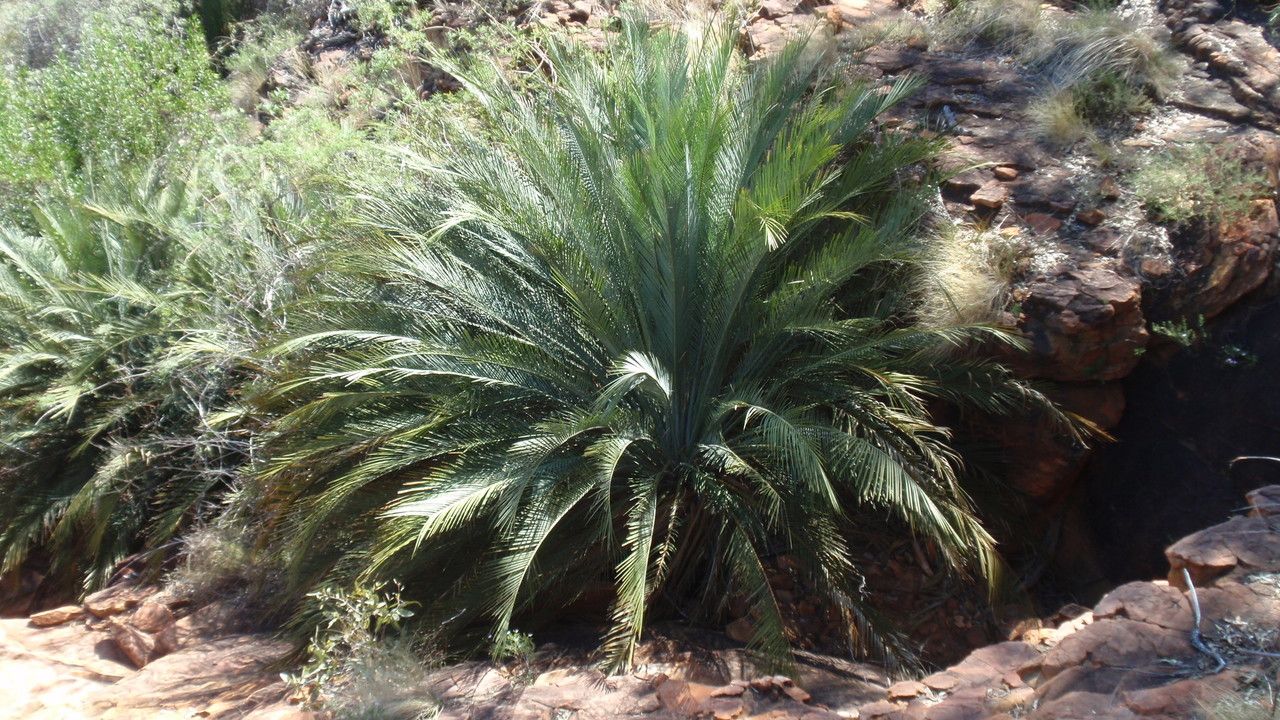
Macrozamia riedlei, commonly known as a zamia or zamia palm, is a species of cycad in the plant family Zamiaceae. It is endemic to southwest Australia and often occurs in jarrah forests. It may only attain a height of half a metre or form an above trunk up to two metres with long arching fronds of a similar length. The giant cones amidst the crown of palm-like fronds contain edible seeds surrounded by red sarcotesta. The seeds are consumed by birds and animals, and can be a favoured part of the human diet when prepared correctly. M. riedlei benefits from a close association with bacteria that fix nitrogen, which also produce substances found throughout the plant that are toxic to some animals when consumed. The species is cultivated for ornamental use in urban and domestic environments.
Zamia palm is resistant to disease and generally not susceptible to illnesses. In terms of care, this plant is fairly low maintenance. When grown outdoors, it needs only minimal watering, and larger plants usually do not require pruning. Smaller plants, however, should be pruned after they have finished blooming. Zamia palm is suitable for anyone with outdoor space, such as a garden or deck, and does not demand much gardening experience.
How to keep Macrozamia Riedlei.
Light
The Zamia palm is native to habitats like forest understories and rocky areas, where it grows under natural shade. It prefers partial sun but can adapt to full sun or full shade, reflecting its versatile, hardy nature.
Fertilizer
The Zamia palm has specific nutrient needs and does not require heavy fertilization. Spring is the best time to apply fertilizer for optimal growth. Providing nutrients enhances its health, increases its resistance to pests and diseases, and helps support a long lifespan.
Pruning
The Zamia palm is a slow-growing plant with evergreen, fern-like fronds. To maintain its health, prune it minimally in early spring by removing only dead or damaged fronds to improve airflow. It's important not to cut healthy fronds. Always use clean tools to prevent infection. Regular monitoring helps ensure the plant stays in optimal health.
Botanical profile.
- Plant Type
- Palm
- Life Cycle
- Perennial
- Genus
- Macrozamia
- Family
- Zamiaceae
- Hardiness Zone
- 9-11
- Mature Height
- 0.91 m to 2.13 m
- Mature Spread
- 2.13 m to 3.05 m
- Leaf Color
- Dark Green
- Leaf Type
- Evergreen
- Bloom Time
- Late fall, Early winter
- Planting Time
- Summer, Autumn
- Harvest Time
- Spring
Other names.