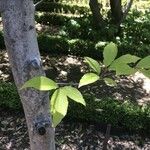
Magnolia salicifolia
Anise magnolia · Japanese willow-leaf magnolia · Willow leafed magnolia · Willow-leaved magnolia
Description
Source: leafsnapMagnolia salicifolia, commonly known as the willow-leafed magnolia, is a deciduous tree native to the southeastern United States. Belonging to the Magnoliaceae family, this tree can grow up to 15 meters tall. It features an upright habit, a narrow crown, and smooth gray bark. The leaves of Magnolia salicifolia are long and narrow, closely resembling those of willow trees. They are dark green on the upper side and lighter green on the underside, and can grow up to 20 cm in length. The tree produces large, fragrant flowers that are creamy-white with pink or purple tinges at the base. Magnolia salicifolia thrives in moist, well-drained soils but can tolerate some drought once established. It grows best in full sun or partial shade, though it may suffer from leaf scorch if exposed to excessive sunlight. This tree is commonly used as an ornamental plant in gardens due to its attractive foliage and showy flowers, which bloom from late spring through early summer. Additionally, it provides habitat for birds such as woodpeckers, which feed on its seeds. Overall, Magnolia salicifolia is an elegant tree that adds beauty and interest to any landscape while also offering ecological benefits for local wildlife populations.
Care Guide
💧 Water Every 7 days
The willow-leafed magnolia thrives in regions with moderate moisture and strikes a balance between hydration and drought tolerance. For optimal growth, water the plant every 1 to 2 weeks, ensuring the soil remains moist but not waterlogged. While it is generally cultivated outdoors, this magnolia species benefits from natural rainfall, which supports its growth cycles effectively.
☀️ Light
🌡️ Temperature 5–32°C
Anise magnolia is hardy in zones 3 to 9, but gardeners outside of these zones may note that the tree suffers in extreme cold or heat. Anise magnolias like constantly damp soil in warm summer temperatures, so they thrive with the occasional rain or heavy watering.
💨 Humidity
🪴 Soil
🌱 Fertilizer
In the spring, apply an organic fertilizer to the base of the willow-leafed magnolia to provide nitrogen, which supports leaf development. Later, especially following heavy rain, you can apply a light potassium-rich fertilizer, such as potash, in the fall to replenish nutrients before the plant enters winter dormancy.
🪴 Pot & Repot
✂️ Pruning
The willow-leafed magnolia is known for its slender leaves and fragrant white blooms. To maintain its shape, prune it in early spring. During pruning, remove any dead or crossing branches to improve airflow. Thinning dense areas can enhance flowering, while avoiding heavy pruning helps reduce stress and the risk of disease, thereby promoting structural strength.
🌿 Propagating
🐛 Diseases & pets
☠️ Toxicity
The anise magnolia is not toxic. The dish has fallen out of favor, but during the colonial era the petals of the magnolia flowers were once eaten. They have a very strong flavor and taste much like they smell. The preparation was to dilute the flavor by pickling the petals in a brine that was much like a sweet and sour pickle brine. The dried leaves of the magnolia were also commonly used much like the bay leaf to flavor soups, stews, and sauces.
Characteristics
- Plant Type
- Tree
- Genus
- Magnolia
- Family
- Magnoliaceae
- Hardiness Zone
- 4-9
- Mature Height
- 10 m
- Mature Spread
- 6 m
- Bloom Time
- Early spring
- Native Area
- Japan