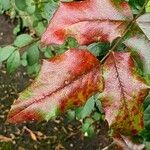
Mahonia aquifolium
Oregongrape · Hollyleaved barberry · Holly-leaved Berberry · Mountain Grape · Tall Oregon Grape
Description
Source: leafsnapMahonia aquifolium, commonly known as Oregon grape or holly-leaved barberry, is a species of flowering plant in the Berberidaceae family. This plant is native to western North America, extending from Alaska to California and eastward to Montana and New Mexico. Typically growing to a height of 1 to 2 meters, Mahonia aquifolium features glossy green leaves that resemble those of the holly plant. In the spring, it produces clusters of bright yellow flowers, which are followed by blue-black berries in the summer. Mahonia aquifolium has a long history of medicinal use by Native American tribes. They utilized it to treat a variety of ailments, such as skin conditions, digestive problems, and infections. The plant's roots contain berberine alkaloids, known for their antimicrobial properties. Beyond its medicinal applications, Mahonia aquifolium is also popular as an ornamental plant due to its attractive foliage and flowers. It can thrive in either full sun or partial shade and prefers well-drained soil. Overall, Mahonia aquifolium is a versatile plant, offering both practical medicinal benefits and aesthetic appeal for landscaping.
Care Guide
💧 Water
☀️ Light Partial sun
🌡️ Temperature 10–32.2°C
💨 Humidity
🪴 Soil 5-6
🌱 Fertilizer
🪴 Pot & Repot
✂️ Pruning
🌿 Propagating
🐛 Diseases & pets
☠️ Toxicity
Characteristics
- Plant Type
- Shrub
- Life Cycle
- Perennial
- Genus
- Mahonia
- Family
- Berberidaceae
- Hardiness Zone
- 6-8
- Mature Height
- 91 cm
- Mature Spread
- 1.52 m
- Leaf Color
- Green
- Leaf Type
- Evergreen
- Flower Color
- Yellow
- Flower Size
- 0.51 cm to 1.02 cm
- Bloom Time
- Mid spring, Late spring
- Planting Time
- Autumn, Winter, Spring
- Harvest Time
- Mid summer
- Native Area
- North America