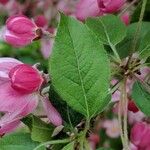
Malus pumila
منړا · سیب · Apple · Apple Tree · Paradise apple
Description
Source: leafsnapAn apple is an edible fruit produced by an apple tree (Malus domestica). Apple trees are cultivated worldwide and are the most widely grown species in the genus Malus. The tree originated in Central Asia, where its wild ancestor, Malus sieversii, is still found today. Apples have been grown for thousands of years in Asia and Europe and were brought to North America by European colonists. Apples have religious and mythological significance in many cultures, including Norse, Greek, and European Christian tradition. Apples grown from seed tend to be very different from those of their parents, and the resultant fruit frequently lacks desired characteristics. Generally, apple cultivars are propagated by clonal grafting onto rootstocks. Apple trees grown without rootstocks tend to be larger and much slower to fruit after planting. Rootstocks are used to control the speed of growth and the size of the resulting tree, allowing for easier harvesting. There are more than 7,500 known cultivars of apples. Different cultivars are bred for various tastes and uses, including cooking, eating raw, and cider production. Trees and fruit are prone to a number of fungal, bacterial, and pest problems, which can be controlled by a number of organic and non-organic means. In 2010, the fruit's genome was sequenced as part of research on disease control and selective breeding in apple production. Worldwide production of apples in 2018 was 86 million tonnes, with China accounting for nearly half of the total.
💡 The white trumpet-shaped flower is stunning, and its fruit is equally appealing. Its allure is so strong that people are often tempted to eat them. However, this is a trap, as the plant is poisonous to the body. This is why the flower symbolizes a trap or snare. Individuals born under this birth flower may appear honest but can be quite cunning. You might get hurt if you get too close to them. Only those who are sharp-witted might find them intriguing.
🌳 Apples are commonly enjoyed as fruit, but they also play a role as a beauty aid and a vegan-friendly ingredient. Apple seed oil, a lesser-known component, not only hydrates the skin because of its vitamin content but has also been used in cosmetic blends. Likewise, pectin from apples functions as a plant-based alternative to gelatin, appealing to vegan cooking with its natural thickening properties.
🎭 Sound health, happiness to come, enticement
Care Guide
💧 Water Every 1-2 weeks
Apple trees prefer moderate moisture levels and can tolerate infrequent watering, typically on a 1-2 week schedule. Maintaining a balance between dry and moist soil is crucial to prevent root rot. These trees thrive in temperate climates, where they can adapt to local rainfall patterns for optimal growth and water retention.
When should I water my apple?
Proper and timely watering of an apple plant is essential for its health, growth, and fruit production. You should water your apple when the soil moisture is low. To check, insert your finger into the soil up to the second knuckle; if it feels dry, it's time to water. Also, lookout for signs like leaf drooping, dull or yellowing leaves, and stunted growth which indicate a need for water. During fruit development and in conditions of high temperature and direct sunlight, the apple may require more frequent watering. Be careful not to water too early or too late to avoid risks such as root rot or permanent plant damage.
How should I water my apple?
Watering your apple effectively involves using the right techniques and tools. Bottom-watering is recommended for deep hydration without over-saturating the surface, which involves placing the plant pot in a tray of water and allowing the roots to absorb moisture from below. When using a watering can, opt for one with a narrow spout to direct water to the base of the plant, minimizing foliage moisture and reducing the risk of fungal diseases. This approach is particularly beneficial for providing the apple with its specific hydration needs.
How much water does an apple really need?
The amount of water an apple plant needs depends on several factors including root depth, the size of the pot, and the plant size. Typically, the goal is to saturate the top 6-8 inches of soil, focusing on the root zone. Smaller pots may require more frequent watering, while larger ones retain moisture longer. Signs of proper hydration include lush and vibrant leaves, slightly moist soil, and healthy plant growth. To prevent under or over-watering, monitor the soil and plant conditions, ensuring just the right amount of moisture.
What kind of water is best for apple?
Apple plants are versatile and can generally tolerate various types of water including tap, distilled, rainwater, and filtered water. If your tap water is soft and low in salts, it's considered ideal. Although apple plants aren't highly sensitive to chlorine or fluoride, to avoid causing any potential harm, letting tap water stand overnight to allow chlorine to dissipate is recommended. Also, avoid highly mineralized or 'hard' water to prevent mineral buildup which could affect growth. Room temperature water is preferred for watering to avoid shocking the plant's root system.
How do apple's watering needs change with the seasons?
Apple's watering needs vary throughout the year. In spring, as the plant breaks dormancy, keep the soil slightly moist to support new growth. During summer, increased temperatures and evaporation mean the plant may require more water. In autumn, reduce the frequency as growth slows, but ensure the soil doesn't completely dry out. Winter watering is minimal but necessary in arid regions if the soil dries out. Seasonal changes in temperature and the plant's growth cycle will dictate the frequency and amount of watering needed for a healthy apple plant.
☀️ Light Full sun
Apples prosper with significant exposure to sunlight but can also cope well under medium light conditions. Adequate light contributes to the plant's strong growth and evolution. Different phases of growth may require different light requirements. Either too much or too little light could potentially hamper the plant's well-being. Ultimately, the plant's native habitat is in harmony with these light conditions.
What are the sunlight requirements for apple plants?
Apple plants thrive best under full sun conditions, requiring more than 6 hours of sunlight daily. However, they can also grow in partial sun, with about 3-6 hours of sunlight. It's important to observe how sunlight moves through your garden to find spots that offer the right balance of light and shade, promoting the health and happiness of your plants.
How does sunlight affect the growth of apple plants?
Sunlight plays a crucial role in the optimal growth and development of apple plants. They need ample sun exposure to flourish but can adapt to moderate light levels. Different growth stages may have varying light demands, and both excessive and insufficient light can negatively impact the plant's health. Apple plants' natural habitat aligns with these conditions, necessitating an environment that mimics their original light exposure. For indoor plants, when natural light is insufficient, especially in winter or less sunny spaces, artificial lighting such as LED lights can be used to provide the necessary wavelengths and intensity for healthy growth.
What are some common symptoms of light deficiency in apple plants?
When apple plants receive inadequate light, they may exhibit several symptoms such as smaller new leaves, leggy or sparse growth, premature leaf drop, slowed or halted new growth, lighter-colored new leaves, and chlorosis—where leaves lose their green color. In conditions of excessive sunlight, symptoms like sunscald, leaf curling, wilting, and leaf scorching can occur. These symptoms reflect the plant's struggle to adapt to suboptimal light conditions, signaling the need for intervention.
How can I address light-related issues in my apple plants?
To mitigate light-related issues in apple plants, gradually acclimatize them to an ideal light exposure. For indoor plants, move them weekly towards a sunnier location until they receive at least 6 hours of direct sunlight daily, or use artificial lights like plant grow lights or a desk lamp to supplement light, ensuring they're turned on for at least 8 hours daily. For outdoor plants, similarly, move them gradually into sunnier spots to prevent sunburn. In cases where the environment itself blocks light, consider pruning or transplanting your plants to more suitable locations. Remember, while you can manage future growth by adjusting the plant's exposure to light, parts that have already been affected might not recover but can be managed to allow healthier new growth.
🌡️ Temperature 0–35°C
The apple tree is indigenous to areas with temperate climates, suggesting it thrives better in colder temperatures. It operates optimally in temperature ranges of 32 to 95 ℉ (0 to 35 ℃). The tree's temperature conditions need to be tweaked in accordance with the season. For instance, during the spring season, the tree should be subjected to colder temperatures to stimulate flowering, whereas, in the summer, it performs better in relatively warmer settings.
What is the native climate for the apple tree?
The apple tree, or Malus pumila, thrives in temperate regions, favoring cooler temperatures ideally between 32 to 95 °F (0 to 35 °C). It requires different temperature adjustments across the seasons; cooler temperatures in spring to encourage flowering, and slightly warmer conditions in summer for optimal growth. Despite its strong cold resistance, measures should be taken to protect it from severe frost by wrapping its trunk and branches if winter temperatures are expected to drop significantly. Additionally, it's beneficial to water the tree abundantly before the first freeze in autumn to maintain soil moisture throughout winter.
How to care for an apple tree during low temperatures?
Apple trees are notably cold-tolerant and show optimal growth when temperatures are above their minimum suitable growth temperature. During winter, it's crucial to keep the temperature above the minimum tolerable growing temperature. Exposing the tree to temperatures below its growth limit may not show immediate damage during the colder seasons, but can lead to branches becoming brittle and dry, with a lack of new shoots in spring. To address this, dead branches that fail to produce new leaves should be pruned away in spring.
How should you care for an apple tree during high temperatures?
To ensure the health of an apple tree during the summer, it's important to keep it below the maximum suitable growth temperature. Exceeding the maximum tolerable growing temperature can cause the leaves to lighten in color and the tips to become dry and withered, making the plant more susceptible to sunburn. To mitigate these issues, trim away the sunburned and dried parts, move the plant to a shaded location during the midday and afternoon sun or use a shade cloth, and water the plant in the morning and evening to keep the soil moist.
💨 Humidity
🪴 Soil 6-7
🌱 Fertilizer
The Apple tree necessitates adequate nutrition for the ideal yield of fruit. Apply fertilizer in the initial days of spring to stimulate new growth and blossom. Regular fertilization assists the tree in maintaining its health, producing tastier fruit, and averting problems related to nutrient deficiency such as pale leaves and low fruit yield.
Why is it necessary to put fertilizer on my Apple tree?
Plants rely on nutrients in the soil to grow, and fast-growing ones can deplete these nutrients quickly. Regular fertilization is crucial for Apple's health and productivity. Without proper fertilization, plants can face various problems, such as foliage issues like yellow leaves or reddish color, shape deformities, withered tips, and dieback. Nutrient deficiency can also lead to bark disorders, slow growth, poor shoot development, and limited fruit production.
When should I fertilize my Apple tree for the best results?
The best time to fertilize Apple trees is in the early spring, before the buds appear. During this time, Apple trees use the energy reserves they stored up over winter to grow new branches. To ensure the development of beautiful blooms, it's recommended to fertilize 2 to 4 weeks before you expect the tree to bloom. This allows enough time for the nutrients to soak into the soil and be absorbed by the tree, promoting overall growth. While you can continue to fertilize Apple trees throughout spring, it's advisable to avoid fertilizing in autumn. Late-season fertilization can cause excessive foliage growth, which makes the leaves more vulnerable to damage during the winter.
When is the best time to not fertilize my Apple?
To ensure the best growth for your Apple plant, there are a few guidelines to follow regarding fertilizing. Firstly, it is advised not to fertilize Apple during its first year of growth. In general, it is also important to use fertilizer only when necessary. Additionally, if you pruned 20% or more of the plant in the previous year, avoid fertilizing it. The same goes for plants that are diseased or damaged - fertilizing them can do more harm than good. Remember that fertilizer is not a cure-all, so it is best to address the root cause of any issues before considering fertilizing again. Timing is also crucial when it comes to fertilizing Apple. After the peak of summer, refrain from fertilizing as this can lead to excessive growth right before winter. Similarly, avoid fertilizing during hot and dry periods, as dry soil is not as effective in delivering fertilizer, and stimulating growth can require more water than may be available. It is preferable to apply fertilizer earlier in the season when temperatures are cooler. Lastly, keep in mind that Apple can absorb fertilizer that has been applied to nearby plants or lawns. Therefore, be cautious of inadvertently giving plants a double dose of fertilizer.
What kind of fertilizer does my Apple tree need?
Using fertilizer that contains a balance of nitrogen, phosphorus, and potassium can bring many benefits to plants. Nitrogen is important for leaf growth and chlorophyll production. Phosphorus helps support the root system and promotes the development of blossoms, fruits, and seeds. Potassium plays a role in photosynthesis and the movement of water and nutrients throughout the plant. When choosing a fertilizer, you can opt for a commercial one that is specifically designed for a particular type of tree. Alternatively, you can use organic sources of nitrogen such as manure, feather meal, or blood meal. To ensure you apply fertilizer accurately, conducting a soil test can give you a better understanding of the condition of your soil. For commercial fertilizers, if your soil lacks sufficient phosphorus and potassium according to the soil test, you can use a balanced granular fertilizer with a ratio of 10-10-10 or similar. In most cases, nitrogen in the soil is continuously depleted with rainfall. If your soil already has enough phosphorus and potassium, it would be more appropriate to use a high-nitrogen fertilizer with a ratio of 6-2-1 or 10-2-2.
How do I help my Apple grow?
When fertilizing your Apple tree, it's important to follow the directions for the specific fertilizer type and conduct research on how to use it properly. Avoid over-fertilizing, especially for fruit trees like Apple, as it can be detrimental. To determine the right amount of fertilizer, consider the tree's age or trunk diameter. Typically, you can estimate using about one-tenth of a pound of fertilizer per year of age or per inch of trunk, with a maximum limit of one pound. Note that Apple trees should not be fertilized during the first few years of growth. When applying granular fertilizers or organic options like blood meal, sprinkle the substance around the tree's base, extending it to the drip line (the outermost branches). Keep the fertilizer away from direct contact with the trunk. Over time, the granules will break down and seep into the soil, getting absorbed by the roots. After fertilizing, spread a one-inch layer of compost around the base of the tree and water it thoroughly.
🪴 Pot & Repot 2-3 years
When rehousing an Apple plant, select a container that is 1-2 inches (2.5-5 cm) bigger and has sufficient drainage. Utilize a potting mixture that drains well. Carry out the repotting during spring or autumn, making sure that the root ball is positioned a bit lower than the edge of the plant pot. Thoroughly water the plant after the repotting process and position it in a warm location that gets indirect sunlight.
✂️ Pruning
Apple trees are well-known for their edible fruit and beautiful spring flowers. To keep them healthy and productive, it is crucial to prune them annually, ideally in late winter. Pruning helps remove dead wood, thin out branches, and improve air circulation. These practices enhance fruit quality, reduce the risk of disease, and promote healthier growth, ultimately leading to better yields.
🌿 Propagating
🐛 Diseases & pets
☠️ Toxicity
It's often said that you should avoid eating the seeds of apples as they contain the poison cyanide. Apple seeds do indeed contain amygdalin, a chemical compound formed of sugar and cyanide. One gram of apple seeds contains around 0.6mg of cyanide, but the lethal dose of cyanide starts at over 50g.
Characteristics
- Plant Type
- Tree
- Life Cycle
- Perennial
- Genus
- Malus
- Family
- Rosaceae
- Hardiness Zone
- 3-10
- Mature Height
- 2.13 m to 14.94 m
- Mature Spread
- 4.57 m to 9.14 m
- Leaf Color
- Green
- Leaf Type
- Deciduous
- Flower Color
- White, Pink
- Flower Size
- 3.05 cm to 4.06 cm
- Bloom Time
- Mid spring, Late spring
- Planting Time
- Spring, Autumn
- Harvest Time
- Mid summer
- Native Area
- Kazakhstan