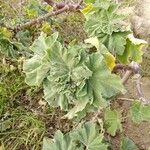
Malva arborea
پنیرک قرمز · Tree mallow · Velvet leaf · Velvet tree mallow · Tree Malva
Description
Source: leafsnapMalva arborea (also known as Lavatera arborea, or, more recently as Malva eriocalyx), the tree mallow, is a species of mallow native to the coasts of western Europe and the Mediterranean region, from Ireland and Britain south to Algeria and Libya, and east to Greece.
🌳 Tree mallow is typically a biennial plant, but in gardens, it is often grown as an annual. This is because it only flowers during its first year. As a result, tree mallow is commonly used in containers and as a bedding plant for annual displays, rather than as part of permanent garden arrangements. Its main attraction is its hibiscus-like, trumpet-shaped flowers, which range in color from purple to pink. Tree mallow also makes an excellent cut flower.
Care Guide
💧 Water Every 1 week
Tree mallow, which originates from the Mediterranean, is moderately drought-tolerant and can handle dry spells well. It grows best in well-drained soil and should be watered weekly to prevent the roots from becoming too saturated. To enhance its growth, especially during the active growing season, it's beneficial to mimic natural rainfall patterns when watering.
How do I water my Tree mallow when it is growing in different stages?
The water requirements of the Tree mallow can vary depending on its growth stages. When the Tree mallow is in its early years or when it has been recently transplanted, it will need more water than usual. During these stages, the Tree mallow focuses its energy on growing new roots to support future growth. To ensure optimal root performance, these young roots require slightly more moisture. As the Tree mallow matures over a few seasons, its water needs will decrease. Another growth stage that requires additional watering is during the bloom period. The development of flowers requires a significant amount of moisture, thus making it necessary to provide more water to your Tree mallow during this time.
How do I water my Tree mallow throughout the year?
The Tree mallow has different water needs depending on the season. During the hottest months of the year, it will require the most water. In the summer, you might need to water the plant more than once a week, depending on how quickly the soil dries out. On the other hand, during the winter, the plant goes into a dormant phase and needs significantly less water. You may not need to water the plant at all during the winter months, but if you choose to, it should be done no more than once a month. Overwatering during this time increases the risk of the Tree mallow getting a disease.
How is watering my Tree mallow different inside and outside?
For gardeners who live in non-temperate and tropical regions, growing the Tree mallow indoors is the most common practice. It is important to note that soil in a container tends to dry out faster than ground soil. Additionally, if your Tree mallow is exposed to drying elements like air conditioning units, it may require more frequent watering if planted outdoors. In this case, watering your Tree mallow won't be necessary most of the time, especially if you receive regular rainfall. However, if you grow the plant indoors, you will need to water it more often since the soil won't be able to soak up rainwater.
☀️ Light Full sun
Tree mallow favors locations with strong sunlight for healthy growth. Its native habitat is made up of areas that receive abundant sun throughout the day. Very limited light can impede its proper development, whereas excessive exposure has not been reported as harmful.
What are the sunlight requirements for Tree Mallow?
Tree Mallow thrives in environments that provide ample sunlight throughout the day, as it originally grows in heavily sunlit habitats. The plant requires more than 6 hours of sunlight (full sun) to flourish properly. However, it can also grow in conditions with about 3-6 hours of sunlight (partial sun). It's essential to observe how sunlight moves through your garden to ensure your Tree Mallow gets the perfect balance of light and shade for optimal growth. Insufficient sunlight might hinder its development, but overexposure hasn't been reported as detrimental.
How can I use artificial lighting for my indoor Tree Mallow?
For indoor Tree Mallow plants that receive limited natural sunlight, especially in winter or less sunny spaces, artificial lighting can be a vital solution. LED lights are a popular choice because they can provide specific wavelengths required for optimal growth. Full sun plants need 30-50W/sq ft, partial sun plants 20-30W/sq ft, and full shade plants 10-20W/sq ft of artificial light. The light source should be placed 12-36 inches above the plant to mimic natural sunlight, and most plants will need 8-12 hours of light per day to mimic the natural daylight hours for your plant species.
What are the symptoms of inadequate lighting for Tree Mallow?
When Tree Mallow is placed in areas with insufficient lighting, it might show several symptoms indicating light deficiency. These include smaller new leaves, leggy or sparse growth, a tendency for faster leaf drop, delayed or halted growth, lighter-colored new leaves, chlorosis (yellowing of leaves), sunscald, leaf curling, wilting, and leaf scorching. Each of these symptoms suggests that the plant is not receiving the optimal amount of sunlight it needs for healthy growth.
How can I help my Tree Mallow get more sunlight?
To ensure your Tree Mallow receives enough sunlight, gradually move it to a sunnier location each week until it gets at least 6 hours of direct sunlight daily. For indoor plants, use a south-facing window or artificial lights, keeping a lamp on for at least 8 hours daily or investing in professional grow lights. For outdoor plants, move them gradually to avoid sunburn. Observe the environment to identify obstacles blocking sunlight and consider pruning or transplanting smaller plants to sunnier spots with good drainage. Note that parts of the plant affected by low light may not recover, but new growth will be healthy with improved light exposure.
🌡️ Temperature 5–32.2°C
Tree mallow is native to areas with mild climates. Its optimal growth temperature ranges from 68 to 95 °F (20 to 35 °C). In very hot or very cold seasons, provide shade or shelter to moderate its exposure to temperature.
What is the ideal temperature range for growing Tree Mallow?
Tree mallow thrives in moderate climates, with its ideal temperature for growth ranging from 68 to 95°F (20 to 35°C). It is important to modulate temperature exposure during extremely hot or cold seasons, by providing shade or shelter, to ensure the best growing conditions for tree mallow.
How should Tree Mallow be protected during winter?
Tree mallow has strong cold resistance and usually does not require special frost protection measures during winter. However, if winter temperatures are expected to drop below -30°C, it is important to provide cold protection by covering the plant with materials such as soil or straw. Additionally, before the first freeze in autumn, it is recommended to water the plant abundantly to ensure the soil remains moist and enters a frozen state, helping to prevent drought and water scarcity during winter and early spring.
What symptoms indicate Tree Mallow is affected by low temperatures?
Tree mallow is cold-tolerant and generally thrives when the temperature is above 20°C. It should be kept above 0°C during winter. If temperatures fall below -30°C, there may not be any noticeable changes during winter, but there may be a decrease in sprouting or even no sprouting during springtime. In cases of decreased or no sprouting in spring, it is recommended to remove any parts of the plant that have failed to sprout.
How does high temperature affect Tree Mallow and what are the solutions?
During summer, it is best to keep Tree mallow below 35°C. If the temperature exceeds 38°C, the plant's leaves may become lighter in color, prone to curling, susceptible to sunburn, and in severe cases, the entire plant may wilt and become dry. To address these issues, trim away the sunburned and dried-up parts of the plant, move it to a location that provides shade from the midday and afternoon sun, or use a shade cloth to create shade. Additionally, water the plant in the morning and evening to keep the soil moist.
💨 Humidity normal (40-60%)
This plant will thrive in moderate humidity, which is probably the level in your home. However, misting it a few times a week can be very beneficial. Make sure the room has good ventilation.
🪴 Soil 6-7
🌱 Fertilizer
The best time to fertilize a Tree mallow is in early spring, when it is coming out of dormancy and entering active growth. Fertilization supplies essential nutrients for healthy growth. Although Tree mallow has relatively low fertilizer needs, applying fertilizer annually can improve its survival and encourage better, longer-lasting flowers.
🪴 Pot & Repot Every 12 months
✂️ Pruning
Tree mallow thrives when properly pruned, which involves removing dead wood and thinning out branches. This is best done from early to late spring, as it enhances air circulation, encourages new growth, and improves the quality of blooms. Pruning at the right time also prevents legginess and helps maintain a balanced and aesthetically pleasing structure.
🌿 Propagating
🐛 Diseases & pets
☠️ Toxicity
Characteristics
- Plant Type
- Herb
- Life Cycle
- Perennial, Annual, Biennial
- Genus
- Malva
- Family
- Malvaceae
- Hardiness Zone
- 4-8
- Mature Height
- 0.49 m to 3.05 m
- Mature Spread
- 2.13 m
- Leaf Color
- Green
- Leaf Type
- Evergreen, Semi-evergreen
- Flower Color
- Purple, Lavender
- Flower Size
- 3.05 cm to 4.06 cm
- Bloom Time
- Early summer, Mid summer
- Planting Time
- Spring
- Harvest Time
- Mid summer
- Native Area
- Libya, Turkey, Tunisia, Italy, Portugal, Spain, Montenegro, Albania, Ireland, United Kingdom, Greece, Croatia, Algeria, France