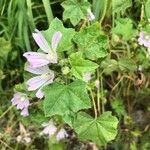
Malva multiflora
گونه ای پنیرک · Cretan Tree-mallow · Cornish mallow · Cheeseweed · Cretan-hollyhock
Description
Source: leafsnapMalva multiflora, commonly known as the many-flowered mallow, is a perennial herbaceous plant in the family Malvaceae. Native to Europe and Asia, it has also been introduced and naturalized in various parts of North America. The plant can grow up to 1 meter tall and features a deep taproot system, allowing it to withstand drought conditions. The leaves of Malva multiflora are alternately arranged, heart-shaped with serrated edges, and have long petioles. Its flowers, blooming from June through September, are pink or purple with five petals forming a cup-shaped structure. Malva multiflora is frequently used for medicinal purposes due to its anti-inflammatory properties. Traditionally, it has been used to treat respiratory ailments like coughs and bronchitis, as well as digestive issues such as diarrhea. Ecologically, the plant plays a crucial role by providing food for pollinators like bees and butterflies. It can be found growing along roadsides, in fields, meadows, disturbed areas, and waste places throughout its range. Overall, Malva multiflora is an attractive perennial herb that offers medicinal benefits while also playing an important ecological role within its habitat.
Care Guide
💧 Water Every 7 days
The Cornish mallow, a plant native to Mediterranean climates, thrives with moderate drought tolerance. To maintain soil moisture, it needs weekly watering and benefits from mulching, especially in full sun during hot seasons. This helps prevent water loss and supports the plant's growth cycles.
How should I water my Cornish mallow properly?
To water Cornish mallow, you have several options. You can use a garden hose with a spray nozzle, a watering can, or any other common watering tool. The plant isn't too choosy about how it gets its water, as it can thrive on rainwater, tap water, or filtered water. However, it's generally best to avoid watering this plant from above, as it can harm the leaves and flowers and potentially cause disease. Instead, setting up a drip irrigation system is often the most effective method for watering Cornish mallow. These systems distribute water evenly and directly into the soil. If you have a container-grown Cornish mallow, simply adjust the tools you use. You can use a cup, watering can, or your tap to directly water the soil of the plant.
What do I do if I give my Cornish mallow too much or too little water?
If your Cornish mallow is not getting enough water, the solution is simple. Start watering it more regularly when you see that it lacks moisture. On the other hand, overwatering can be a bigger problem if you don't catch it early. When your Cornish mallow is overwatered, it can develop diseases that can cause it to decline and die. To prevent this, choose a suitable spot for it to grow, with plenty of sunlight to help dry the soil and good drainage to prevent waterlogging. If you overwater a potted Cornish mallow, you may need to transfer it to a new pot. The previous container might not have had proper drainage or enough holes. When repotting an overwatered Cornish mallow, use loose soil and ensure the new pot drains efficiently.
How frequently do I need to water my Cornish mallow plant?
Cornish mallow requires regular watering throughout the growing season. In the spring, it is recommended to water the plant once per week. As the season progresses and temperatures rise, you may need to increase watering to two to three times per week. However, exceeding this watering rate can harm the plant. It is important to keep the soil moist but not wet, regardless of how often you water. When it comes to watering Cornish mallow in a pot, you will generally need to water more frequently compared to plants in the ground. Potted plants tend to have soil that heats up and dries out faster, so watering a container-grown Cornish mallow a few times per week is usually necessary, as opposed to watering an in-ground plant just once per week.
How much water does my Cornish mallow plant need?
There are a few different ways to determine how much water your Cornish mallow needs. Some gardeners rely on the feel of the soil to decide when to water. They suggest watering until the top six inches of soil feel moist. Another method is to use a set amount of water, usually around two gallons per week, adjusting for temperature and soil dryness. However, following these strict guidelines may result in overwatering if your plant needs less water. When growing Cornish mallow in a container, a different approach is needed. You should water until all layers of soil are moist, which can be tested by sticking your finger in the soil. Additionally, you can look for a slight trickle of excess water coming out of the drainage holes.
How do I know if I'm giving enough water to my Cornish mallow?
Avoiding overwatering your Cornish mallow can be a bit challenging. While these plants need weekly watering due to their deep roots, they are also highly prone to root rot and browning if overwatered. On the other hand, underwatering is less of a concern as Cornish mallow can survive without additional watering for some time. However, if you wait too long to water it, the plant may start to wilt and develop dry leaves.
☀️ Light Full sun
Cornish mallow shows a strong preference for areas that receive plentiful light all day, doing best where sunlight is constant. It can, however, tolerate spots with moderate sun. Too much exposure may cause wilting, while too little light can limit growth and flowering. It comes from habitats that are frequently sunny.
What are the sunlight requirements for Cornish mallow?
Cornish mallow flourishes in environments with abundant light, ideally thriving under conditions of continuous sun exposure throughout the day. It requires full sun, which is above 6 hours of sunlight per day, but can also adapt to partial sun, about 3-6 hours of sunlight. It's essential to monitor the movement of sunlight through your garden to ensure that the plants are placed in spots that offer the perfect balance of light and shade, promoting their well-being.
How does artificial lighting support indoor Cornish mallow?
Indoor Cornish mallow plants can benefit significantly from artificial lighting, especially when natural sunlight is insufficient, such as during winter or in less sunny spaces. Artificial lights, such as LED lights that can be customized to provide specific wavelengths of light, are essential for promoting faster, healthier growth. Full sun plants should receive 30-50W/sq ft of artificial light, partial sun plants 20-30W/sq ft, and full shade plants 10-20W/sq ft. The light source should be placed 12-36 inches above the plants, mimicking natural sunlight as closely as possible, and the plants should be exposed to 8-12 hours of light per day.
What are the symptoms of insufficient sunlight in Cornish mallow?
Cornish mallow shows several symptoms when there's a lack of sufficient sunlight. You might notice smaller new leaves compared to mature ones, a leggy or sparse growth pattern due to longer spaces between leaves or stems, earlier leaf drop as an attempt to conserve resources, and a halt in new growth as the plant enters a survival mode. Leaves may also appear pale or develop irregular color patterns, indicating a lack of chlorophyll and essential nutrients. Overexposure symptoms include chlorosis, or yellowing of leaves, sunscald, leaf curling as a defense mechanism against excessive sunlight, wilting due to increased water loss, and leaf scorching characterized by brown, dry edges on leaves.
How can you address Cornish mallow's need for more sunlight?
To ensure your Cornish mallow receives enough sunlight, gradually move plants to a location with at least 6 hours of direct sunlight daily for outdoor plants. For indoor plants or those large and not easily movable, consider using a south-facing window or artificial light sources like desk lamps or professional plant grow lights for at least 8 hours daily. If sunlight is blocked by trees or other obstructions, pruning or transplanting to a sunnier location may be necessary. Remember, although parts of the plant that suffered from insufficient sunlight may not recover, new growth should be healthy with proper light exposure.
🌡️ Temperature 5–35°C
The Cornish mallow thrives in climates that are warmer, favoring temperatures between 68 and 95 °F (20 to 35 ℃). For optimal growth, one should keep track of and amend its habitat in line with alterations in seasonal temperatures.
What is the native environment of Cornish mallow?
Cornish mallow, scientifically known as Malva multiflora, thrives in environments with warmer temperatures. It prefers a temperature range of 68 to 95 °F (20 to 35 °C). To ensure the plant's healthy growth, it's important to monitor and adjust its surrounding temperature according to seasonal changes. This includes providing warmth in cooler temperatures and ensuring it does not get too cold, especially during the winter months.
Does Cornish mallow require frost protection?
Cornish mallow possesses strong cold resistance, which typically eliminates the need for special frost protection measures during winter. However, in regions where winter temperatures are expected to drop below -25°C, it's important to provide additional cold protection. Protecting the plant can be accomplished by covering it with insulating materials such as soil or straw. Additionally, watering the plant abundantly before the first freeze in autumn is recommended to keep the soil moist, aiding in the plant's resilience through winter and early spring.
How does Cornish mallow react to low temperatures?
Cornish mallow is cold-tolerant and prefers temperatures above 20°C. During the cold winter months, it should be kept above 0°C to avoid damage. However, if temperatures fall below -25°C, the plant may show no noticeable changes during the winter but could experience a decrease in sprouting or not sprout at all during spring. The solution to this issue is to remove any parts of the plant that have failed to sprout come springtime.
How does high temperature affect Cornish mallow?
During the warm summer months, it is crucial to keep Cornish mallow's temperature below 35°C. Exposure to temperatures exceeding 38°C can cause the plant's leaves to lighten in color, curl, become prone to sunburn, and in severe cases, cause the entire plant to wilt and dry out. To mitigate these effects, trim away any sunburned and dried parts of the plant. Moving the plant to a shaded location during the midday and afternoon sun or using a shade cloth can help protect it. Additionally, watering the plant in the morning and evening can keep the soil properly moist.
💨 Humidity
🪴 Soil 6-7
🌱 Fertilizer
To maximize Cornish mallow's yield and flavor, provide sufficient nitrogen throughout the entire growth cycle, including before planting and at harvest. Plants that are well watered and properly fertilized develop abundant, healthy leaves and are less bitter. Before planting, enrich the soil with organic matter such as compost or manure, ideally 2 to 8 weeks beforehand.
🪴 Pot & Repot
✂️ Pruning
Cornish mallow features vibrant flowers and lush foliage and flourishes with proper care. To encourage healthy growth and flowering, prune from early to late spring by removing dead stems. Regular annual trimming is essential to maintain the plant's robust health, prevent leggy growth, and enhance its natural shape.
🌿 Propagating
🐛 Diseases & pets
☠️ Toxicity
Characteristics
- Plant Type
- Herb
- Life Cycle
- Annual, Biennial
- Genus
- Malva
- Family
- Malvaceae
- Hardiness Zone
- 5-9
- Mature Height
- 0.3 m to 1.52 m
- Mature Spread
- 30 cm to 46 cm
- Leaf Color
- Green, Dark Green
- Leaf Type
- Deciduous
- Flower Color
- Pink, Lavender
- Flower Size
- 2.03 cm to 3.05 cm
- Bloom Time
- Late spring, Summer, Early fall, Mid fall
- Planting Time
- Spring, Autumn
- Harvest Time
- Mid summer, Late summer, Fall, Early winter
- Native Area
- Libya, Egypt, Tunisia, Turkey, Montenegro, Cyprus, Greece, Croatia, Morocco, Lebanon, Syria, Portugal, Italy, Spain, Albania, United Kingdom, Algeria, France