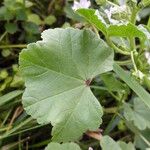
Malva neglecta
پنیرک · خُروف · Common mallow · Dwarf mallow · Roundleaf mallow
Description
Source: leafsnapMalva neglecta is an annual growing to 0.6 m (2 ft). It is known as common mallow in the United States and also as buttonweed, cheeseplant, cheeseweed, dwarf mallow, and roundleaf mallow. This plant is often consumed as a food, with its leaves, stalks and seed all being considered edible. This is especially true of the seeds, which contain 21% protein and 15.2% fat.
🌳 Although often dismissed as an annoying weed, common mallow conceals interesting uses. It is employed in herbal remedies, and its leaves are edible with a pleasant flavor, suitable raw in salads or cooked as a green. Pressed plants yield a soft green dye that could serve as an eco-friendly fabric colorant. Additionally, infusions of common mallow can soften leather, offering a more environmentally friendly option in leather processing. These notable uses remain largely underexploited, underscoring the plant’s overlooked value.
🎭 Pleasant disposition
Care Guide
💧 Water
Common mallow flourishes with moderate moisture and consistent hydration, requiring weekly watering to stay healthy. Although it can withstand brief dry periods, it's important to manage watering carefully during the active growing season. This helps avoid overwatering and ensures the plant remains healthy.
How should I water my Common mallow plant?
There are several ways to water Common mallow, including using a garden hose, a watering can, or any other common watering tool. Common mallow is not too particular about the type of water it receives, as it can thrive with rainwater, tap water, or filtered water. It is generally not recommended to water this plant from above, as it can harm the leaves and flowers and potentially lead to disease. A drip irrigation system can be a great method for watering Common mallow, as it evenly delivers water directly to the soil. For Common mallow grown in a container, you can use a cup, watering can, or tap water to water the plant specifically at the soil level.
What should I do if I give my Common mallow plant too much or too little water?
To help Common mallow thrive, it is important to address both underwatering and overwatering. If you notice that your plant lacks moisture, simply water it more frequently. However, overwatering can be more problematic. It can lead to diseases and even death for Common mallow. To prevent this, choose a location with ample sunlight to dry the soil and good drainage to avoid waterlogged soil. If you overwater a potted Common mallow, consider changing to a new pot with better drainage. When repotting, use loose soil and a pot that drains efficiently.
How often do I need to water my Common mallow plant?
Common mallow requires regular watering throughout the growing season. In spring, you should water it once a week. As the season progresses and it gets warmer, you may need to increase watering to two to three times per week. Exceeding this rate can harm the plant. It's important to keep the soil relatively moist, but not wet, regardless of how often you need to water. Watering a potted Common mallow is a little different. Generally, you'll need to water it more frequently because the soil in a pot can dry out faster. In most cases, you should water a container-grown Common mallow a few times per week, compared to just once a week for a plant in the ground.
How much water does my Common mallow plant need?
There are a few ways to decide how much water to give your Common Mallow. One approach is to feel the soil to gauge its moisture level. If the top six inches of soil feel dry, you should water until it becomes moist. Another option is to use a specific measurement, such as two gallons per week, considering factors like temperature and how quickly the soil dries. However, this guideline may cause overwatering if your plant requires less water. When growing in a container, you should water enough to moisten all dry layers of soil. You can test this by inserting your finger into the soil or by watering until you see a slight excess water drainage.
How do I water my Common mallow as it grows?
Common mallow goes through different growth stages throughout the year, each with varying water requirements. When starting Common mallow from a seed, it is important to provide extra water during germination. You should water frequently to keep the soil consistently moist. After a few weeks, when the Common mallow has grown above the soil, it will require slightly less water than during the seedling phase. Once the plant is mature, watering about once per week is sufficient. During flower development, giving slightly more water can help aid the process.
☀️ Light Full sun
Common mallow grows best with abundant sunlight throughout the day, though it can tolerate milder, filtered light. Native to areas with strong solar exposure, the plant’s growth and vigor are heavily affected by light levels. Still, very low or excessively high sun exposure can harm its development.
What are the sunlight requirements for Common Mallow?
Common Mallow requires a significant amount of sunlight throughout the day for optimal growth, thriving best under full sun conditions, which means it needs above 6 hours of sunlight daily. It can also tolerate partial sun, defined as about 3-6 hours of sunlight. However, the plant can grow in less intense, filtered light environments as well. To ensure your plants are happy, it's important to watch how sunlight moves through your garden and choose spots that provide a perfect balance of light and shade.
Can Common Mallow be grown with artificial lighting?
Yes, Common Mallow can be grown with artificial lighting, especially when natural sunlight is insufficient, like in winter or less sunny spaces. Optimal growth requires adequate lighting, and artificial lights like LEDs, which can be customized to provide specific wavelengths of light, serve as a vital solution. For full sun plants, 30-50W/sq ft of artificial light is needed, partial sun plants require 20-30W/sq ft, and full shade plants need 10-20W/sq ft. The light source should be placed 12-36 inches above the plant, mimicking natural sunlight for 8-12 hours per day.
What are the symptoms of insufficient light in Common Mallow?
When grown indoors or under inadequate light, Common Mallow may exhibit symptoms like smaller new leaves, leggy or sparse growth, faster leaf drop, slower or no new growth, lighter-colored new leaves indicating a lack of chlorophyll and essential nutrients. Additionally, overexposure to sunlight can cause chlorosis, sunscald, leaf curling, wilting, and leaf scorching. These issues indicate either insufficient or excessive light, impacting the plant's health and growth.
How can I treat Common Mallow that's not receiving enough sunlight?
For indoor Common Mallow suffering from insufficient sunlight, gradually moving the plant to a sunnier location each week until it receives at least 6 hours of direct sunlight daily can improve growth. Use south-facing windows for maximum exposure and supplement with artificial light if necessary. For outdoor plants, avoid sudden changes to prevent sunburn by moving them gradually to sunnier spots. If trees obstruct sunlight, consider pruning to improve exposure. For smaller plants, you might transplant them during their dormant period to a sunnier location with good drainage.
🌡️ Temperature 5–35°C
Common mallow is mainly found in areas where temperatures range from 68 to 95 °F (20 to 35 °C). In cooler seasons, it may need a slight increase in warmth to thrive.
What is the ideal temperature range for Common Mallow?
Common mallow thrives in temperatures ranging from 68 to 95 °F (20 to 35 °C). It has strong cold resistance, making it adaptable to cooler seasons without needing special frost protection measures in most cases. However, during the winter, if temperatures are expected to drop below -30°C, protective measures should be taken to shield the plant from extreme cold, such as covering it with soil or straw. Additionally, before the first freeze of autumn, it's recommended to water the plant abundantly so the soil remains moist, helping to prevent drought and water scarcity during the colder months.
How does low temperature affect Common Mallow and what are the solutions?
Common mallow is cold-tolerant and fares best when temperatures stay above 20°C. Throughout the winter, it's crucial to keep the plant above 0°C to ensure its wellbeing. When temperatures plunge below -30°C, you might not observe immediate changes, but there can be a reduced rate of sprouting or no sprouting at all come springtime. In such cases, it's advised to remove any parts of the plant that fail to sprout as part of the spring care routine.
How does high temperature affect Common Mallow and what are the solutions?
During the summer, it is important to keep Common mallow's environment below 35°C. Exposing the plant to temperatures over 41°C can lead to lighter leaf colors, increased susceptibility to curling and sunburn, and in severe cases, wilting or complete drying out of the plant. To mitigate these issues, it's recommended to trim away the sunburned and dried parts. Moving the plant to a shaded location or using a shade cloth can protect it from intense midday and afternoon sun. Additionally, watering the plant in the morning and evening will help keep the soil adequately moist.
💨 Humidity
🪴 Soil 6-7
🌱 Fertilizer
Common mallow benefits from regular, light applications of fertilizer to encourage healthy leaf growth. You should feed Common mallow about once a month during the summer. Nitrogen is essential for foliage, and providing nitrogen-rich sources helps Common mallow thrive.
🪴 Pot & Repot
✂️ Pruning
Common mallow benefits from occasional pruning, which is best done in late winter or early spring after the frost has passed. To encourage dense growth, trim the shoots back to the first set of leaves. Be sure to use clean, sharp shears, and disinfect your tools between cuts to prevent cross-contamination and avoid frost damage.
🌿 Propagating
🐛 Diseases & pets
☠️ Toxicity
Malva neglecta has no toxic effects reported.
Characteristics
- Plant Type
- Herb
- Life Cycle
- Annual, Perennial, Biennial
- Genus
- Malva
- Family
- Malvaceae
- Hardiness Zone
- 4-10
- Mature Height
- 61 cm
- Mature Spread
- 46 cm to 61 cm
- Leaf Color
- Green, Silver
- Leaf Type
- Deciduous
- Flower Color
- White
- Flower Size
- 0.51 cm to 1.27 cm
- Bloom Time
- Late spring, Early summer, Mid summer
- Planting Time
- Autumn, Winter
- Harvest Time
- Summer
- Native Area
- India, Austria, Turkey, Sweden, Slovakia, Montenegro, Pakistan, Croatia, Slovenia, Morocco, Belarus, Uzbekistan, Russia, Iraq, Germany, Estonia, Oman, Romania, Latvia, Belgium, Portugal, Netherlands, Saudi Arabia, France, Tajikistan, Czech Republic, Cyprus, Bulgaria, Poland, Armenia, Greece, Ukraine, Serbia, Chad, Lithuania, Norway, Lebanon, China, Syria, Afghanistan, Kyrgyzstan, Kazakhstan, Italy, Spain, Switzerland, Denmark, Mongolia, Bhutan, Iran, Albania, Ireland, United Kingdom, Hungary, Algeria, Azerbaijan, Turkmenistan