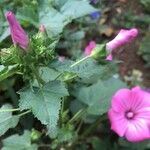
Malva trimestris
Annual mallow · Rose Mallow · Royal Mallow · Nalbă Regală
Description
Source: leafsnapMalva trimestris, commonly known as the Three-flowered Mallow, is an annual plant belonging to the Malvaceae family. Native to Europe and Asia, it has been introduced and naturalized in various parts of North America. The plant can grow up to 60 cm tall, featuring a branching stem with green, lobed leaves. The flowers of Malva trimestris are pink or purple with dark veins and measure about 2-3 cm in diameter. They bloom from June to September, attracting bees, butterflies, and other pollinators. The plant produces disc-shaped schizocarps as fruit, which split into several segments when mature. Malva trimestris prefers well-drained soils in full sun or partial shade but can tolerate a wide range of soil types. It is commonly found along roadsides, in fields, waste areas, and disturbed sites such as construction zones. The Three-flowered Mallow has been used for medicinal purposes for centuries due to its anti-inflammatory properties, which are useful for treating respiratory ailments like coughs and sore throats. Additionally, its leaves have been used topically on wounds due to their antiseptic properties. Overall, Malva trimestris is an attractive annual plant with medicinal benefits, making it popular among gardeners who desire both beauty and function from their plants.
🌳 Besides its decorative appeal, the annual mallow produces a distinctive mucilage traditionally employed in 'queso de flor', a specialty cheese from the Canary Islands. The plant's sap contains particular proteins that cause milk to curdle, a step that is essential in cheesemaking. This use highlights a notable overlap between botany and gastronomy, with the annual mallow serving as a botanical substitute for animal rennet and providing a useful option for vegetarians and people with dietary restrictions.
Care Guide
💧 Water Every 3 days
Annual mallow thrives in temperate environments with moderate moisture levels. While it can endure periods of dryness, it benefits most from consistent watering, ideally on a weekly basis. Typically grown outdoors, annual mallow takes advantage of natural rainfall, which boosts its blooming vigor and frequency. The plant’s flowering is closely tied to regular watering and the seasonal patterns of precipitation.
How should I water my Annual mallow plant?
To water Annual mallow, you have several options: a garden hose with a spray nozzle, a watering can, or any other common watering tool. Annual mallow is not too particular about the type of water it receives - it can thrive on rainwater, tap water, or filtered water. However, it's generally best to avoid watering this plant from above, as it can harm the leaves and flowers and potentially lead to disease. Instead, a drip irrigation system is often the most effective method for watering Annual mallow, as it ensures even and direct moisture to the soil. For container-grown Annual mallow, you can use a cup, watering can, or tap water to apply water directly to the soil.
What should I do if I give my Annual mallow plant too much or too little water?
If your Annual mallow lacks moisture, the solution is simple: water it more regularly. However, overwatering can be a bigger problem that leads to diseases and the eventual decline and death of your plant. To prevent this, choose a suitable location for your Annual mallow with ample sunlight and good drainage. If you have overwatered an Annual mallow in a pot, you may need to consider changing it to a new pot with better drainage. When repotting, use loose soil and a pot that drains efficiently.
How many times should I water my Annual mallow?
Annual mallow needs regular watering throughout the growing season. In the spring, water it once a week. As the season gets hotter, increase watering to two to three times a week. However, be careful not to overwater, as it can harm the plant. Make sure the soil remains moist but not wet, regardless of how often you water. If you're growing annual mallow in a pot, remember that the soil can dry out faster than in the ground. Water container-grown plants a few times a week, as opposed to once a week for those in the ground.
How much water does my Annual mallow plant need?
There are a few ways to decide how much water your Annual mallow needs. One method is to feel the soil for moisture and water until the first six inches are moist. Another option is to use a set measurement, like around two gallons per week. However, be cautious with this method as it could lead to overwatering if your plant needs less. When growing in a container, you'll need a different approach. Make sure all layers of soil are moist, which you can check by sticking your finger in the soil. Another way is to water until you see a slight trickle of excess water coming out of the pot's drainage holes.
How do I know if I'm giving enough water to my Annual mallow?
Avoiding overwatering your Annual mallow can be somewhat challenging. These plants have deep roots that need to be watered weekly. However, overwatering can lead to root rot and browning. Underwatering is less of a concern as Annual mallow can survive without frequent watering, but if you go too long without watering, it may wilt and develop dry leaves.
☀️ Light Full sun
Annual mallow is a sun-loving plant that needs ample sunlight to achieve optimal growth and health. In its natural habitat it does best with unobstructed sunlight. When light is limited, the plant can develop weak growth and pale foliage. Excessive shading should be avoided.
What are the sunlight requirements for Annual Mallow?
Annual Mallow (Malva trimestris) thrives in locations that receive a significant amount of sunlight. For optimal growth and health, it is crucial for the plant to be exposed to full sun, which means more than 6 hours of sunlight a day. However, it can also grow in partial sun, receiving about 3-6 hours of sunlight daily. Monitoring the movement of sunlight through your garden and selecting spots that offer an ideal mix of light and shade will help ensure your plants' well-being.
How important is sunlight for the growth of Annual Mallow?
Sunlight is essential for the growth and health of Annual Mallow, as it is a sun-loving plant. In its natural habitat, it flourishes under unimpeded sunlight. Insufficient light may lead to weak growth and pale foliage, while too much shade can adversely affect the plant. When natural sunlight is lacking, especially during winter or in less sunny spaces, artificial lighting can provide an effective alternative, ensuring faster and healthier growth. For plants requiring full sun, 30-50W/sq ft of artificial light is recommended, 20-30W/sq ft for partial sun plants, and 10-20W/sq ft for full shade plants.
What are the symptoms of inadequate light for Annual Mallow?
When grown indoors or in conditions of insufficient light, Annual Mallow may display several symptoms indicating light deficiency. These include smaller new leaves, leggy or sparse growth, faster leaf drop, slower or no new growth, and lighter-colored or pale new leaves. Excessive sunlight can lead to chlorosis, sunscald, leaf curling, wilting, and leaf scorching. These symptoms help in identifying whether the plant is receiving too little or too much light and in taking corrective action.
How can I provide the best light conditions for Indoor and Outdoor Annual Mallow Plants?
To ensure your Annual Mallow receives adequate light indoors, gradually relocate it to brighter areas until it gets at least 6 hours of direct sunlight daily, using a south-facing window for the best exposure. If necessary, supplement with artificial light for at least 8 hours a day. For outdoor plants, progressively move the plants to sunnier spots, avoiding sudden changes to prevent sunburn. If trees block sunlight, consider pruning them. For smaller plants, you might transplant them during their dormant period to a sunnier location with good drainage, typically in late winter or early spring. It’s important to note that while parts of the plant affected by insufficient light might not recover, new growth should be healthy once light conditions are improved.
🌡️ Temperature 5–35°C
Annual mallow is native to areas with moderate temperatures. It performs best in a temperature range of 68 to 95 °F (20 to 35 ℃). During extreme seasonal fluctuations, it may be necessary to modify its surrounding temperature.
What is the optimal temperature range for Annual mallow?
Annual mallow thrives best in environments with moderate temperatures, favoring a range of 68 to 95 °F (20 to 35 °C). These conditions are ideal for the plant to grow and develop healthily.
Does Annual mallow need special frost protection?
Annual mallow possesses strong cold resistance, meaning special frost protection measures are generally unnecessary. However, in conditions where winter temperatures are anticipated to drop below -30°C, it is crucial to safeguard the plant with coverings such as soil or straw. Additionally, watering the plant abundantly before the first freeze in autumn helps keep the soil moist and protects the plant from drought and water scarcity during winter and early spring.
How does low temperature affect Annual mallow, and what are the solutions?
Annual mallow is cold-tolerant and performs best when temperatures are above 20°C. It should remain above 0°C during winter. In extreme cold below -30°C, the plant may not show immediate adverse effects, but there might be reduced or no sprouting in spring. The solution in spring is to remove any parts of the plant that have failed to sprout.
How does high temperature affect Annual mallow, and what are the solutions?
During the summer, it is essential to ensure the temperature around Annual mallow does not exceed 35°C. Temperatures above 38°C can cause the leaves to lighten in color, curl, become susceptible to sunburn, and in severe cases, cause the plant to wilt and dry out. To mitigate these issues, trim away the sunburned and dried parts. Relocating the plant to a shaded area or using a shade cloth can protect it from the intense midday and afternoon sun. Adequate watering in the morning and evening is also crucial to keep the soil moist and the plant healthy.
What is the botanical name of Annual mallow?
The botanical name of Annual mallow is Malva trimestris. Understanding the botanical name is important for researching and acquiring more in-depth information about the plant's specific care requirements.
💨 Humidity
🪴 Soil 6-7
🌱 Fertilizer
When most of Annual mallow's blooms have opened to full size, resume fertilizing. During the period of peak flowering, apply fertilizer every three to four weeks, depending on weather. Once Annual mallow begins producing fewer new blooms, stop fertilizing; there is no need to feed the plant when it can no longer produce additional flowers.
Why do I have to give fertilizer to my Annual mallow?
Plants, including Annual mallow, rely on nutrients to survive. Most gardeners understand this. However, if Annual mallow doesn't receive enough food, it will die soon after being pollinated. To keep Annual mallow thriving and producing large, beautiful flowers throughout the blooming season, it's important to provide the right type and amount of nutrients. Fertilizer is especially helpful for Annual mallow because it has a thin and delicate root system that can easily be damaged. By fertilizing at planting, Annual mallow can develop a strong root structure, which not only provides stability but also sets the stage for an impressive flowering display. Properly timed fertilization can also help extend the flowering period of Annual mallow.
When should I fertilize my Annual mallow?
Annual mallow experiences significant growth in the early part of the growing season, after the last frost has passed. It is important to fertilize the plant during this time, specifically when it is first planted in the ground or in planters. This initial application of fertilizer will be sufficient until later in the year when the plant is in full bloom. Once the blooms are fully developed, it is time to resume fertilizing. This should be done every three to four weeks, depending on the weather conditions. However, once the plant starts producing fewer new blooms, there is no need to continue fertilizing.
When should I not put fertilizer on my Annual mallow?
Regular fertilizing is important for Annual mallow, but it can sometimes be applied at the wrong time. In certain situations, it is necessary to hold back the fertilizer. These situations are mainly related to climate, but they can also involve various controllable factors. Basically, if there is something wrong with the plant, the soil, or the climate, it is best to wait until things have improved and the plant has recovered. For example, if there are severe or unexpected changes in the weather, it is not a good time to fertilize. If there is a sudden cold snap in the middle of summer, it's best to wait until it warms up again before starting to fertilize. The same applies if the soil becomes too dry or compacted to effectively absorb the fertilizer. In that case, the fertilizer would go straight to the roots without being diffused by the soil, which is not ideal for Annual mallow's roots. During the hottest parts of the day when temperatures reach the 90-degree Fahrenheit range, it is also not recommended to apply fertilizer. This is because fertilizer can break down at different speeds depending on the temperature, and it is important not to allow hot temperatures to break it down too quickly. Additionally, any pests or diseases should be treated and cleared up before re-fertilizing.
Which fertilizer should I use for my Annual mallow?
Annual mallow plants thrive with a specific balance of nutrients, which can be provided by a high-yield blooming plant fertilizer containing a higher level of phosphorus (such as 10-30-10). Many fertilizer brands offer options specifically designed for blooming plants like Annual mallow, making it easy to provide the necessary nutrients. When using a pre-mixed fertilizer, it is important to follow the package instructions to avoid overfertilizing or underfertilizing the plants, as either can negatively impact their growth and even cause wilting.
How do I make my Annual mallow plant grow better?
Applying fertilizer to Annual mallow can vary depending on the type of fertilizer you have. Here are some general tips to follow: 1. When first planting Annual mallow, mix the recommended amount of fertilizer into the soil before planting and water it in. 2. For pellet fertilizers, mix the pellets into the top inch of soil around the outer edge of the plant, where the roots are. Initially, water them in thoroughly, and then water regularly afterwards. 3. Other fertilizers can be mixed into a watering can and applied like regular watering. Follow any instructions on the fertilizer packaging for consistency. 4. If you prefer a regular schedule, aim to fertilize every three to four weeks.
🪴 Pot & Repot
✂️ Pruning
Pruning annual mallow from early to late spring improves blooming and helps prevent disease. Focus on removing dead stems, thinning out crowded areas, and shaping the plant to enhance airflow. Regular maintenance promotes healthy growth and enhances the plant's appearance. Be sure to use clean, sharp tools to minimize stress on the plant and ensure precise cuts.
🌿 Propagating
🐛 Diseases & pets
☠️ Toxicity
Characteristics
- Plant Type
- Herb
- Life Cycle
- Annual, Biennial
- Genus
- Malva
- Family
- Malvaceae
- Hardiness Zone
- 4-9
- Mature Height
- 91 cm
- Mature Spread
- 46 cm
- Leaf Color
- Green
- Leaf Type
- Semi-evergreen
- Flower Color
- Pink, Lavender
- Flower Size
- 7.62 cm to 10.16 cm
- Bloom Time
- Late spring, Early summer, Mid summer
- Planting Time
- Spring, Summer
- Harvest Time
- Early summer, Mid summer
- Native Area
- Libya, Turkey, Tunisia, Syria, Italy, Spain, Portugal, Lebanon, Algeria, Morocco, France