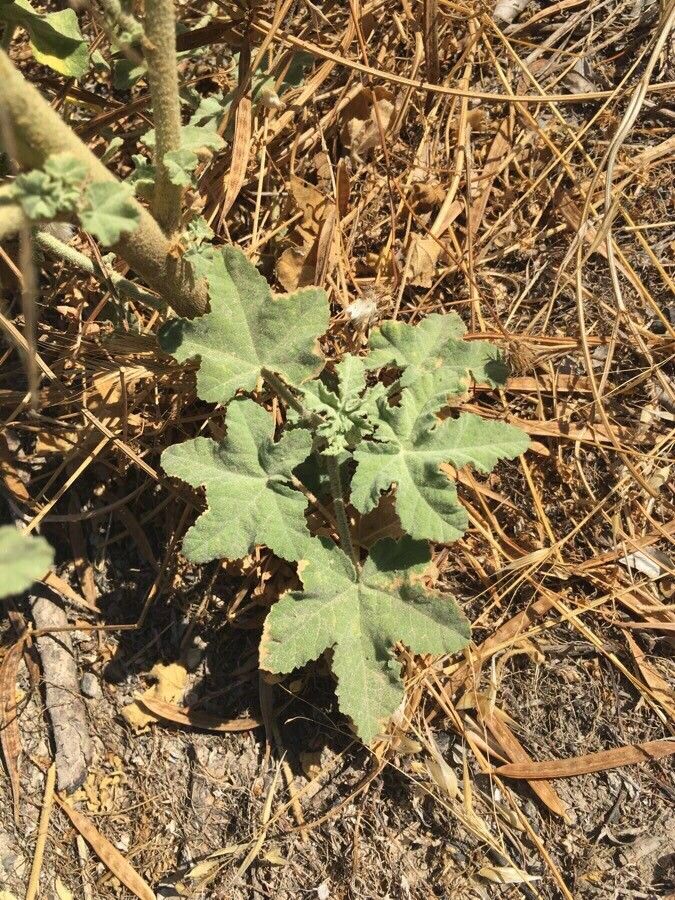
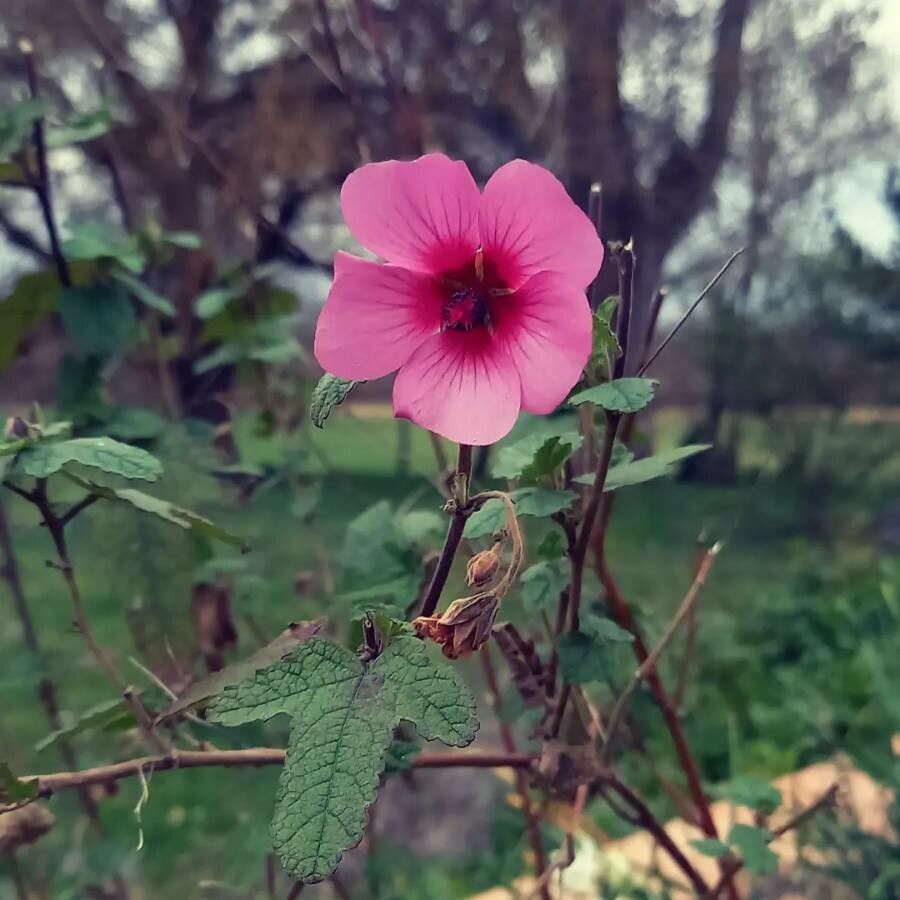
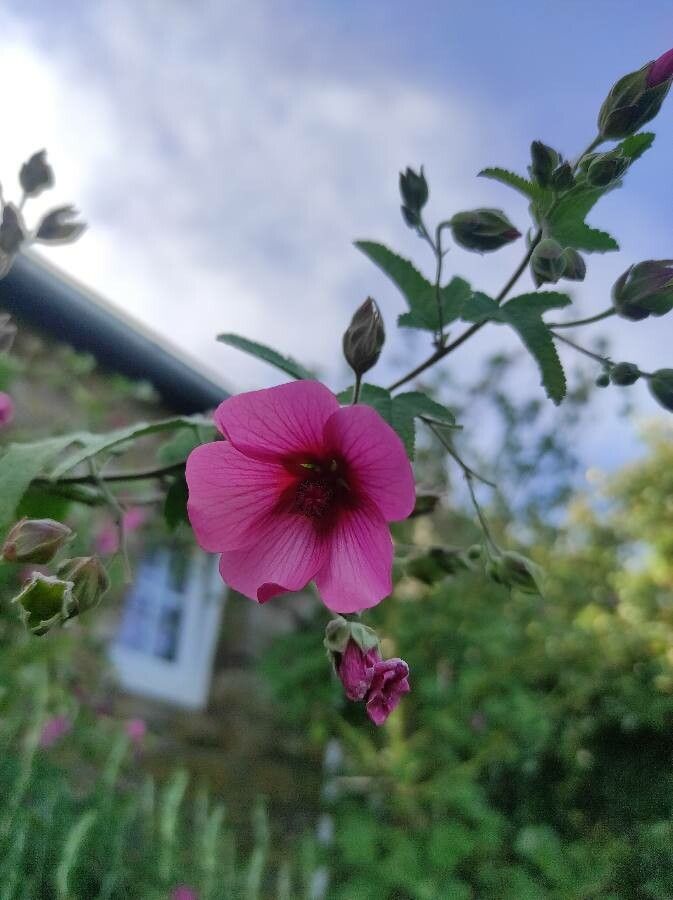
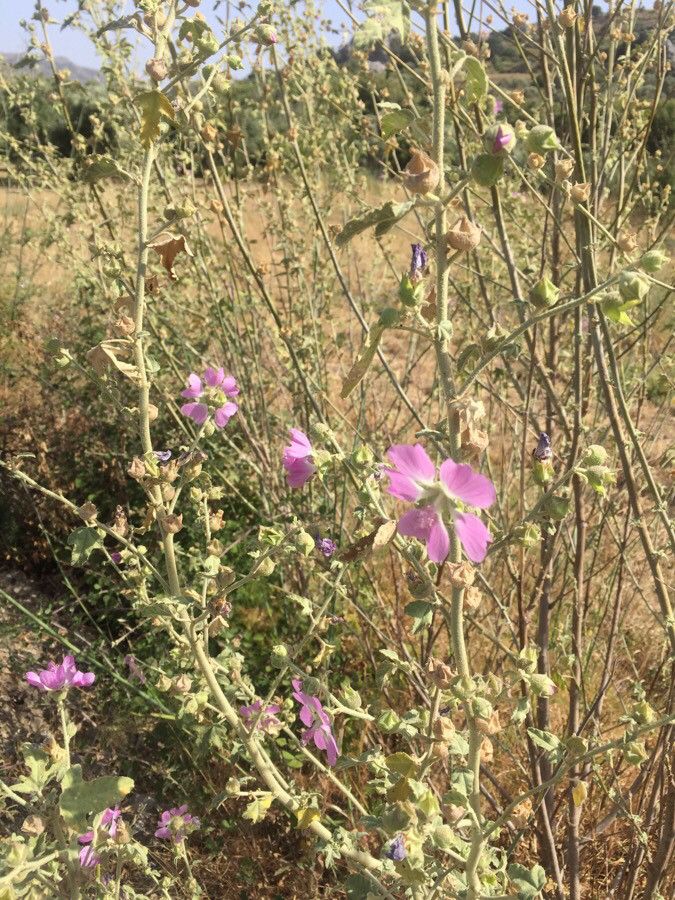
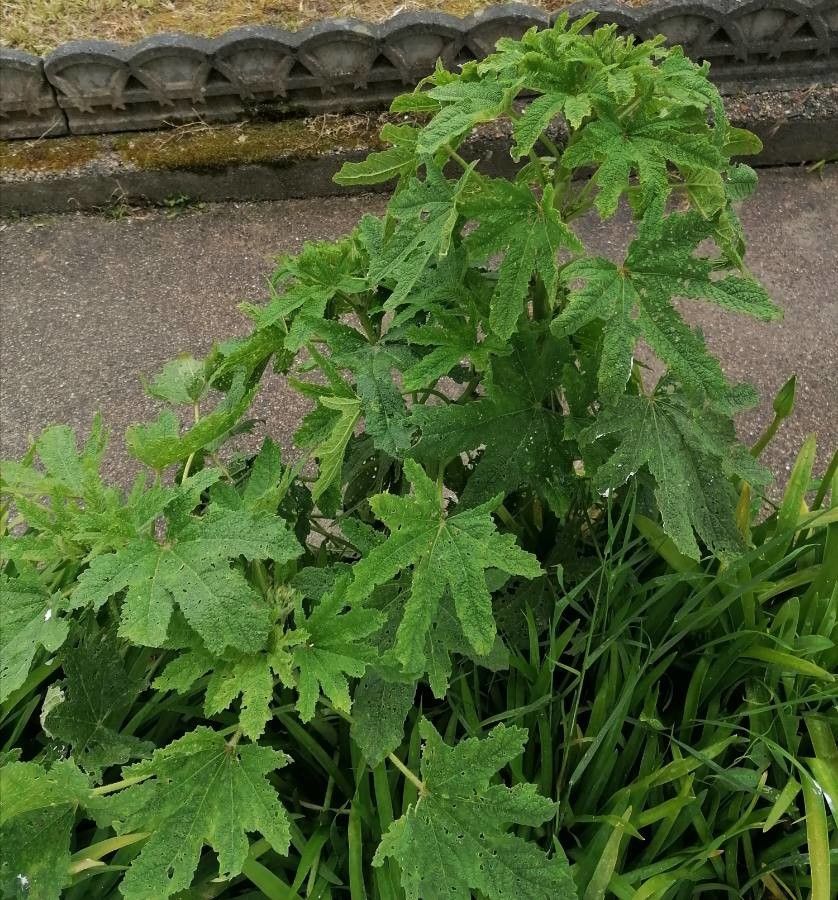
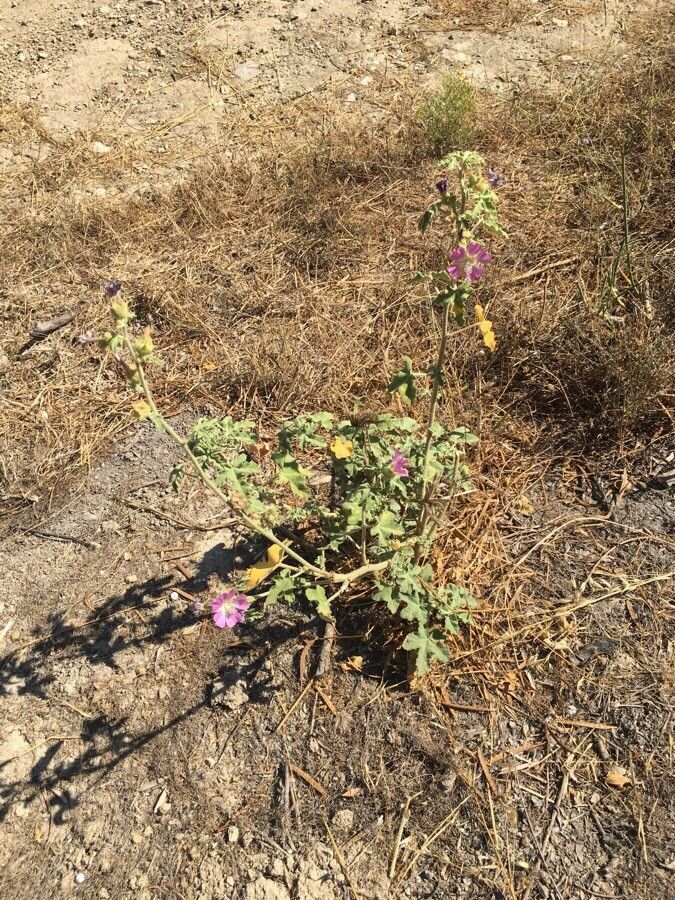
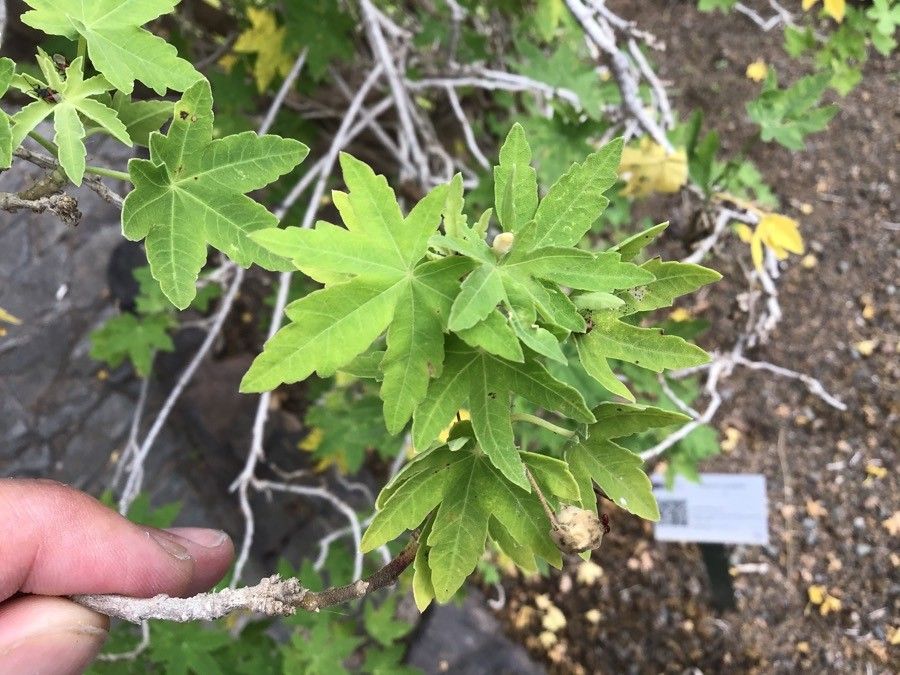
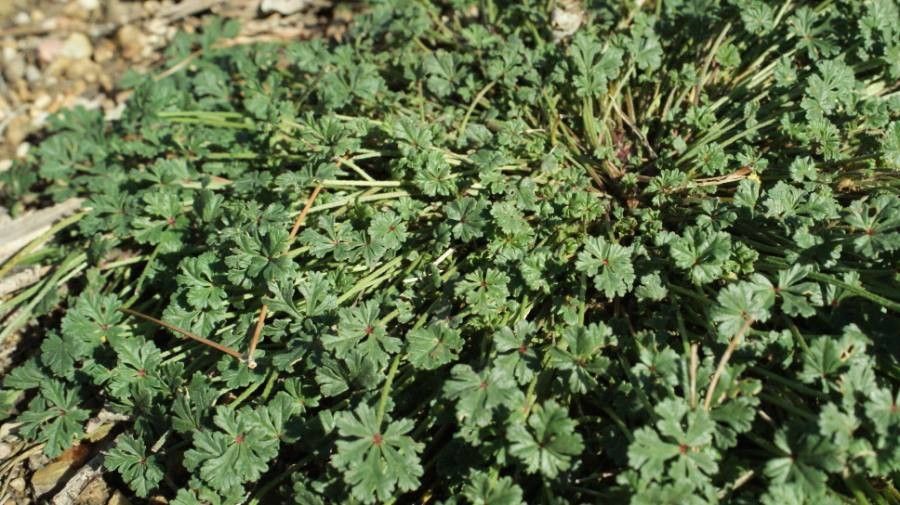
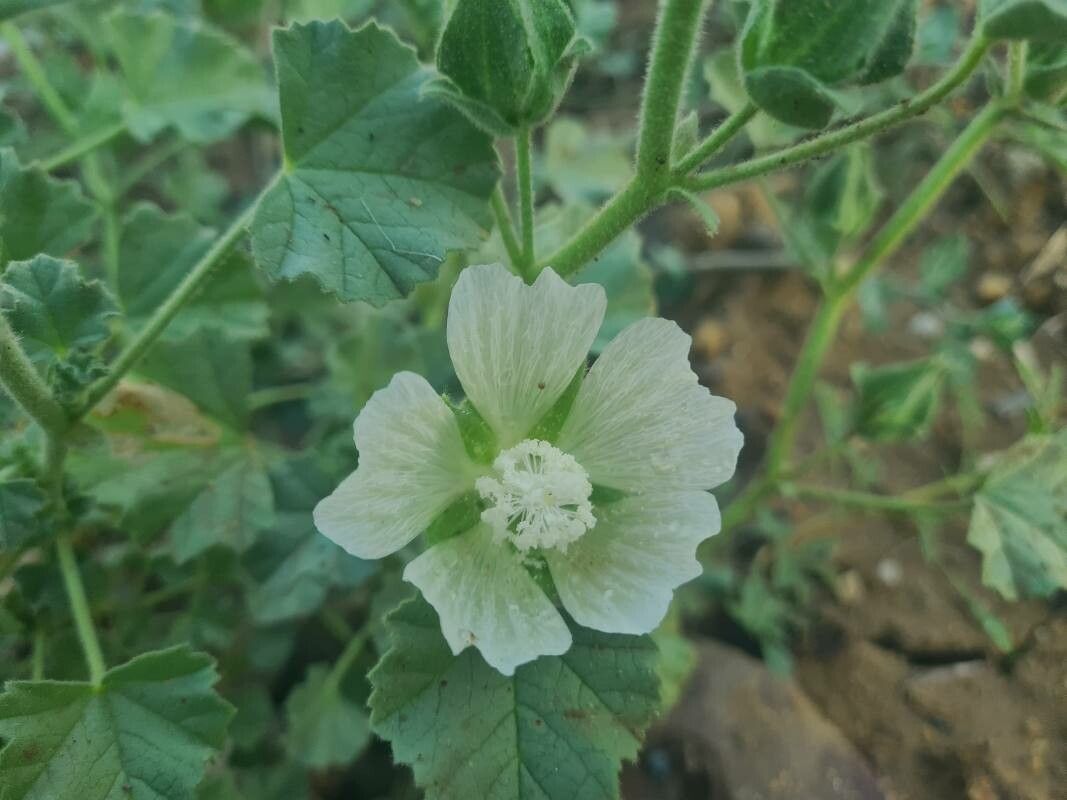
Malva unguiculata, commonly known as "okra leaf mallow" or "cluster mallow," is a species of flowering plant in the Malvaceae family. Originally native to Africa, it has been introduced to various other regions, including Asia and North America. This plant typically grows up to 1 meter tall and features a sprawling habit, with stems reaching up to 2 meters in length. The leaves are deeply lobed, resembling those of okra plants, which is why it has its common name. The flowers, which are usually pink or purple, have five petals that form a cup-shaped bloom. They blossom from late spring through early fall and are known to attract bees, butterflies, and other pollinators. Often cultivated as an ornamental plant for its attractive foliage and flowers, Malva unguiculata also boasts medicinal properties. The leaves have been traditionally used for their anti-inflammatory effects to treat various ailments such as sore throats, coughs, wounds, and burns. Overall, Malva unguiculata is a visually appealing ornamental plant that also offers medicinal benefits, making it a popular choice among gardeners who appreciate both aesthetics and functionality in their gardens.
Bryony-leaved tree-mallow has strong disease resistance and typically does not suffer from illnesses. Nonetheless, it can be vulnerable to pests and diseases present in its vicinity, and these outbreaks are usually mild. For care, the plant is of moderate maintenance. It should be pruned regularly to preserve a neat appearance and encourage healthy growth. Fertilizing can also help increase flowering. Bryony-leaved tree-mallow is suitable for anyone with outdoor areas such as a garden or patio and does not demand extensive gardening experience. It may need more attention when cultivated indoors.
How to keep Malva Unguiculata.
Light
Bryony-leaved tree-mallow comes from sunny, open habitats where it does best in full sun. It can tolerate some partial shade but favors direct sunlight for optimal growth. This plant, which appears as both an annual and a biennial, is noted for its sun-loving character.
Temperature
Bryony-leaved tree-mallow can tolerate a wide range of temperatures, though its distribution may still be restricted by particular combinations of moisture and heat. It performs best in warm summer conditions with adequate rainfall or watering. Extended periods of cloudy, rainy weather, as well as sustained high temperatures, increase the risk of the plant dying. In winter, appropriate protection from cold can improve its chances of survival.
Fertilizer
Bryony-leaved tree-mallow responds well to regular, light applications of fertilizer to encourage healthy leaf growth. You should feed Bryony-leaved tree-mallow about once a month during the summer. Nitrogen is key for foliage, and providing nitrogen-rich sources helps Bryony-leaved tree-mallow thrive.
Botanical profile.
- Plant Type
- Herb
- Life Cycle
- Annual, Perennial
- Genus
- Malva
- Family
- Malvaceae
- Hardiness Zone
- 8-11
- Mature Height
- 30 cm to 61 cm
- Mature Spread
- 30 cm to 46 cm
- Leaf Color
- Green, Dark Green
- Leaf Type
- Deciduous
- Flower Color
- Pink
- Flower Size
- 3.05 cm to 5.08 cm
- Bloom Time
- Summer, Early fall, Mid fall
- Planting Time
- Autumn, Winter
- Harvest Time
- Late summer, Fall, Early winter
- Native Area
- Libya, Turkey, Italy, Cyprus, Greece
Other names.