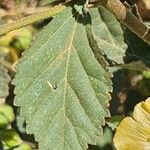
Malvastrum coromandelianum
Prickly-mallow · Broomweed · Three-lobe false mallow · Three-point false mallow · Prickly malvastrum
Description
Source: leafsnapMalvastrum coromandelianum, commonly known as Indian mallow or buttonweed, is a perennial herbaceous plant belonging to the Malvaceae family. Native to India and Southeast Asia, it has spread and naturalized in many other regions worldwide. The plant can grow up to 1 meter tall and features a woody base with numerous branches. Its leaves are alternate, simple, and either ovate or lanceolate in shape, with serrated margins. The small flowers, approximately 1 cm in diameter, are pinkish-purple or white, each with five petals that form a cup-shaped corolla. Indian mallow thrives in well-drained soils and is drought-tolerant, but it does not fare well in frost conditions. It is commonly found growing along roadsides, in waste areas, and in disturbed sites such as abandoned fields. Historically, the plant has been used in various cultures for its medicinal properties, particularly its anti-inflammatory capabilities, which can help alleviate pain caused by arthritis or other inflammatory conditions. Overall, Malvastrum coromandelianum is an attractive ornamental plant that is easy to grow from seeds. It is an ideal choice for gardeners seeking low-maintenance plants that add color to their gardens year-round, while also offering medicinal benefits if needed.
🎭 Pleasant disposition
Care Guide
💧 Water Every 7 days
The three-lobed false mallow is native to tropical regions and thrives in consistently moist environments. For optimal growth, it should be watered weekly, though it can withstand short periods of dryness. Using mulch is helpful for retaining soil moisture, particularly in warmer climates.
How should I water my Three-lobed false mallow plant?
To properly water the Three-lobed false mallow plant, it is best to use filtered water at room temperature. Tap water may have harmful particles, so filtering it is important. Additionally, the water should be at room temperature or slightly warmer because the plant is accustomed to warmer climates, and cold water can be a shock to its system. Instead of watering from above, it is recommended to pour the filtered room temperature water onto the soil until it is completely soaked. This helps to moisturize the roots and facilitate nutrient absorption.
What should I do if I give my Three-lobed false mallow plant too much or too little water?
Overwatering can harm your Three-lobed false mallow more than underwatering. When this plant gets too much water, its stems and leaves may wilt and turn yellow. Overwatering for a long time can also cause diseases like root rot, mold, and mildew, which can kill your plant. Underwatering is less common for this plant because it can tolerate drought well. But it's still possible, and if it happens, the leaves will become brittle and brown. It's important to notice signs of overwatering early. Some diseases caused by overwatering, like root rot, can't be fixed if you wait too long. If you see signs of overwatering, reduce watering right away. Check the soil's quality as well. If it doesn't drain well, replace it with a loose, well-draining potting mix. On the other hand, if you notice signs of underwatering, simply water more regularly until those signs go away.
How often do I need to water my Three-lobed false mallow plant?
If your Three-lobed false mallow is in a pot, the best way to determine if it needs water is by sticking your finger into the soil. If the top two to three inches of soil are dry, it's time to water it. If you're growing the plant outdoors in the ground, you can also use this method. When the top few inches of soil are dry, it's time to give it some water. In the spring and early fall, you'll likely need to water it about once a week. During extremely hot weather, you may need to water it twice a week or even more. However, mature and well-established Three-lobed false mallow plants can withstand drought quite well.
How much water does my False Mallow plant need?
To properly water your Three-lobed false mallow, do not hold back on the amount of water you give. Make sure the top two to three inches of soil are dry, and then water the plant thoroughly. Water it enough so that the soil is completely soaked and excess water flows out of the drainage holes at the bottom of the pot. If you don't see excess water draining, it means you haven't watered enough. However, be careful not to let water accumulate inside the soil as it can harm the plant. Additionally, if water is not draining properly, it could mean the soil doesn't drain well, which is bad for the plant's health. If the plant is outdoors, 1 inch of rain per week is sufficient.
How do I water my Three-lobed false mallow at different stages of growth?
The water needs of the Three-lobed false mallow can change depending on its growth stages. When the plant is in its early years or recently transplanted, it requires more water than usual. During these stages, the plant focuses on developing new roots, which need additional moisture for optimal growth. However, after a few seasons, the water requirements decrease. Another growth stage that requires more water is the bloom period when the flower development relies on a significant amount of moisture.
☀️ Light Full sun
Three-lobed false mallow does best with abundant sunlight, which supports its healthy growth. Its need for light stays the same during all growth stages. Native to sunlit habitats, it can also tolerate somewhat reduced light. Both excessive and insufficient light can impair its health.
What are the sunlight requirements for three-lobed false mallow?
Three-lobed false mallow thrives under full sun conditions, requiring more than 6 hours of sunlight daily for healthy growth. It can also sustain well with partial sun, which is about 3-6 hours of sunlight. This plant's need for abundant sunlight is significant throughout its different growth stages. Originating from environments rich in solar energy, it demonstrates some flexibility, tolerating slightly lower light levels. However, both excessive and insufficient light exposure can be detrimental, emphasizing the necessity of finding the perfect balance of light and shade for the plant's well-being.
How does artificial lighting affect the growth of indoor three-lobed false mallow plants?
Artificial lighting serves as an essential solution for indoor three-lobed false mallow plants, especially when natural sunlight is insufficient, such as during winter or in less sunny spaces. It promotes faster, healthier growth by providing adequate lighting. LED lights are recommended due to their ability to offer customizable wavelengths suitable for plant needs. Full sun plants require 30-50W/sq ft, partial sun plants need 20-30W/sq ft, and full shade plants need 10-20W/sq ft of artificial light. Placement should be 12-36 inches above the plant, simulating natural sunlight, and the duration should mimic natural daylight hours, usually 8-12 hours per day.
What are the symptoms of insufficient or excessive light exposure in three-lobed false mallow?
Symptoms of light deficiency in three-lobed false mallow include smaller new leaves, leggy or sparse growth, accelerated leaf drop, halted or no new growth, pale or irregularly colored new leaves, and conditions such as chlorosis and sunscald from excessive light. Other signs include leaf curling as a defense mechanism against extreme sunlight, wilting due to increased transpiration and reduced hydration, and leaf scorching characterized by brown or crispy leaf edges. These symptoms indicate the plant's struggle with either too much or too little light.
How can I address sunlight-related issues for my three-lobed false mallow?
To optimize growth in response to sunlight-related issues, gradually relocate your three-lobed false mallow to receive at least 6 hours of direct sunlight daily, using south-facing windows for indoor plants and considering artificial lighting for large or immobile plants. Outdoors, adapt your plant to sunlight changes to avoid sunburn. Additionally, for plants in the ground, reduce sunlight obstructions by pruning or transplanting to sunnier locations during dormant periods for sufficient sunlight and good drainage. Note that parts of the plant suffering from past light deficiencies may not recover, but new growth should be healthy with improved light conditions.
🌡️ Temperature 15–37.8°C
Three-lobed false mallow is native to areas where temperatures range from 68 to 100 °F (20 to 38 ℃) and performs best in those climates. Adapting the plant to different seasons may require maintaining that temperature range to ensure optimal growth.
What is the native climate for Three-lobed false mallow?
Three-lobed false mallow, botanically known as Malvastrum coromandelianum, is native to climates where temperatures range between 68 to 100 °F (20 to 38 °C). It thrives best in such environments, indicating a preference for warm conditions. To ensure optimal growth, especially in varying climates, maintaining this temperature range is recommended.
How does Three-lobed false mallow handle cold temperatures?
Three-lobed false mallow has a moderate level of cold tolerance. Generally, it does not require special care for cold protection as long as temperatures remain above 0°C. However, when temperatures are expected to drop below freezing, it's necessary to take temporary measures to protect the plant. This can include wrapping the plant in plastic film, fabric, or other insulating materials. It's important to remove these protections once temperatures rise to prevent any potential damage from excessive heat or moisture retention.
What are the symptoms and solutions for Three-lobed false mallow exposed to low temperatures?
When exposed to temperatures below its comfort zone, specifically under 20°C, and especially below 0°C, Three-lobed false mallow may exhibit leaves beginning to droop. If temperatures fall below -10°C, this drooping progresses to wilting, and eventually, leaf fall in severe cases. The solution involves trimming off the frost-damaged parts to encourage new growth. To prevent damage from future cold episodes, wrapping the plant with non-woven fabric or cloth, and constructing a wind barrier to protect it from cold winds, are effective strategies.
How does Three-lobed false mallow react to high temperatures, and what are the solutions?
Three-lobed false mallow enjoys warm temperatures but should be maintained below 38°C during summer to prevent heat stress. When temperatures exceed 43°C, you may observe signs of distress such as lighter leaf color, dry and withered leaf tips, curling leaves, and increased susceptibility to sunburn. To address these symptoms, trim away any sunburned or dried parts. Moving the plant to a shaded location or using a shade cloth can protect it from the harsh midday and afternoon sun. Also, ensuring the soil is consistently moist by watering the plant in the morning and evening helps alleviate stress from high temperatures.
💨 Humidity
🪴 Soil 6-7
🌱 Fertilizer
Typically, a single fertilizer application in spring is enough for Three-lobed false mallow, though several feedings can maximize growth. Feed once every month to a month and a half. Fertilization improves leaf appearance and function, helping maintain consistent color and a healthy texture. It also encourages root growth and enhances nutrient absorption for long-term plant health.
🪴 Pot & Repot
✂️ Pruning
🌿 Propagating
🐛 Diseases & pets
☠️ Toxicity
Characteristics
- Plant Type
- Herb
- Life Cycle
- Perennial, Annual
- Genus
- Malvastrum
- Family
- Malvaceae
- Hardiness Zone
- 8-11
- Mature Height
- 91 cm
- Mature Spread
- 30 cm to 61 cm
- Leaf Color
- Yellow, Bronze
- Leaf Type
- Deciduous
- Flower Color
- Yellow
- Flower Size
- 1.52 cm
- Bloom Time
- Late spring, Early summer, Mid summer
- Planting Time
- Spring
- Harvest Time
- Summer