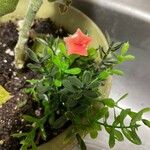
Malvaviscus arboreus
Turk's-cap · Fire dart bush · Sleeping Hibiscus · Turkscap · Wax-Mallow
Description
Source: leafsnapMalvaviscus arboreus, commonly known as Turk's cap or wax mallow, is a tropical shrub native to Mexico and Central America. It belongs to the Malvaceae family and can grow up to 10 feet tall. The plant features dark green, heart-shaped leaves with serrated edges and produces bright red flowers that resemble a turban or cap, inspiring its common name. Turk's cap is a popular ornamental plant due to its attractive flowers and foliage. It can be grown in gardens as well as in containers, both indoors and outdoors. The plant prefers well-drained soil with regular watering but can tolerate some drought conditions. In addition to its ornamental value, Malvaviscus arboreus possesses medicinal properties due to its high content of antioxidants, such as flavonoids and phenolic compounds. Its leaves are used in traditional medicine for treating various ailments, including fever, coughs, sore throats, and wounds. Overall, Turk's cap is an attractive tropical shrub that adds color and beauty to any setting while also providing medicinal benefits for those who use it in traditional medicine.
🌳 Turk's cap is valued for more than just its decorative appearance. Pigments extracted from its bright red blooms are used in textile dyeing, giving fabrics a natural, vivid color. The cosmetics sector has also shown interest, though its gentle tint and possible skin benefits remain underused. The plant can likewise act as a bioindicator because it is sensitive to certain soil metal levels, aiding environmental monitoring.
🎭 Heavenly concern
Care Guide
💧 Water Every 7 days
Wax mallow thrives in warm, humid environments where moisture is consistently available. To keep it healthy, water the plant every 1-2 weeks, but be careful not to overwater. Adding a layer of mulch can help retain moisture and protect the plant from temperature fluctuations. This makes wax mallow an excellent evergreen choice for outdoor growth.
☀️ Light Full sun
Turk's cap grows best with unobstructed access to sunlight, though it can tolerate diffuse light as well. Its development can be impeded by either a severe deficiency or an overabundance of light. Originating from habitats with abundant sun, it requires a substantial amount of light at every stage of growth.
What are the sunlight requirements for Wax Mallow?
Wax mallow requires full sun, defined as above 6 hours of sunlight per day, to thrive at its best. However, it can also tolerate partial sun, which means about 3-6 hours of sunlight per day. The perfect balance of light and shade in your garden is crucial for the happiness of your plants. It is essential to observe how sunlight moves through your garden over the day and choose spots accordingly.
Can Wax Mallow grow under artificial lighting?
Yes, wax mallow can grow under artificial lighting, especially during winter or in spaces that do not receive sufficient natural sunlight. Artificial lighting provides an essential source of light for indoor plants, promoting faster and healthier growth. LED lights are recommended due to their customizability to offer specific wavelengths needed by plants. Full sun plants need 30-50W/sq ft, partial sun plants require 20-30W/sq ft, and full shade plants need 10-20W/sq ft of artificial light. The light source should be positioned 12-36 inches above the plant, and plants usually need 8-12 hours of light per day to mimic natural daylight hours.
What are the symptoms of light deficiency in Wax Mallow?
Wax mallow shows several symptoms when suffering from light deficiency, especially during indoor winter cultivation. These symptoms include smaller new leaves, leggy or sparse growth, faster leaf drop, slower or no new growth, and lighter-colored new leaves. Additional problems can occur from excessive sunlight, such as chlorosis, sunscald, leaf curling, wilting, and leaf scorching. These symptoms serve as indicators that your plant needs a change in its lighting environment.
How can I address light deficiencies in Wax Mallow?
To address light deficiencies in wax mallow, gradually increasing sunlight exposure is key. For indoor plants, move them to a sunnier location each week until they receive at least 6 hours of direct sunlight daily, using a south-facing window and keeping curtains open during the day. Additionally, consider using artificial light for plants that are large or not easily movable, ensuring they receive at least 8 hours of light daily. For outdoor plants, avoid sudden changes in light intensity to prevent sunburn and move plants gradually to sunnier locations. Minimizing obstructions, such as pruning trees, can help increase sunlight exposure. For small plants, transplanting during their dormant period to a location with better sunlight and drainage may also be beneficial.
🌡️ Temperature 20–37.8°C
Turk's cap grows best in tropical and subtropical climates, favoring temperatures from 68 ℉ (20 ℃) up to 100.4 ℉ (38 ℃). To adapt to seasons like winter or summer, the plant will require adjustments to its temperature environment depending on the desired outcome. Maintaining consistent temperature levels is important to encourage healthy growth and a lush appearance.
What climate does Wax Mallow prefer?
Wax mallow thrives in tropical and subtropical climates, favoring temperatures between 68°F (20°C) to 100.4°F (38°C). This heat-loving plant requires consistent temperature levels to foster healthy growth and maintain its lush appearance. During colder seasons, such as winter, it's essential to adjust the plant's environment to prevent any damage due to low temperatures. Ideally, Wax mallow should be kept indoors in a bright spot away from heaters during the colder months to ensure the temperature stays above 20°C, as exposure to temperatures nearing 0°C can be harmful.
What should I do if my Wax Mallow is exposed to low temperatures?
Wax mallow is sensitive to low temperatures and performs best when the temperature remains above 20°C. If exposed to temperatures below 0°C, the plant's leaves may lighten and, following frost damage, turn brown or black with signs of wilting and drooping. In such cases, trim off the frost-damaged parts and immediately move the plant to a warmer indoor environment. Placing it near a south-facing window ensures ample sunlight while avoiding locations near heaters or air conditioning vents to prevent air dryness.
How should I care for my Wax Mallow during high temperatures?
During the summer, it's crucial to keep Wax mallow's temperature below 38°C as exceeding 43°C can cause the leaves to lighten and increase the risk of sunburn. To mitigate damage from high temperatures, trim away any sunburned or dried-up parts of the plant. Relocate the plant to a shaded area, especially during the midday and afternoon sun. Ensure the soil remains moist by watering the plant in the morning and evening.
💨 Humidity
🪴 Soil 6-7
🌱 Fertilizer
Fertilization is essential for the care of Turk's cap. Regular feeding during the growing season preserves the energy needed for its showy leaves and supports overall growth. Ignoring fertilization can cause unhealthy foliage, reduced ornamental appeal, and stunted or weak growth that is prone to breaking.
🪴 Pot & Repot 2-3 years
When repotting Turk's cap, pick a pot 1-2 inches (2.5–5.1 cm) larger that has good drainage. Use a well-draining potting mix. Repot in spring or fall, making sure the root ball sits slightly below the rim of the flower pot. Water thoroughly after repotting and place it in a warm spot with indirect sunlight.
✂️ Pruning
The wax mallow is known for its vibrant red flowers and robust, shrub-like structure. For optimal health and flowering, it is best to prune the plant in early spring. This involves removing dead wood, thinning out overcrowded branches, and shaping the plant. Regular pruning improves air circulation, reduces the risk of disease, and enhances the overall appearance of the plant.
🌿 Propagating
🐛 Diseases & pets
☠️ Toxicity
Characteristics
- Plant Type
- Shrub
- Life Cycle
- Perennial
- Genus
- Malvaviscus
- Family
- Malvaceae
- Hardiness Zone
- 9-12
- Mature Height
- 30 cm to 61 cm
- Mature Spread
- 2.44 m to 3.66 m
- Leaf Color
- Green
- Leaf Type
- Evergreen
- Flower Color
- Red
- Flower Size
- 2.03 cm
- Bloom Time
- Summer, Early fall
- Planting Time
- Spring, Autumn
- Harvest Time
- Mid summer, Late summer, Fall
- Native Area
- Belize, Honduras, Mexico, Guatemala, El Salvador, Nicaragua, Costa Rica, Panama, Trinidad and Tobago