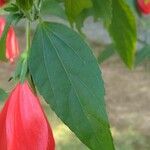
Malvaviscus penduliflorus
Mazapan · Turk's hat · Turk's cap · Cardinal's hat · Sleeping hibiscus
Description
Source: wikipedia (CC BY-SA)Malvaviscus penduliflorus is a flowering plant in the family Malvaceae. It can be found in many tropical places including in the United States, South America, Asia, Australia, and several islands.
Care Guide
💧 Water Every 7 days
Mazapan thrives in tropical climates that offer high humidity and consistent rainfall. While it prefers steady moisture, it can tolerate brief periods of dryness. To keep the soil moist without making it soggy, it should be watered weekly. When grown outdoors, employing mulch can help retain moisture and reduce the need for frequent watering.
☀️ Light Partial sun
Mazapan is native to habitats such as forest understories or rocky areas, where it grows in naturally shaded conditions. It prefers partial sun but can adapt to full sun or full shade, demonstrating its versatile and hardy nature.
What are the sunlight requirements for Mazapan (Malvaviscus penduliflorus)?
Mazapan, also known as Malvaviscus penduliflorus, thrives in areas that receive above 6 hours of sunlight. It's important to observe how sunlight moves through your garden throughout the day. This will help you to find spots that offer a perfect balance of light and shade, ensuring the best conditions for your Mazapan plants to flourish. Remember, the right amount of sunlight is crucial for their happiness and growth.
🌡️ Temperature 20–37.8°C
Mazapan comes from tropical areas, where the climate is generally warm and humid. Consequently, it is adapted to high temperatures and humidity. It does not tolerate sudden temperature shifts and prefers a steady temperature, so avoiding temperature fluctuations indoors is important. It typically cannot withstand cold temperatures and needs higher temperatures to grow. If the surrounding temperature falls too low, the plant may stop growing or even die.
What is the botanical name of Mazapan?
The botanical name of Mazapan is Malvaviscus penduliflorus.
💨 Humidity
🪴 Soil 6-7
🌱 Fertilizer
Fertilize a Mazapan in early spring, as it breaks dormancy. This encourages overall growth and flower formation. Feeding the plant benefits the foliage, stems, and branches, and supports flowers that are larger, more vivid, and longer-lasting. It helps transport nutrients from the roots to the blooms and enhances the plant’s health and resistance to disease.
🪴 Pot & Repot
✂️ Pruning
To promote the health and growth of mazapan, it is important to prune the plant during its winter dormancy. This practice helps shape the plant and stimulate growth. Begin by removing any dead branches and thinning out crowded areas to improve airflow. Make sure to use sterilized tools and cut at a 45-degree angle to minimize the risk of rot. This technique encourages more abundant flowering and prevents the plant from becoming overgrown.
🌿 Propagating
🐛 Diseases & pets
☠️ Toxicity
Characteristics
- Plant Type
- Shrub
- Life Cycle
- Perennial
- Genus
- Malvaviscus
- Family
- Malvaceae
- Hardiness Zone
- 10-12
- Mature Height
- 0.91 m to 3.05 m
- Mature Spread
- 0.91 m to 2.13 m
- Leaf Color
- Forest Green, Dark Green
- Leaf Type
- Evergreen
- Flower Color
- Red
- Flower Size
- 5.08 cm to 6.35 cm
- Bloom Time
- All year round
- Planting Time
- Spring, Summer, Autumn
- Harvest Time
- All year round
- Native Area
- Honduras, Mexico