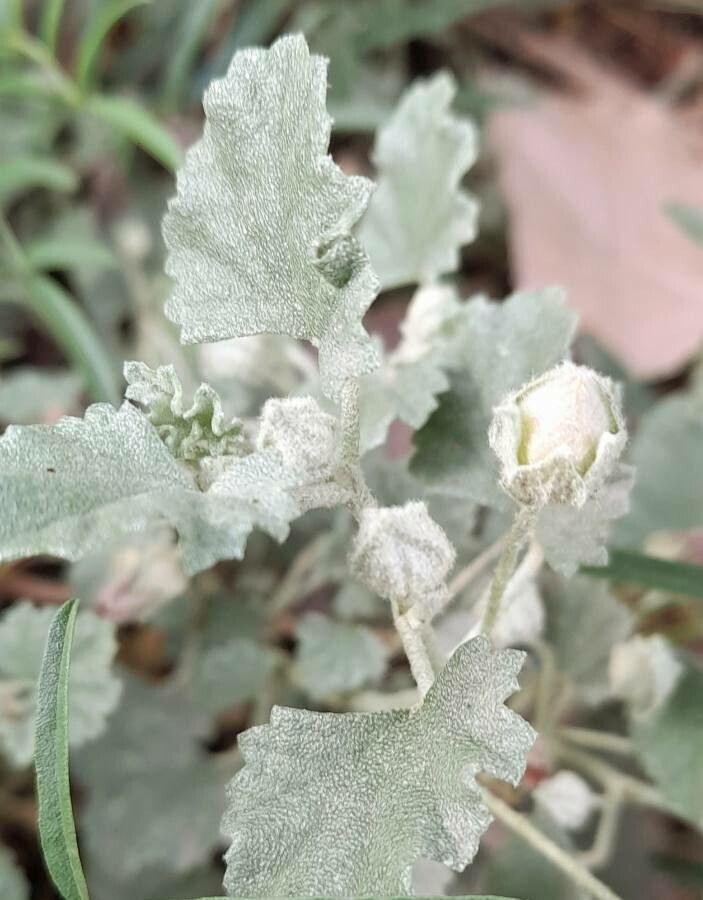
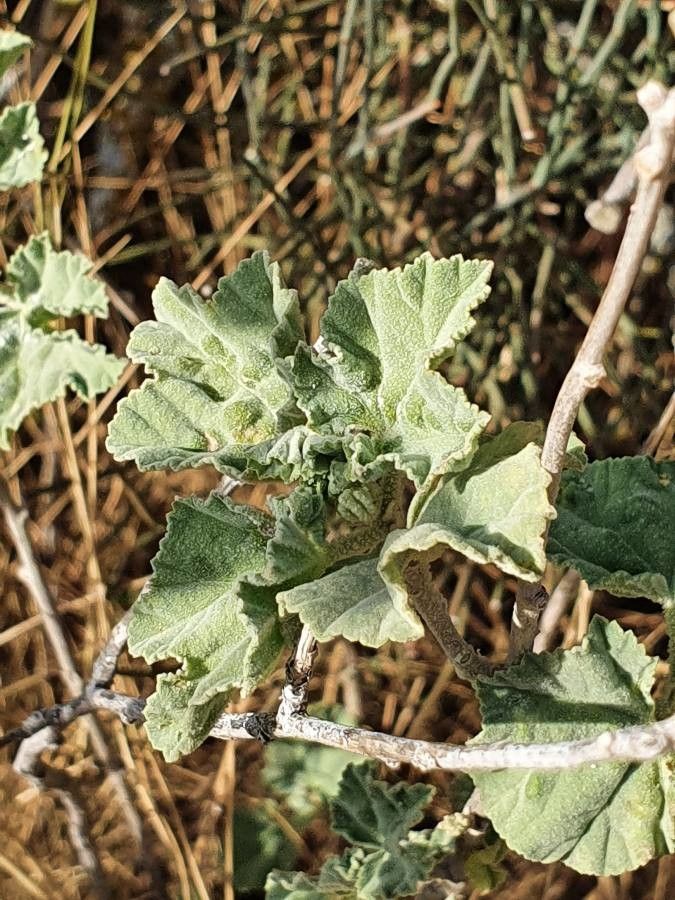
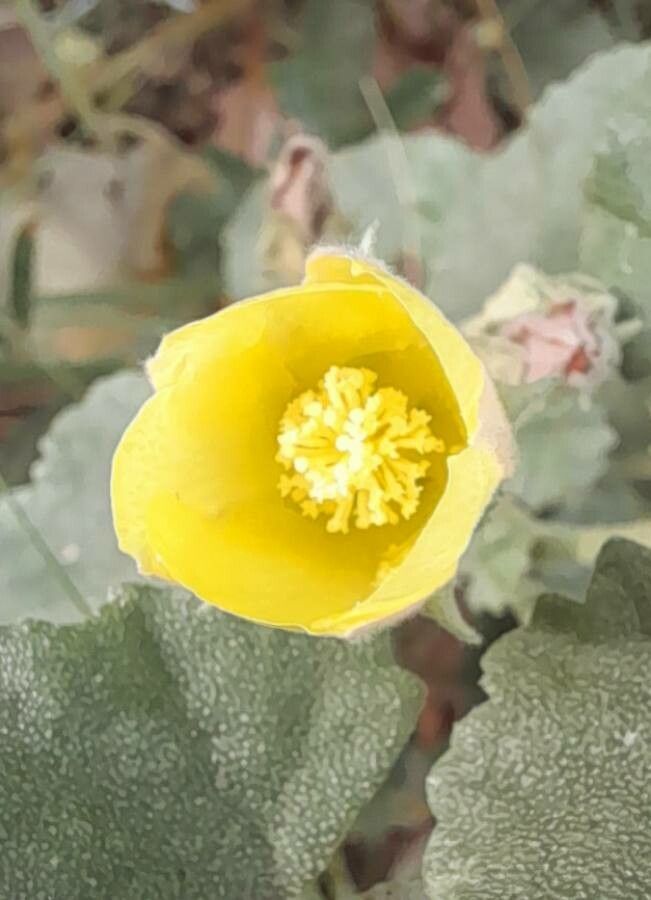
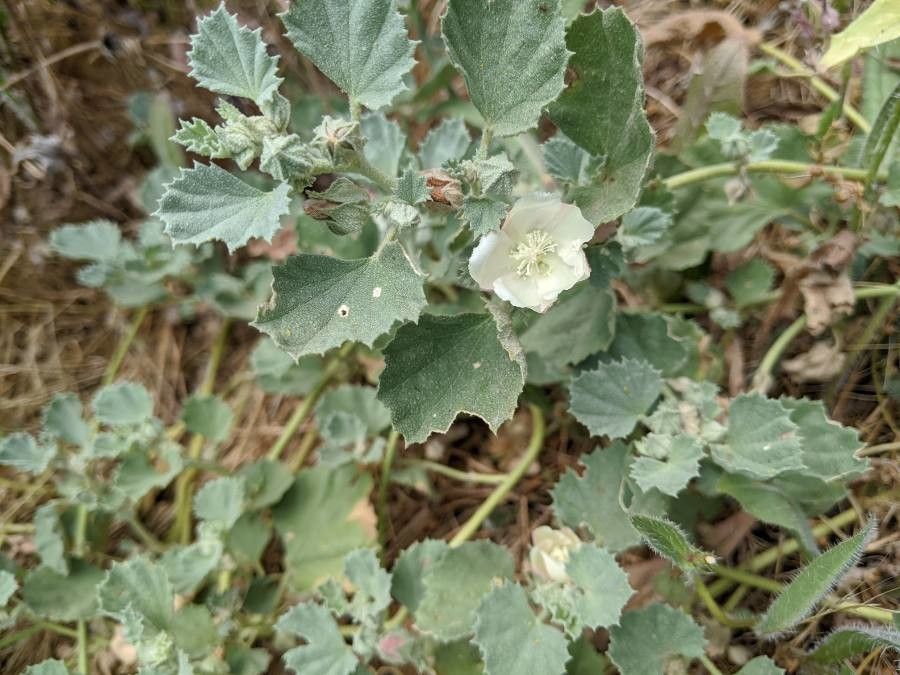
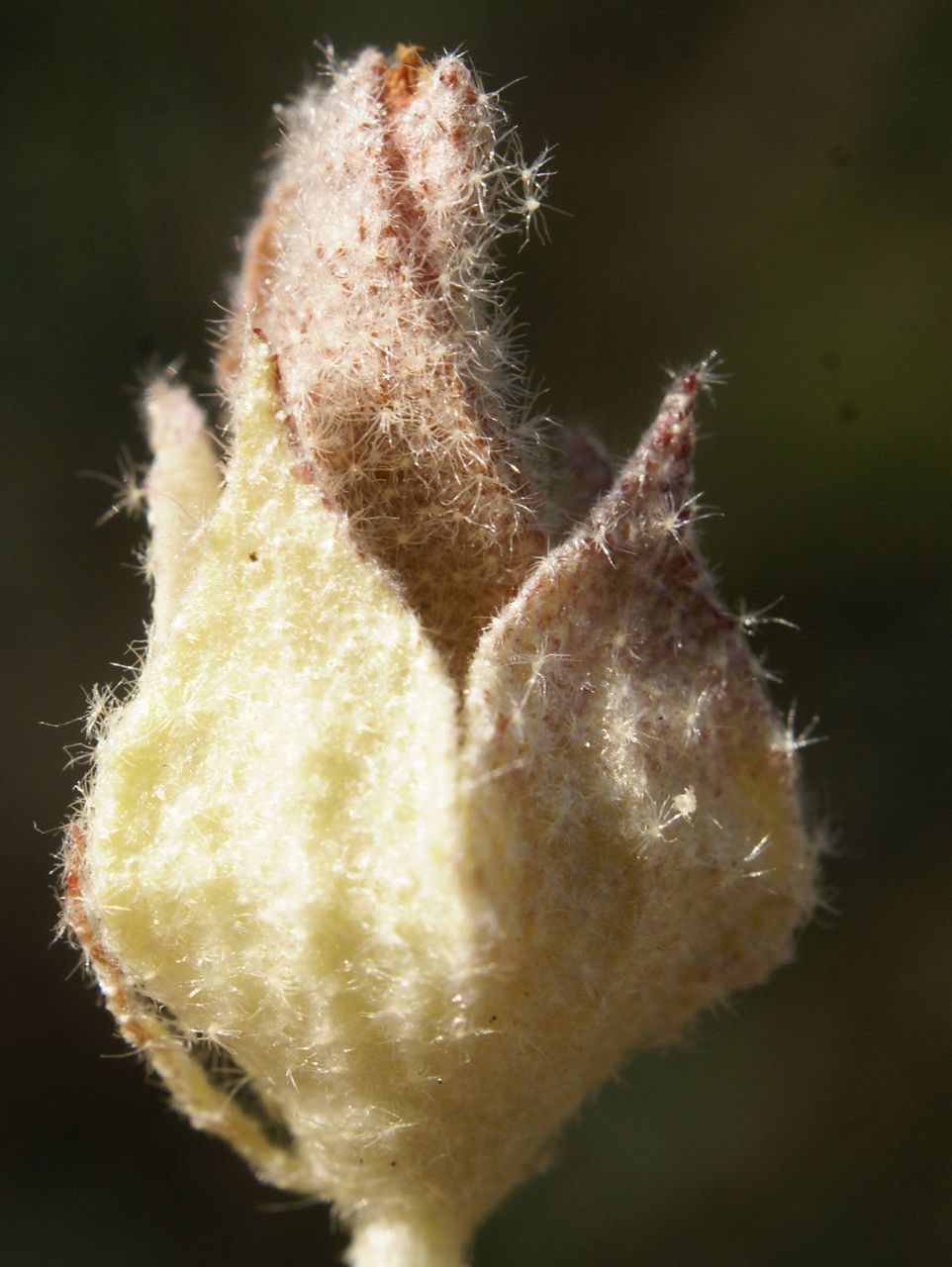
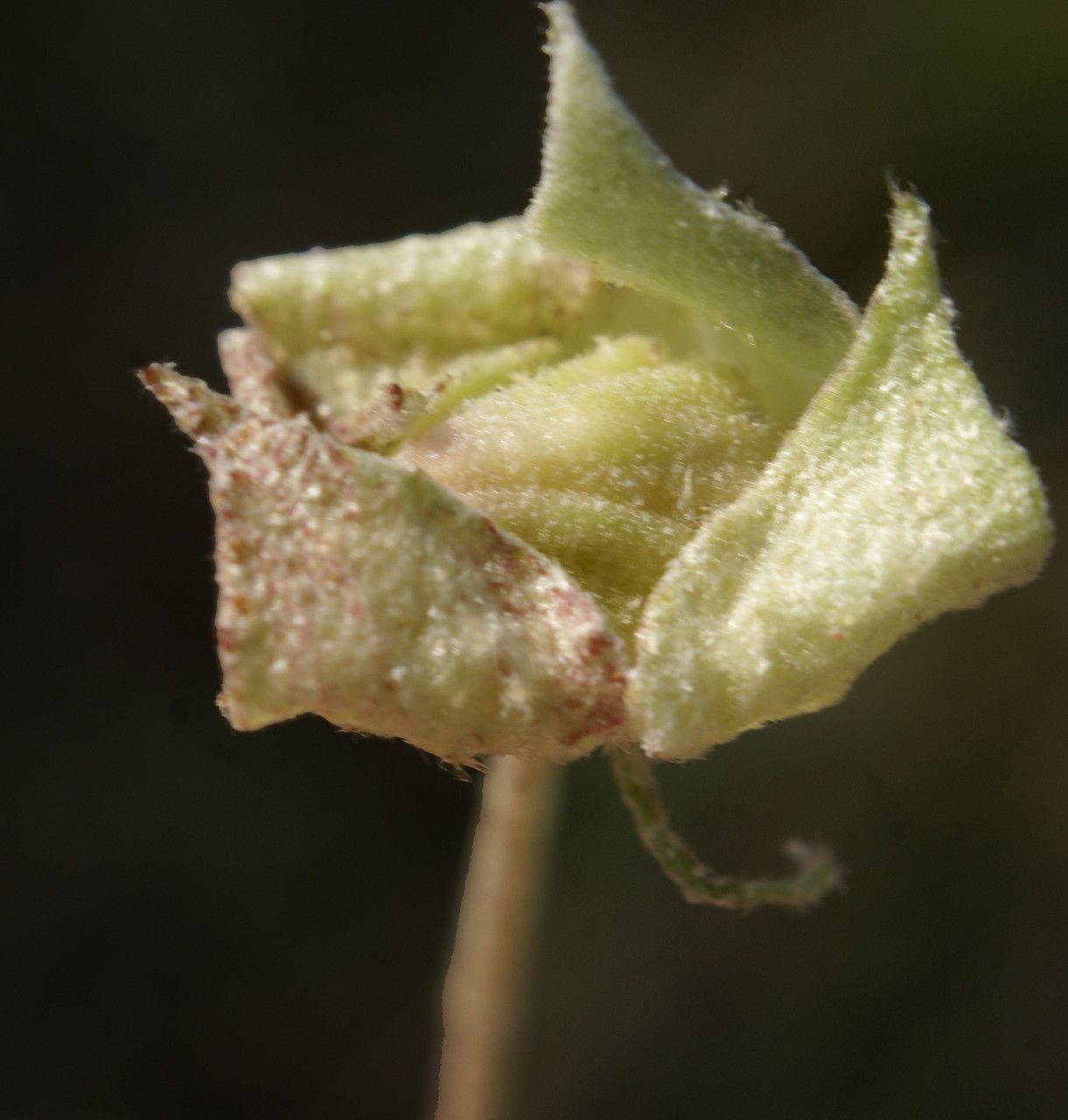
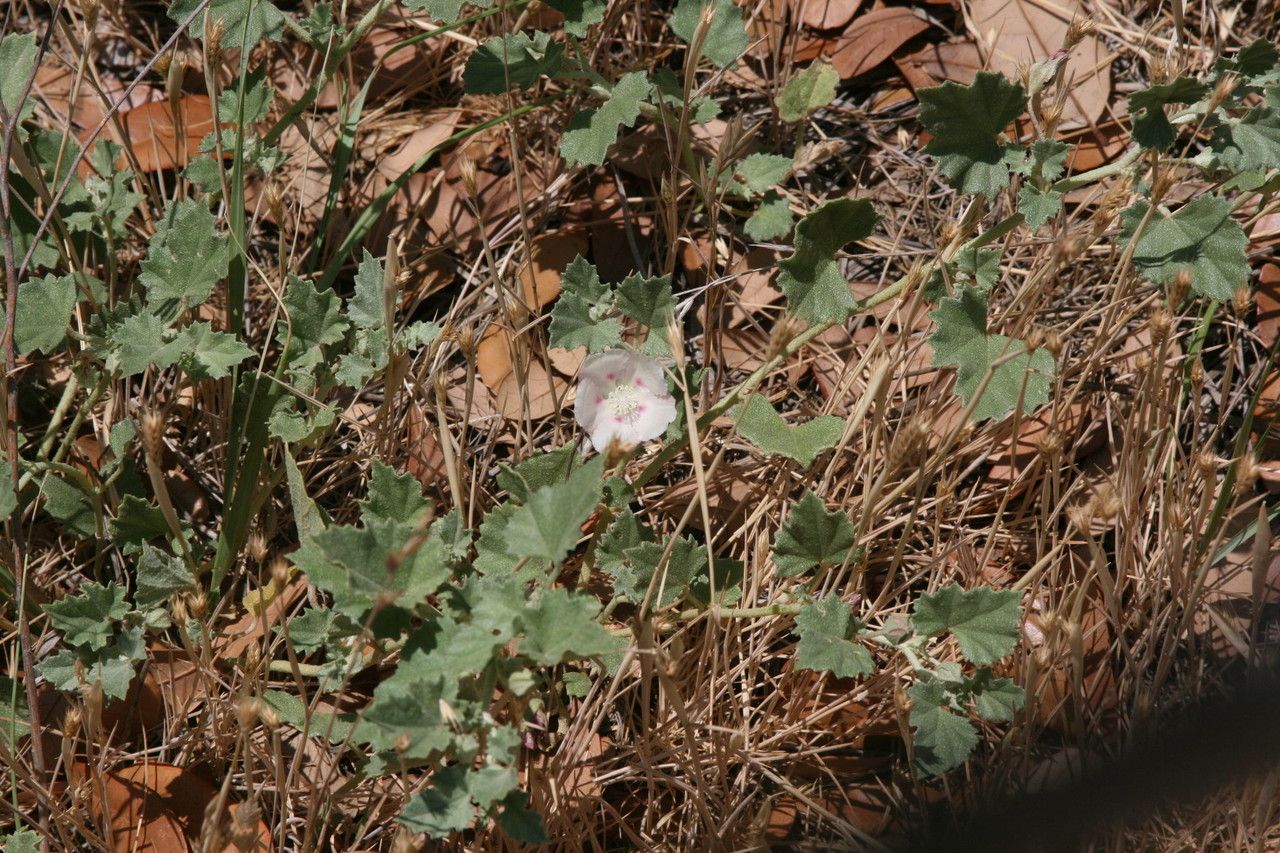
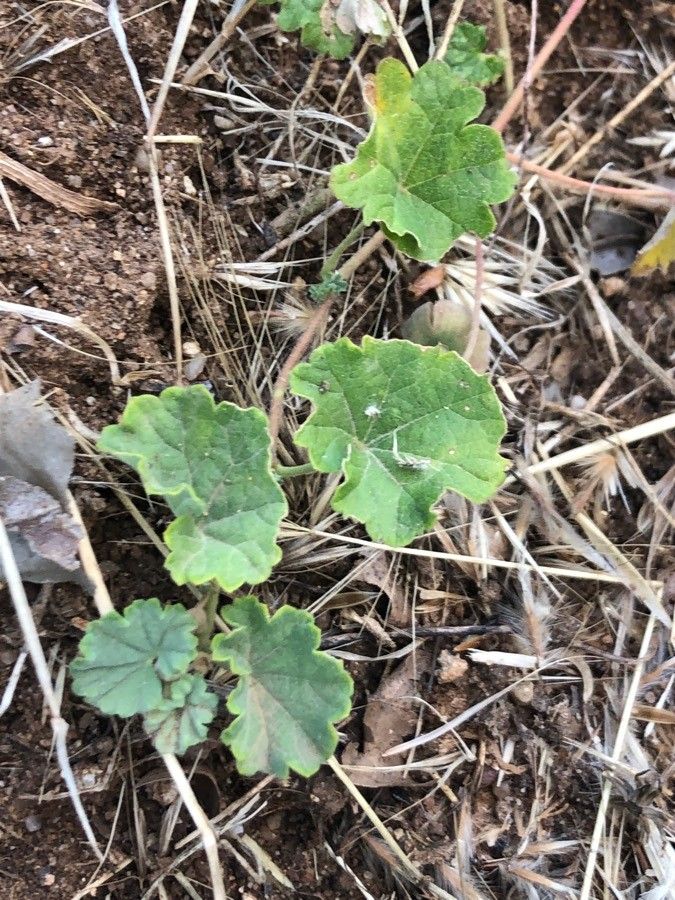
Malvella leprosa is a species of flowering plant in the mallow family known by the common names alkali mallow and alkali sida. It is native to much of the western United States, Mexico, Argentina, and Chile. It is known in parts of Australia as an introduced species. In many regions, whether native there or not, the plant is often a noxious weed and easily invades habitat, including areas with alkaline and saline soils. In California, the plant can be found in agricultural lands, including fields and orchards. This is a decumbent perennial herb producing a white-hairy stem up to about 40 centimetres (16 in) long, spreading along the ground. The leaves are variable in shape but are generally lobed and wavy along the edges, measuring 1 to 3 centimetres (3⁄8 to 1+1⁄8 in) wide. Leaves appear in the leaf axils singly or in clusters of up to 3. Each flower is a cup-shaped corolla of five petals up to 1.5 centimetres (2⁄3 in) long in shades of pale pink, white, or light yellow. The disc-shaped fruit is divided into several segments.
Alkali mallow is fairly disease-resistant and typically does not suffer from many illnesses. However, it can still be affected by pests and diseases present in its environment. Such problems are generally mild. Regarding care, the plant needs moderate upkeep. Regular pruning is required to preserve an attractive form and encourage healthy growth. Applying fertilizer can also boost flowering. Alkali mallow is appropriate for people who have outdoor areas like gardens or patios and does not demand extensive gardening experience. When kept indoors, it may need more attentive care.
How to keep Malvella Leprosa.
Light
Alkali mallow is a sun-loving perennial herbaceous plant native to open habitats, commonly occurring in meadows and grasslands. It favors full sun but can also tolerate partial sun.
Water
Alkali mallow is a drought-resistant plant that thrives in arid conditions with minimal moisture. It remains healthy with weekly watering, which imitates its natural environment of sporadic rainfall. This plant is ideal for outdoor growth and is perfect for xeriscaping, a landscaping method that emphasizes water conservation.
Temperature
Alkali mallow is naturally adapted to moderate to warm temperatures. It performs best between 41 and 95 °F (5 and 35 °C). In colder months, it is recommended to keep the plant in a heated space to ensure optimal growth.
Fertilizer
Generally, a single fertilizer application in spring is enough for Alkali mallow, although repeated feedings can optimize growth. Apply fertilizer about every one to one-and-a-half months. Fertilization improves the leaves' appearance and function, maintaining even color and a healthy texture. It also promotes root development and nutrient uptake, supporting long-term plant health.
Pruning
Alkali mallow flourishes in alkaline soils and benefits from regular pruning between early and late spring. To support its growth and blooming, remove dead stems and thin out crowded areas to improve air circulation. This not only enhances the plant's health and appearance but also makes regular pruning essential for optimal maintenance.
Botanical profile.
- Plant Type
- Herb
- Life Cycle
- Perennial
- Genus
- Malvella
- Family
- Malvaceae
- Hardiness Zone
- 4-10
- Mature Height
- 30 cm
- Mature Spread
- 40 cm
- Leaf Color
- Green
- Leaf Type
- Deciduous
- Flower Color
- White, Yellow
- Flower Size
- 2.54 cm to 3.56 cm
- Bloom Time
- Late spring, Summer
- Planting Time
- Spring, Summer, Autumn
- Harvest Time
- Mid summer, Late summer, Early fall, Mid fall
- Native Area
- Mexico, Bolivia, Peru
Other names.
Reader questions.
How do I water my Alkali mallow plant properly?
To properly water the Alkali mallow, it is best to use filtered water at room temperature. Tap water may have harmful particles for this plant, so filtering it is important. Additionally, the water should not be too cold as this plant is accustomed to warm environments. It is recommended to avoid overhead watering and instead, water the soil directly until it is fully soaked. This method helps to moisturize the roots and aids in their spread throughout the soil to gather necessary nutrients.
What are the sunlight requirements for Alkali mallow?
Alkali mallow requires above 6 hours of sunlight daily (full sun) but can also thrive in conditions with about 3-6 hours of sunlight (partial sun). It's important to observe your garden's sun exposure to choose the best spots for your plants, ensuring a balance of light and shade that promotes healthy growth.
What temperature conditions are optimal for Alkali mallow growth?
Alkali mallow thrives in mid to high range temperatures, specifically between 41 to 95 °F (5 to 35 ℃). To maintain optimal growth during colder seasons, it's recommended to keep the plant in a heated environment. Despite its strong cold resistance, which usually negates the need for special frost protection measures in winter, if temperatures are anticipated to dip below -30°C, it's important to protect the plant using methods such as covering it with soil or straw. Additionally, watering the plant abundantly before the first freeze in autumn ensures the soil remains moist, preventing drought and water scarcity during winter and early spring.
What should I do if I give my Alkali mallow plant too much or too little water?
Overwatering is more common for the Alkali mallow and can cause wilting, yellowing leaves, and diseases like root rot, mold, and mildew. Underwatering is less common but can still occur, resulting in brittle, brown leaves. It is important to detect overwatering signs early to prevent irreversible damage. Reduce watering and improve soil drainage if overwatering is suspected. If underwatering is the issue, water more regularly until the signs improve.
What are the essential care tips for Alkali mallow?
Alkali mallow is a perennial herbaceous plant that loves sun and originates from open habitats like meadows and grasslands. It prefers full sun but can tolerate partial sun conditions. For indoor plants lacking natural sunlight, artificial lighting is a great option. LED lights, recommended for their efficiency, should be installed 12-36 inches above the plant, ensuring 8-12 hours of light per day, mimicking natural daylight conditions. The wattage requirement varies: 30-50W/sq ft for full sun, 20-30W/sq ft for partial sun, and 10-20W/sq ft for full shade plants.
How does low temperature affect Alkali mallow and what are the solutions?
Alkali mallow is cold-tolerant, performing best when temperatures are above 5°C and should be kept above -25°C during winter. However, if temperatures fall below -30°C, the plant may not show noticeable changes during winter but could experience decreased sprouting or fail to sprout in spring. To address this, removing parts of the plant that have failed to sprout in spring is recommended.
How often do I need to water my Alkali mallow?
If your Alkali mallow plant is in a pot, the best way to determine if it needs water is by checking the soil moisture. Simply stick your finger into the soil and if the top two to three inches are dry, then it is time to water it. For Alkali mallow plants grown outdoors in the ground, you can use a similar method to check the soil moisture. Again, if the top few inches of soil have dried out, it's a sign that it needs watering. Usually, during the spring and early fall, watering once a week is sufficient. However, during hot weather, you may need to water it two or more times per week. It's important to note that mature and well-established Alkali mallow plants have a great ability to tolerate drought, so they can withstand longer periods without water.
What are the symptoms of light deficiency in Alkali mallow?
Symptoms of light deficiency in Alkali mallow include smaller new leaves, leggy or sparse growth, early leaf drop, halted or no new growth, and pale or irregularly colored new leaves. Moreover, excessive sunlight can cause chlorosis, sunscald, leaf curling, wilting, and leaf scorching. These symptoms indicate either insufficient light exposure or overexposure to sunlight, both of which can significantly affect plant health.
What should be done if Alkali mallow is exposed to high temperatures?
During summer, it's crucial to keep Alkali mallow below 35°C. Exceeding 41°C can cause the leaves to lighten in color, become prone to curling, suffer from sunburn, and in severe cases, the entire plant may wilt and dry out. Addressing this involves trimming away the sunburned and dried-up parts. Relocating the plant to a shaded area or using a shade cloth to protect it from the midday and afternoon sun helps prevent damage. Additionally, watering the plant in the morning and evening ensures the soil remains moist, assisting in coping with the heat.
How much water does my Alkali mallow plant require?
To properly water your Alkali mallow, don't hold back on the amount of water you give. Make sure the top few inches of soil are dry before watering, and then give it a good, thorough soak. The water should completely saturate the soil and flow out through the drainage holes at the bottom of the pot. If you don't see any excess water draining, it means you didn't water enough. However, be careful not to let the water accumulate inside the soil, as that can harm the plant. Similarly, if water is not draining through the pot, it could indicate poorly draining soil, which is bad for the plant's health. If the plant is outside, 1 inch of rainfall per week will be sufficient.
How can I address light-related issues with my Alkali mallow?
To resolve light-related issues, gradually increase sunlight exposure to at least 6 hours daily for indoor plants, using south-facing windows or artificial light sources for 8 hours daily. For outdoor plants, move them weekly to a sunnier location to adapt without causing sunburn. Reduce obstruction from trees or other barriers by pruning, and consider transplanting smaller plants during their dormant period to areas with more sunlight and better drainage. Remember, while damaged parts may not recover, new growth after adjusting light exposure should be healthy.
How should I water my Alkali mallow as it grows?
The water needs of the Alkali mallow can vary depending on different growth stages. In the early years and when it is newly transplanted, it requires more water. During these stages, the plant is focused on developing new roots, which need extra moisture for optimal growth. After a few seasons, the water requirement decreases. Another time when the plant may need more water is during the bloom period. Flower development uses a significant amount of moisture, so additional watering may be necessary.