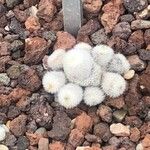
Mammillaria albilanata
Description
Source: leafsnapMammillaria albilanata is a species of plant in the family Cactaceae. It is endemic to Mexico. Its natural habitat is hot deserts.
Care Guide
💧 Water
Mammillaria albilanata, a drought-tolerant plant, requires watering only when the soil is dry. During its growing season, from spring to fall, water it once a week. In winter, reduce the frequency of watering. It's best to use rainwater or distilled water to minimize the risk of soil compaction. Be careful to avoid splashing water on the stem, as this can lead to rotting.
☀️ Light Full sun
Originating from arid habitats, Mammillaria albilanata does best in full sun; its native habitat features intense sunlight and little shade. It also tolerates partial sun, giving it some flexibility in growth.
🌡️ Temperature 20–37.8°C
Although Mammillaria albilanata tolerates some heat, it mainly thrives and grows in the cooler months and goes dormant in summer. In very hot summer conditions, shade is necessary to avoid scorching from strong sunlight. Watering should be cut back or stopped during the hottest period to avoid root rot. Mammillaria albilanata grows vigorously in winter and spring. Provided temperatures do not fall too low, it will maintain steady growth.
What is the botanical name of Mammillaria albilanata?
The botanical name of Mammillaria albilanata is indeed Mammillaria albilanata itself. This specie is recognized by its unique characteristics among the cactus family.
💨 Humidity
🪴 Soil 6-7
🌱 Fertilizer
For Mammillaria albilanata, light applications of fertilizer once or twice a year during the growing season are sufficient. Do not fertilize in winter or in summer when the plant is dormant. Reduce feeding for recently repotted plants and wait a couple of months after repotting before resuming fertilization. Fertilizing supports healthy growth and helps encourage blooms.
🪴 Pot & Repot 2-3 years
Repot Mammillaria albilanata in spring or summer, picking a container slightly larger than the current one that has good drainage. Use a sandy or gritty cactus mix that drains well. Handle the plant carefully to avoid its spines. Allow the cactus to dry out before repotting to help prevent root rot. After repotting, wait about a week before watering so the roots can heal.
✂️ Pruning
Mammillaria albilanata is known for its distinctive round shape and spiny surface, and requires minimal pruning. It's best to prune in early spring to remove any damaged parts, using sterilized tools to ensure cleanliness. Be careful not to over-prune, as this can stress the plant. Proper pruning enhances air circulation and light penetration. Additionally, handle the plant with care because of its spines.
🌿 Propagating
🐛 Diseases & pets
☠️ Toxicity
Characteristics
- Plant Type
- Succulent, Shrub
- Life Cycle
- Perennial
- Genus
- Mammillaria
- Family
- Cactaceae
- Hardiness Zone
- 9-11
- Mature Height
- 10 cm to 20 cm
- Mature Spread
- 5 cm to 10 cm
- Leaf Color
- Light Green
- Leaf Type
- Evergreen
- Flower Color
- Pink, White
- Flower Size
- 1.52 cm to 2.03 cm
- Bloom Time
- Mid spring, Late spring, Early summer
- Planting Time
- Summer
- Harvest Time
- Mid summer, Late summer, Early fall