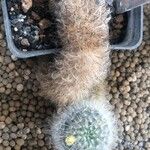
Mammillaria crinita
Long hair coctus · బొచ్చు జెముడు
Description
Source: leafsnapMammillaria crinita is a species of cactus in the subfamily Cactoideae.
🌳 The pincushion cactus, with its abundant pink flowers and compact size, is an attractive choice for enhancing cactus gardens, rock gardens, and xeriscapes, especially in areas without hard frost. Its low water requirements make it ideal for sunny locations in low-maintenance gardens as well.
Care Guide
💧 Water
The pincushion cactus is a drought-tolerant plant that thrives in arid regions. It requires minimal watering, about once every three weeks. This cactus prefers well-draining soil, which mirrors its natural habitat of rocky terrains. Such conditions help prevent root rot and align perfectly with its infrequent watering needs.
☀️ Light Full sun
Native to arid regions, the Pincushion cactus does best in full sun; its natural habitat features intense sunlight and very little shade. It will also tolerate partial sun, providing some flexibility in its growth.
What are the sunlight requirements for Pincushion cactus?
Pincushion cactus requires full sun, meaning it should receive above 6 hours of sunlight daily. It can also tolerate partial sun, approximately 3-6 hours of sunlight daily. Observing the movement of sunlight through your garden can help you choose the ideal spots that provide the perfect balance of light and shade for your plants, ensuring their wellbeing.
How does the native environment of Pincushion cactus influence its sunlight needs?
Originating from arid regions, Pincushion cactus is accustomed to thriving under strong sunlight with minimal shade. This background suggests that the plant is naturally inclined to do well in full sun conditions. However, it can also adapt to partial sun, showing some flexibility in its growth requirements.
What artificial lighting requirements do Pincushion cactus have when grown indoors?
When natural sunlight is insufficient, particularly during winter or in less sunny spaces, artificial lighting becomes crucial for the growth of indoor Pincushion cacti. LED lights, which can be tailored to provide specific wavelengths of light needed by the plants, are a popular choice. Full sun plants require 30-50W/sq ft of artificial light, partial sun plants need 20-30W/sq ft, and full shade plants should have 10-20W/sq ft. The light source should be placed 12-36 inches above the plant to mimic natural sunlight, and the duration should mimic natural daylight hours, with most plants requiring 8-12 hours of light per day.
What are the symptoms of light deficiency in Pincushion cactus when grown in suboptimal lighting?
Pincushion cactus may exhibit several symptoms when placed in rooms with suboptimal lighting, including smaller new leaves, leggy or sparse growth, faster leaf drop, and slower or no new growth. The leaves may develop irregular color patterns or appear pale, indicating a lack of chlorophyll, which is essential for photosynthesis. Conditions such as chlorosis, where the leaves turn yellow, sunscald, leaf curling, wilting, and leaf scorching can also occur due to excessive sunlight exposure or insufficient light.
What can be done to address light deficiency and excessive sunlight exposure in Pincushion cactus?
To optimize growth, gradually introduce your Pincushion cactus to more sunlight each week, aiming for at least 6 hours of direct sunlight daily. For indoor plants, especially those that are large or not easily movable, consider supplementing with artificial light, keeping a desk or ceiling lamp on for at least 8 hours a day, or using professional plant grow lights. When moving plants outdoors or adjusting their position for better sunlight exposure, do so gradually to prevent sunburn. If sunlight is obstructed by trees or other barriers, consider pruning or transplanting to a spot with more sun and good drainage. Note that parts of the plant affected by insufficient sunlight may not recover, but new growth will be healthy with improved light conditions.
🌡️ Temperature 20–37.8°C
The pincushion cactus originates from warmer climates and prefers temperatures of 68 to 100 °F (20 to 38 ℃). In colder seasons, it is advisable to keep indoor areas warmer to mimic its natural habitat.
What is the ideal temperature range for Pincushion cactus?
Pincushion cactus thrives in temperatures ranging from 68 to 100 °F (20 to 38 ℃), favoring warmer environments that mimic its natural habitat. During the colder seasons, it's important to maintain warmer interior temperatures to keep the plant healthy. As a heat-loving plant, it gradually stops growing and enters a dormant state during winter. Therefore, when the outdoor temperature drops below freezing, the cactus should be moved indoors, near a south-facing window for ample sunlight, or provided with supplemental lighting if natural sunlight is inadequate. When the temperature falls below 20℃, the plant's growth slows, and watering should be reduced or halted to prevent root rot. For those grown outdoors, stop watering completely in low temperatures, and consider insulation methods such as setting up a temporary greenhouse or wrapping the plant with plastic film or fabric.
How should I care for Pincushion cactus in low temperature conditions?
In low temperature conditions, it's crucial to ensure that the Pincushion cactus is kept above 0℃, as it thrives best when the temperature is above 20℃. Exposure to temperatures below -5℃ can weaken the plant, leading to wilting and root rot. If the cactus suffers mild frost damage, you might not see symptoms immediately, but the plant may gradually wither after a week. In such cases, you should trim the frostbitten areas, check for and remove any rotted roots, then propagate through cuttings if necessary. Moving the plant indoors to a warm environment and placing it near a south-facing window for ample sunlight can help in recovery. If there's insufficient light, supplemental lighting can be utilized.
What measures should be taken for Pincushion cactus in high temperature conditions?
During the summer, it's advisable to keep the Pincushion cactus below 38℃. Temperatures above 43℃ can halt the plant's growth, cause water loss, wilting, and increase susceptibility to sunburn. In such cases, remove any sunburned or rotten parts and protect the plant from direct afternoon sunlight until it recovers and resumes growth. If the plant has suffered from root rot, withhold watering until new roots start to develop, which will support the plant's recovery and health.
💨 Humidity
🪴 Soil 6-7
🌱 Fertilizer
Pincushion cactus only needs light amounts of fertilizer once or twice a year during the growing season. Do not fertilize in winter or in summer when it is dormant. Use less fertilizer on repotted plants and wait a couple of months after repotting before applying fertilizer. Fertilizing promotes healthy growth and encourages blooms.
🪴 Pot & Repot 2-3 years
Repot Pincushion cactus in spring or summer, choosing a pot only slightly larger than the current one that has good drainage. Use a well-draining, sandy or gritty cactus mix. Handle the plant carefully to avoid its spines. Allow the cactus to dry out before repotting to reduce the risk of root rot. After repotting, wait one week before watering to let the roots heal.
✂️ Pruning
The pincushion cactus requires minimal pruning. It is important to remove any withered flowers and branches to redirect nutrients toward healthy growth.
🌿 Propagating
🐛 Diseases & pets
☠️ Toxicity
While the spines can cause pain and irritation there are no reports that the Mammillaria crinita is toxic.
Characteristics
- Plant Type
- Succulent
- Life Cycle
- Perennial
- Genus
- Mammillaria
- Family
- Cactaceae
- Hardiness Zone
- 9-11
- Mature Height
- 8 cm
- Mature Spread
- 5 cm
- Leaf Color
- Green
- Leaf Type
- Evergreen
- Flower Color
- Pink
- Flower Size
- 1.52 cm
- Bloom Time
- Mid spring, Late spring, Summer
- Planting Time
- Spring, Summer, Autumn
- Harvest Time
- Summer, Early fall, Mid fall
- Native Area
- Mexico