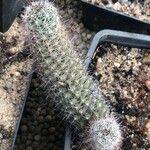
Mammillaria thornberi
Cluster fishhook cactus · Thornber's nipple cactus · Clustered pincushion · Slender pincushion · Thornber's Fishhook Cactus
Description
Source: leafsnapMammillaria thornberi is a small cactus species native to the Sonoran Desert in Mexico and the United States. This slow-growing plant typically reaches up to 10 cm (4 inches) in height and 5 cm (2 inches) in diameter. It features cylindrical stems covered with small, white spines that grow from tubercles arranged in spirals around the stem. In the spring, Mammillaria thornberi produces bright pink flowers that bloom at the top of its stem. These flowers are about 2 cm (0.8 inches) wide and consist of numerous petals arranged around a central stigma. Mammillaria thornberi is an easy-to-care-for plant that requires well-draining soil, bright sunlight, and occasional watering during its growing season. It can be propagated from seeds or offsets produced at the base of mature plants. Popular among collectors for its attractive appearance and ease of cultivation, it is important to note that Mammillaria thornberi can be toxic if ingested by humans or pets due to its alkaloid content.
Care Guide
💧 Water Every 7 days
☀️ Light Partial sun
Thornber's nipple cactus is native to areas with dappled light, like the understory of forests or rocky sites that offer natural shade. It prefers partial sun but can tolerate full sun.
🌡️ Temperature 20–37.8°C
Thornber's nipple cactus performs best in warm conditions and needs higher temperatures during the growing season to support growth and metabolic processes. It prefers abundant sunlight, suitable moisture, and good airflow. It is vulnerable to harm from very low temperatures and from overwatering, so maintaining a balance is important and extreme heat or excessively dry conditions should also be avoided.
💨 Humidity
🪴 Soil 0-0
🌱 Fertilizer
For Thornber's nipple cactus, light applications of fertilizer once or twice a year during the growing season are sufficient. Avoid fertilizing in winter and summer when the plant is dormant. Cut back on fertilizer for repotted plants and wait a couple of months after repotting before feeding. Fertilizing helps maintain healthy growth and promotes flowering.
🪴 Pot & Repot
✂️ Pruning
🌿 Propagating
🐛 Diseases & pets
☠️ Toxicity
Characteristics
- Plant Type
- Succulent
- Life Cycle
- Perennial
- Genus
- Mammillaria
- Family
- Cactaceae
- Hardiness Zone
- 9-11
- Mature Height
- 10 cm to 20 cm
- Mature Spread
- 5 cm to 10 cm
- Leaf Color
- Green
- Leaf Type
- Evergreen
- Flower Color
- Pink
- Flower Size
- 1.52 cm to 2.03 cm
- Bloom Time
- Mid spring, Late spring, Early summer
- Planting Time
- Spring, Summer, Autumn
- Harvest Time
- Mid summer, Late summer, Early fall