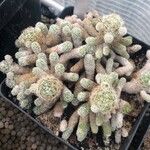
Mammillaria vetula
Thimble cactus · Thimble mammilaria · Arizona Snowcap · Cv Arazona snowcap
Description
Source: leafsnapMammillaria vetula is a species of cactus in the subfamily Cactoideae. It is endemic to the Mexican states of Hidalgo, Guanajuato and Querétaro.
Care Guide
💧 Water 1-2 times a month
When caring for cacti, it is generally best to water them sparingly rather than excessively. This applies to the specific cactus you mentioned. Allowing the soil mixture to dry out between waterings entirely is essential. When the time comes to water, make sure to thoroughly and deeply soak the soil. It is crucial to avoid letting the plant or pot sit in water, as this can lead to issues such as root rot. Cacti typically enter a dormant phase during the winter, and watering can be halted. However, if you observe signs of the cactus shriveling or appearing to dry out, you can lightly mist it occasionally to provide some moisture.
☀️ Light Full sun
Originating from arid areas, Thimble cactus flourishes in full sun, since its native habitat has strong sunlight and very little shade. It can also tolerate partial sun, providing some flexibility in its growth.
🌡️ Temperature 20–37.8°C
The thimble cactus grows best in warm conditions and needs higher temperatures during the growing season to support growth and metabolism. It likes plenty of sunlight, proper moisture, and good ventilation. However, it can be harmed by very low temperatures and by overwatering. It's also important to maintain balance and avoid both excessively high heat and overly dry conditions.
💨 Humidity
🪴 Soil 6-7
🌱 Fertilizer
Thimble cactus only needs small amounts of fertilizer 1-2 times a year during its growing season. Do not fertilize in winter or in summer, when the plant is dormant. Cut back on fertilizer for plants that have been repotted, and wait a couple of months after repotting before applying fertilizer. Using fertilizer helps maintain healthy growth and promotes flowering.
🪴 Pot & Repot 2-3 years
Repot the Thimble cactus in spring or summer, selecting a pot slightly larger than the current one that has good drainage. Use a sandy or gritty cactus mix that drains well. Handle the plant carefully to avoid its spikes. Let the cactus dry out before repotting to reduce the risk of root rot. After repotting, wait one week before watering so the roots can heal.
✂️ Pruning
The Thimble cactus requires minimal pruning. It is advisable to remove any withered flowers and branches to allow the plant to allocate nutrients more effectively toward healthy growth.
🌿 Propagating
🐛 Diseases & pets
☠️ Toxicity
The Thimble Cactus is not considered toxic or poisonous. Its thorns are not prickly and will not cause injury if ingested. However, as with any plant, it’s best to err on the side of caution and keep them away from curious children and pets.
Characteristics
- Plant Type
- Succulent
- Life Cycle
- Perennial
- Genus
- Mammillaria
- Family
- Cactaceae
- Hardiness Zone
- 9-11
- Mature Height
- 10 cm to 15 cm
- Mature Spread
- 5 cm to 8 cm
- Leaf Color
- Green
- Leaf Type
- Evergreen
- Flower Color
- Pink, White
- Flower Size
- 1.02 cm to 1.52 cm
- Bloom Time
- All year round
- Planting Time
- Spring, Summer, Autumn
- Harvest Time
- All year round
- Native Area
- Mexico