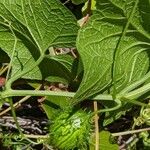
Marah fabacea
California manroot · Valley manroot
Description
Source: leafsnapMarah fabacea, commonly known as the California manroot or wild cucumber, is a perennial vine native to California and parts of Mexico. Belonging to the family Cucurbitaceae, this plant can grow up to 30 feet in length. It features large, heart-shaped, deeply lobed leaves and tendrils that enable it to climb trees or other structures. The flowers of Marah fabacea are small and greenish-white. The plant is dioecious, meaning male and female flowers grow on separate plants. The fruit resembles a large, greenish-yellow cucumber and can reach up to 6 inches in length. Native Americans have historically used Marah fabacea for medicinal purposes, including treating skin conditions and digestive issues. However, caution is advised, as the plant contains toxic compounds such as cucurbitacins, which can cause gastrointestinal distress if ingested. In summary, Marah fabacea is a fascinating native vine with unique physical characteristics, but it should be handled carefully due to its toxic properties.
Care Guide
💧 Water Every 7 days
☀️ Light Partial sun
California manroot is native to habitats like forest understories and rocky sites, where it grows in natural shade. It prefers partial sun but can tolerate full sun or full shade, showing its hardy, adaptable nature.
🌡️ Temperature 15–35°C
California manroot is highly adaptable to a variety of climate conditions, whether facing sweltering summers or frosty winters. However, it does have a preferred temperature range for growth. When temperatures rise too far, the plant can experience heat and humidity stress, which may lead to its death. In locations where temperatures approach the lower limit of its cold tolerance, providing insulation to protect the plant is important.
💨 Humidity
🪴 Soil 6-7
🌱 Fertilizer
Usually a single fertilizer application in spring is adequate for California manroot, but several feedings can maximize growth. Fertilize every month to six weeks. Fertilization improves the appearance and function of the leaves, maintaining uniform color and a healthy texture. It also promotes root development and nutrient uptake for long-term plant health.
🪴 Pot & Repot
✂️ Pruning
California manroot is a rapidly growing vine known for its tuberous roots and white, star-shaped flowers. For optimal growth and flowering, prune it in early spring. This will help you manage its size and shape while promoting healthy development. Be sure to use clean, sharp tools and remove any dead or diseased wood to prevent the spread of pests.
🌿 Propagating
🐛 Diseases & pets
☠️ Toxicity
Characteristics
- Plant Type
- Vine, Herb
- Life Cycle
- Perennial
- Genus
- Marah
- Family
- Cucurbitaceae
- Hardiness Zone
- 7-10
- Mature Height
- 3.05 m to 6.1 m
- Mature Spread
- 2.13 m to 3.96 m
- Leaf Color
- Dark Green, Forest Green
- Leaf Type
- Deciduous
- Flower Color
- White
- Flower Size
- 1.02 cm to 2.03 cm
- Bloom Time
- Early spring, Mid spring
- Planting Time
- Spring, Summer, Autumn
- Harvest Time
- Summer