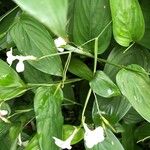
Maranta arundinacea
Arrowroot · Maranta · West Indian arrowroot · Krarus · Common arrowroot
Description
Source: leafsnapMaranta arundinacea, commonly known as arrowroot, is a tropical perennial plant that belongs to the Marantaceae family. Native to South America and the Caribbean, arrowroot has been cultivated for centuries for its starchy rhizomes. The plant can reach up to 1.5 meters in height and features large, broad leaves that are green with white stripes on the top and purple underneath. Arrowroot is primarily grown for its edible rhizomes, which are used as a thickener in cooking or processed into arrowroot flour or starch. The starch extracted from these rhizomes is gluten-free, making it an excellent alternative for individuals with gluten intolerance. In addition to its culinary applications, arrowroot possesses medicinal properties, including anti-inflammatory effects on the digestive system and soothing effects on skin irritations. The plant thrives in warm temperatures ranging from 20-30°C (68-86°F) and requires high humidity levels of around 70%. It prefers well-draining soil that should be kept moist but not waterlogged. Overall, Maranta arundinacea, or arrowroot, is an important tropical crop valued for its use in thickening sauces and soups, as well as its medicinal benefits, such as its anti-inflammatory effects on digestion.
💡 Radiocarbon dating has revealed that arrowroot grains were present on flake knives used by South American Indians as far back as 8200 BC. The Maya and other civilizations not only cultivated arrowroot as a food source but also valued it for its medicinal properties, including its use as an antidote to poison.
🌳 Besides its familiar culinary applications, arrowroot starch is employed in the cosmetic industry for its beneficial properties. Appreciated for its silky texture, it is used as a base in body powders and dry shampoos. The smoothness of the powder also makes it well suited to soothe skin irritations, illustrating a distinctive versatility that contrasts kitchen spice racks with beauty routines.
🎭 Good luck
Care Guide
💧 Water Every 7 days
Arrowroot thrives in the humid understories of tropical rainforests and prefers soil that remains consistently moist. To maintain the necessary moisture levels, it's important to water it regularly, about once a week. When grown as an indoor plant, arrowroot does well in rooms with high humidity, which matches the conditions of its natural habitat.
What should I do if I give my Arrowroot plant too much or too little water?
Observing the plant can help identify watering issues. If the plant is overwatered, you may notice yellow leaves with yellow-brown patches at the tips. Severe drooping and curling of the leaves may also indicate overwatering, as it can cause root rot and hinder water absorption. Indoor Arrowroot plants are particularly susceptible to overwatering and standing water should be avoided. If overwatering is detected, stop watering and allow the soil to dry out for 3-5 days. If signs of root rot are present, take immediate action by removing the plant from its pot or ground, washing off the roots, removing any dead roots, and replacing the soil. Arrowroot plants are also sensitive to drought and may decline if not consistently watered. Signs of underwatering include curled, pendulous, lifeless leaves, yellowing from the bottom, and browning edges. To address underwatering, increase the frequency of watering. If the plant dries out quickly, consider increasing humidity to keep the soil moist for longer or finding a location with less sunlight and heat to minimize evaporation.
How often should I give water to my Arrowroot plant?
To properly water your Arrowroot plant, you should consider the season and various factors such as humidity, temperature, and soil type. In general, during the spring, watering once per week is sufficient. However, during the summer, you should increase the watering frequency. In contrast, during the winter, watering less often is recommended. To determine the appropriate watering frequency for your Arrowroot, regularly check the soil condition using your finger or a Soil Moisture Meter. The soil should be moist but not soggy. Wait until the top 1.5-2 inches of soil has dried out before watering. By continually testing the soil, you can establish a watering schedule that suits your Arrowroot. Keep in mind that potted plants are more prone to overwatering compared to outdoor plants. Ensure your pot has proper drainage holes and well-draining soil. Always check that there is no excess water in the plant tray before watering. If your Arrowroot is planted in the ground, rainfall will contribute to its growth. Ideally, the plant should receive about 1 inch of rain per week. If rainfall is inadequate, you may need to supplement with additional watering once a week. Humidity also plays a role in ensuring proper watering for your Arrowroot. While it can tolerate normal room humidity, higher humidity levels between 40 to 60 percent are preferred. Indoor plants can benefit from a small humidifier placed nearby, while outdoor plants can be misted throughout the day to increase humidity.
How can I make sure to properly water my Arrowroot plant?
There are various ways to water your Arrowroot plant depending on its location. If you have an indoor pot, you can easily bring it to the kitchen sink and use the faucet to add water. Hold the pot and stop watering once you see water flowing out of the drainage holes. Avoid doing this during winter or in cold climates as it can harm the roots. If your tap water contains high levels of fluorine, chlorine, or salts, it's better to use rainwater or lake water. Arrowroot plants can also be watered from above or directly into the soil using a watering can, hose, or any other tool you prefer. For Arrowroot plants in the ground, aim the hose at the root system and let the water flow for more than 10 minutes to ensure thorough watering. It's important to note that Arrowroot is sensitive to the type of water used. They prefer soft, acidic water. If you have hard water, consider using a water filter or letting tap water sit for 24 hours for any chemicals to dissipate. You can also buy filtered water specifically for your plants. Rainwater with a pH of 6.5 is ideal for Arrowroot, so you can collect and store rainwater for watering.
When is the best time to water my Arrowroot plant?
Arrowroot plants thrive in humid conditions that keep them consistently moist. However, it's important to avoid letting the soil become overly soggy, as this can cause the root system to rot. To prevent this, it is recommended to water the plants once the top 1.5-2 inches of soil has dried out. The amount of soil to test for moisture is typically about one-third of the soil depth for a depth of around 5 inches, and more if you have larger pots. Using a Soil Moisture Meter can make watering easier. Simply insert the meter into the soil and if it reads around 3, it's time to water. If the reading is higher than 3, it's best to wait until the soil dries out further. Following these guidelines will help prevent overwatering and keep your plants healthy.
☀️ Light Partial sun
Arrowroot prefers a balance of sun and shade. Too much light can cause leaf damage, while too little may lead to slower growth. In its native environment it does well under the filtered light of larger plants, though it can adjust to either reduced or stronger sunlight.
What are the sunlight requirements for Arrowroot plants?
Arrowroot plants benefit from a combination of sun and shade, with partial sun exposure being ideal, about 3-6 hours of sunlight per day. However, they can tolerate full sunlight, particularly in cooler climates, but more than 6 hours of direct sunlight might lead to leaf damage. It's important to observe how sunlight moves through your garden and choose locations that offer a balanced light environment for your Arrowroot plants. This ensures they receive the appropriate amount of light without being exposed to conditions that could harm their growth.
How can artificial lighting benefit indoor Arrowroot plants?
Indoor Arrowroot plants require adequate lighting for optimal growth, especially when natural sunlight is insufficient, like in winter or less sunny spaces. Artificial lights, such as LED lights, are beneficial as they can be tailored to provide specific wavelengths needed by the plants. For plants that prefer full sun, 30-50W/sq ft of artificial light is recommended. Partial sun plants need 20-30W/sq ft, and full shade plants require 10-20W/sq ft. The artificial light source should be placed 12-36 inches above the plant to mimic natural sunlight, and the duration should mirror the length of natural daylight hours, typically 8-12 hours per day, depending on the plant's species.
What are some common symptoms of incorrect light exposure in Arrowroot plants?
Arrowroot plants might display several symptoms if they receive incorrect light exposure. Insufficient light can cause new leaves to appear lighter-colored or develop irregular color patterns, a sign of inadequate chlorophyll and nutrient absorption. Growth can also slow down or stop due to the plant entering a survival mode under poor light conditions. Excessive sunlight might lead to chlorosis, where leaves lose their green color, or sunscald, presenting as pale or necrotic spots on leaves. Leaf curling, wilting, and leaf scorching are other signs of too much sun exposure, with the plant attempting to minimize water loss and damage through these symptoms.
How can I address lighting issues for my Arrowroot plant?
To optimize light conditions for Arrowroot plants, gradually acclimate them to the desired light by moving them to sunnier spots each week until they receive the optimal 3-6 hours of direct sunlight daily. For indoor plants that are large or not easily movable, artificial light such as desk lamps or professional plant grow lights can be used for at least 8 hours daily. When adjusting outdoor plants, ensure to transition them gradually to prevent sunburn. Additionally, if certain areas are blocking sunlight, consider reducing obstructions or transplanting smaller plants during their dormant period to a location with adequate sunlight and good drainage. Keep in mind that parts of the plant damaged by insufficient sunlight may not recover, but new growth should be healthier following the adjustment.
🌡️ Temperature 20–37.8°C
Arrowroot grows naturally in warm regions. It does best at temperatures between 68 and 100 °F (20 to 38 °C) and prefers a humidity level of 70%. In summer, keep the plant in a shaded spot and increase watering to avoid wilting. In winter, maintain temperatures above 60 °F (15.5 °C) to prevent frost damage.
What are the ideal growing conditions for Arrowroot?
Arrowroot, or Maranta arundinacea, flourishes in warm environments, thriving in temperatures between 68 to 100°F (20 to 38°C) with a humidity level around 70%. It's crucial to offer shaded conditions and increase watering in summer to prevent wilting. In winter, temperatures should not drop below 60°F (15.5°C) to avoid frost damage. Arrowroot is a heat-loving plant and is sensitive to cold, hence it is recommended to bring outdoor plants indoors during autumn near a bright window and maintain temperatures above 20°C, avoiding proximity to heaters.
How does low temperature affect Arrowroot and what can be done?
Arrowroot is sensitive to low temperatures and thrives best above 20°C. During winter, maintaining temperatures above 5°C is crucial as falling below this threshold can make the leaves lighten in color, and dropping below 1°C may lead to frost damage manifesting as brown or black discoloration and symptoms like wilting and drooping. To counteract frost damage, trim the frost-damaged parts and immediately move the plant to a warmer, indoor setting. Placing it near a south-facing window ensures ample sunlight without exposing it to heaters or air conditioning vents, which could dry out the air excessively.
What measures should be taken when Arrowroot is exposed to high temperatures?
In response to high temperatures, particularly above 38°C, Arrowroot's foliage may lighten, indicating stress and an increased risk of sunburn. To protect the plant, remove sunburned or dried parts, and relocate it to a cooler spot shielded from direct midday and afternoon sun. Ensuring the plant is watered in the morning and evening will help keep the soil adequately moist, safeguarding the Arrowroot from extreme heat conditions.
💨 Humidity
🪴 Soil 5-6
🌱 Fertilizer
Arrowroot needs the most fertilizer during its active growth period, which is mainly in spring, summer, and early fall. Fertilizing supplies essential nutrients the soil may lack, encouraging healthy root and stem growth and supporting the attractive foliage that is a key characteristic of this plant.
Why should I add fertilizer to my Arrowroot plant?
Plants, including Arrowroot, need soil nutrients for growth. However, it's not guaranteed that the soil will have all the necessary nutrients. Fertilization and soil amendments ensure that your garden plants get both basic and specific nutrients. Arrowroot specifically requires fertilizer for healthy root and stem development. Fertilization also helps create beautiful leaves, which are important as the plant's main ornamental feature.
When should I fertilize my Arrowroot plant?
Arrowroot requires the highest amount of fertilizer during its active growing seasons, which typically occur during spring, summer, and early fall. After winter ends, it should be fertilized once every two to four weeks until fall. As fall approaches, reduce the fertilization rate gradually until you completely stop feeding it in preparation for winter, when the plant's growth slows down significantly.
When is it not a good idea to fertilize my Arrowroot plant?
For most of the year, including spring, summer, and most of the fall, it is important to keep feeding your Arrowroot regularly. However, there are exceptions to this rule. If you notice that your Arrowroot has received too much fertilizer or if you have made a mistake in fertilizing it, causing fertilizer burn or other issues, you must address these problems before resuming the regular feeding schedule. The only time of year when you should not fertilize your Arrowroot is during winter. If you are growing this plant indoors in a cold winter region, it will go into a dormant phase during this time. Feeding the plant during its dormant phase is not only unnecessary and unhelpful for its growth, but it is also highly likely to cause fertilizer burn.
Which kind of fertilizer should I use for my Arrowroot plant?
For Arrowroot plants, the fertilizer requires a specific mix of nutrients, but each nutrient should be present in low amounts. Ideally, the N-P-K ratio of the fertilizer should be 3-1-2. However, a general-purpose fertilizer with a balanced nutrient blend can also work for some cases. Regardless of the fertilizer type, the ratio numbers representing the volume of each nutrient should be kept at 10 or lower. If you opt for a liquid-based fertilizer, it's usually best to dilute its strength by half. Granular fertilizer doesn't have many downsides, but using liquid fertilizer is often more sensible, especially when watering your Arrowroot.
How should I give nutrients to my Arrowroot plant?
When purchasing fertilizer for your Arrowroot, you will usually receive application instructions that should be followed. For Arrowroot specifically, it is recommended to fertilize just before or while watering the soil to prevent root burn. If you are using slow-release granular fertilizer, sprinkle it on the soil and water immediately after. If you are using liquid-based fertilizer, dilute it with water, apply to the soil, and then provide additional water. It is especially important to dilute your fertilizer by at least half during spring and fall when the plant's growth is increasing or decreasing.
🪴 Pot & Repot 3-4 years
When repotting Arrowroot, pick a pot slightly larger than the old one that provides good drainage. Repot during spring or fall and use a well-draining potting mix. Plant it at the same depth as before. Water thoroughly after repotting and put it in a warm spot with bright, indirect light. Avoid overwatering to prevent root rot.
✂️ Pruning
Arrowroot plants have arrow-shaped leaves and rhizomes. To maintain their health and appearance, it's best to prune them from early to late spring. Use sterilized tools to remove any dead or overcrowded growth. Regular pruning helps control the plant's size and keeps it looking its best. Avoid heavy pruning in the fall or winter to minimize stress during the plant's dormancy.
🌿 Propagating
🐛 Diseases & pets
☠️ Toxicity
Characteristics
- Plant Type
- Herb
- Life Cycle
- Perennial
- Genus
- Maranta
- Family
- Marantaceae
- Hardiness Zone
- 10-12
- Mature Height
- 0.3 m to 1.52 m
- Mature Spread
- 91 cm
- Leaf Color
- Green
- Leaf Type
- Evergreen
- Flower Color
- White
- Flower Size
- 2.54 cm
- Bloom Time
- Late spring, Early summer, Mid summer
- Planting Time
- Spring, Summer, Autumn, Winter
- Harvest Time
- Mid summer, Late summer
- Native Area
- Colombia, Belize, Honduras, Mexico, Guatemala, Venezuela, Peru, Guyana, El Salvador, Nicaragua, Brazil, Ecuador, Suriname, Costa Rica, Panama