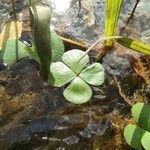
Marsilea minuta
Small water-clover · Dwarf Waterclover · Dwarf Water Clover · Gelid Waterklawer · Pepperwort
Description
Source: leafsnapMarsilea minuta, commonly known as small waterclover or dwarf waterclover, is a small aquatic plant that belongs to the Marsileaceae family. Native to Asia, it thrives in shallow waters such as ponds, lakes, and slow-moving streams. This plant has a distinct appearance characterized by its four-leaf clover-like structure that floats on the water's surface. The leaves are green, rounded, and have notched edges. Its stems are thin and delicate, allowing the plant to float effortlessly. Marsilea minuta is easy to grow and requires minimal maintenance. It prefers full sun or partial shade and can tolerate temperatures ranging from 15°C to 30°C (59°F to 86°F). The plant also thrives in slightly acidic to neutral pH levels. An essential part of many ecosystems, Marsilea minuta serves as a crucial food source for various aquatic animals, including fish, turtles, and ducks. Beyond its ecological significance, Marsilea minuta has been used in traditional Asian medicine for centuries due to its anti-inflammatory properties. In summary, Marsilea minuta is an intriguing aquatic plant with unique characteristics that make it both visually appealing and ecologically important across various ecosystems in Asia.
Care Guide
💧 Water Every 7 days
Dwarf waterclover is native to humid environments and thrives best in conditions with consistent moisture and warmth. It typically requires watering twice a week to maintain its health. Due to its humidity needs, it grows well indoors and is an excellent choice for container water gardens or terrariums. Additionally, it is resilient and can withstand brief periods of dryness.
☀️ Light Partial sun
What are the sunlight requirements for a garden?
Sunlight requirements for a garden include partial sun, which is about 3-6 hours of sunlight, and full shade, meaning less than 3 hours of sunlight. It's important to watch how sunlight moves through your garden to choose spots that provide the right balance of light and shade for your plants, ensuring their happiness.
What are the essential conditions for Dwarf waterclover?
Dwarf waterclover, botanically named Marsilea minuta, is native to environments like forest understories or rocky areas, which offer natural shade. Its preferred sunlight condition is full shade, but it can also tolerate partial sun. When natural sunlight is insufficient, artificial lighting can be a vital solution for indoor plants, ensuring optimal growth. LED lights are recommended because they can be customized to provide specific wavelengths of light. The required wattage varies depending on the plant's sunlight needs: full sun plants need 30-50W/sq ft, partial sun plants 20-30W/sq ft, and full shade plants 10-20W/sq ft. The light source should be placed 12-36 inches above the plant for 8-12 hours per day.
What are symptoms of inadequate light in Dwarf waterclover and how can they be addressed?
Inadequate light can cause several symptoms in Dwarf waterclover, such as smaller leaves, leggy or sparse growth, faster leaf drop, slower or no new growth, lighter-colored new leaves, chlorosis, sunscald, leaf curling, wilting, and leaf scorching. Solutions include gradually adapting the plant to more sunlight by shifting them to sunnier spots each week, using artificial light if the plant is large or not easily movable, and minimizing obstructions to sunlight. For outdoor plants, gradual relocation to sunnier spots is key. If the light obstruction is due to trees, pruning can help let more sunlight through. For smaller plants, transplanting during the dormant period to a location with ample sunlight and good drainage is beneficial. It's important to note that parts of the plant affected by insufficient sunlight may not recover, but new growth will be healthy after adjusting the light exposure.
🌡️ Temperature 20–35°C
Hairy waterclover is native to habitats with temperatures ranging from 68 to 95 °F (20 to 35 ℃). It prefers this moderate warmth for optimal growth. Adjustments may be necessary to maintain these temperatures as seasons change.
What is the native climate for Dwarf waterclover?
Dwarf waterclover, known botanically as Marsilea minuta, is native to climates that offer temperatures ranging between 68 to 95 °F (20 to 35 °C). It thrives in warmer habitats and may require adjustments in temperature management during colder seasons to maintain its health and growth.
How can you protect Dwarf waterclover during winter?
Dwarf waterclover possesses strong cold resistance, so special frost protection measures are usually not necessary. However, in areas where winter temperatures are expected to drop below -25°C, it's important to provide cold protection. This can be done by covering the plant with soil or straw. Additionally, watering the plant abundantly before the first freeze in autumn to ensure the soil remains moist can help prevent drought and water scarcity during the colder months.
What are the important temperature-related symptoms to look out for in Dwarf waterclover?
For Dwarf waterclover, low temperatures above 20°C are ideal but should be kept above 0°C during winter. If temperatures fall below -25°C, the plant may experience a decrease in sprouting or fail to sprout in spring, with no noticeable changes during winter. Conversely, during summer, temperatures should be kept below 35°C. Exceeding 41°C can cause the leaves to lighten, curl, and become more susceptible to sunburn.
What are the solutions for temperature-related issues in Dwarf waterclover?
To address low temperature impacts, such as a decrease in sprouting during spring, remove any parts of the plant that have failed to sprout. In case of high temperature impacts, like sunburn or curling leaves, trim away the sunburned and dried-up parts. Additionally, moving the plant to a shaded location or using a shade cloth to protect it from the midday and afternoon sun, along with watering the plant in the morning and evening, can keep the soil moist and protect the plant.
💨 Humidity
🪴 Soil
🌱 Fertilizer
For optimal growth, dwarf waterclover needs regular fertilization with high-nitrogen solutions. Apply fertilizer every two weeks, increasing to once a month during spring and summer. In fall and winter, reduce the frequency. Use the fertilizer sparingly to avoid algal blooms, and always follow the label instructions to prevent over-fertilization.
🪴 Pot & Repot
✂️ Pruning
The dwarf waterclover is an aquatic plant that resembles a clover. To keep its growth in check, it's beneficial to prune it regularly in early spring. This practice not only helps control its spread but also maintains its density and removes dead leaves. By doing so, you promote healthy growth and minimize algae buildup, ensuring the plant thrives in water gardens.
🌿 Propagating
🐛 Diseases & pets
☠️ Toxicity
Characteristics
- Plant Type
- Herb
- Life Cycle
- Perennial
- Genus
- Marsilea
- Family
- Marsileaceae
- Hardiness Zone
- 9
- Mature Height
- 3 cm to 20 cm
- Mature Spread
- 20 cm to 40 cm
- Leaf Color
- Green, Dark Green
- Leaf Type
- Deciduous
- Planting Time
- Spring
- Native Area
- Bahamas, Mexico, Cuba, Peru