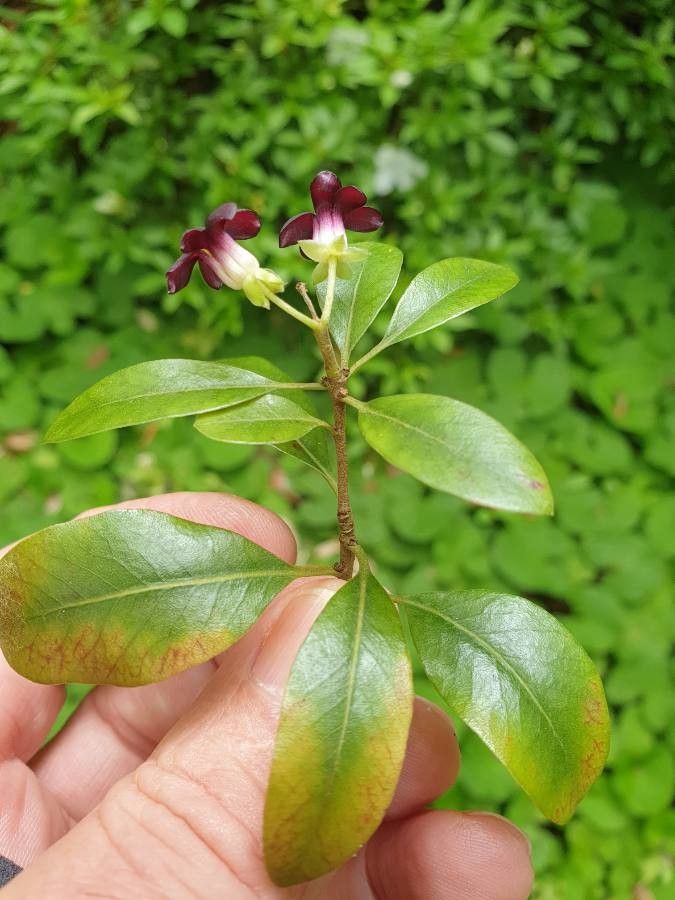
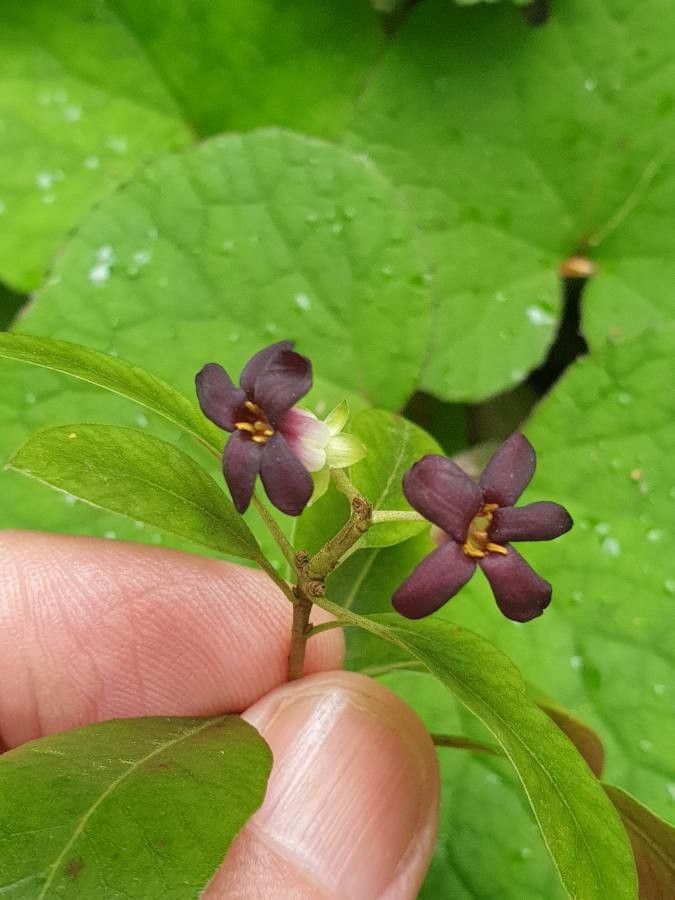
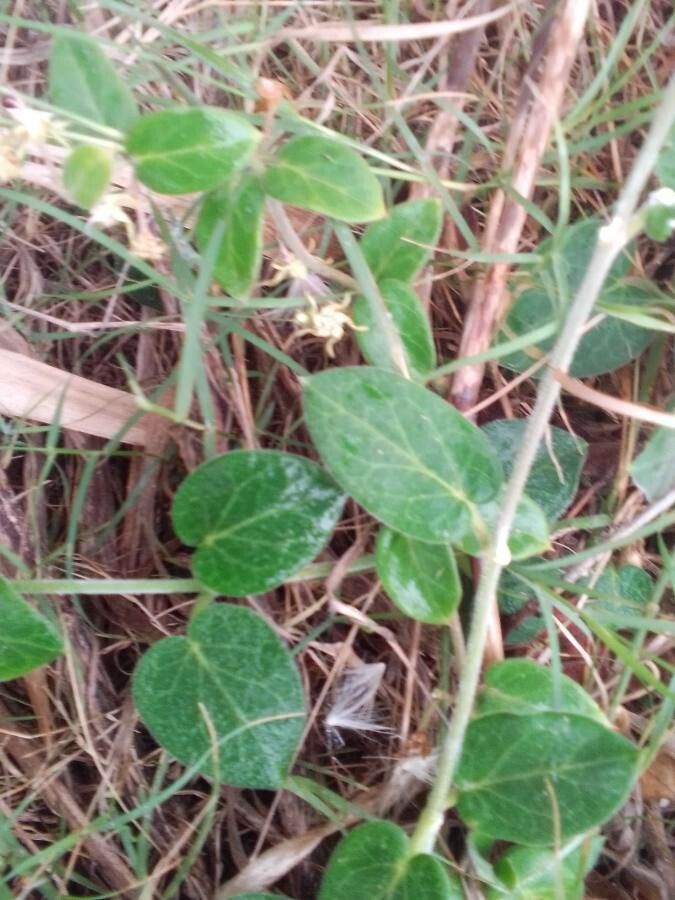
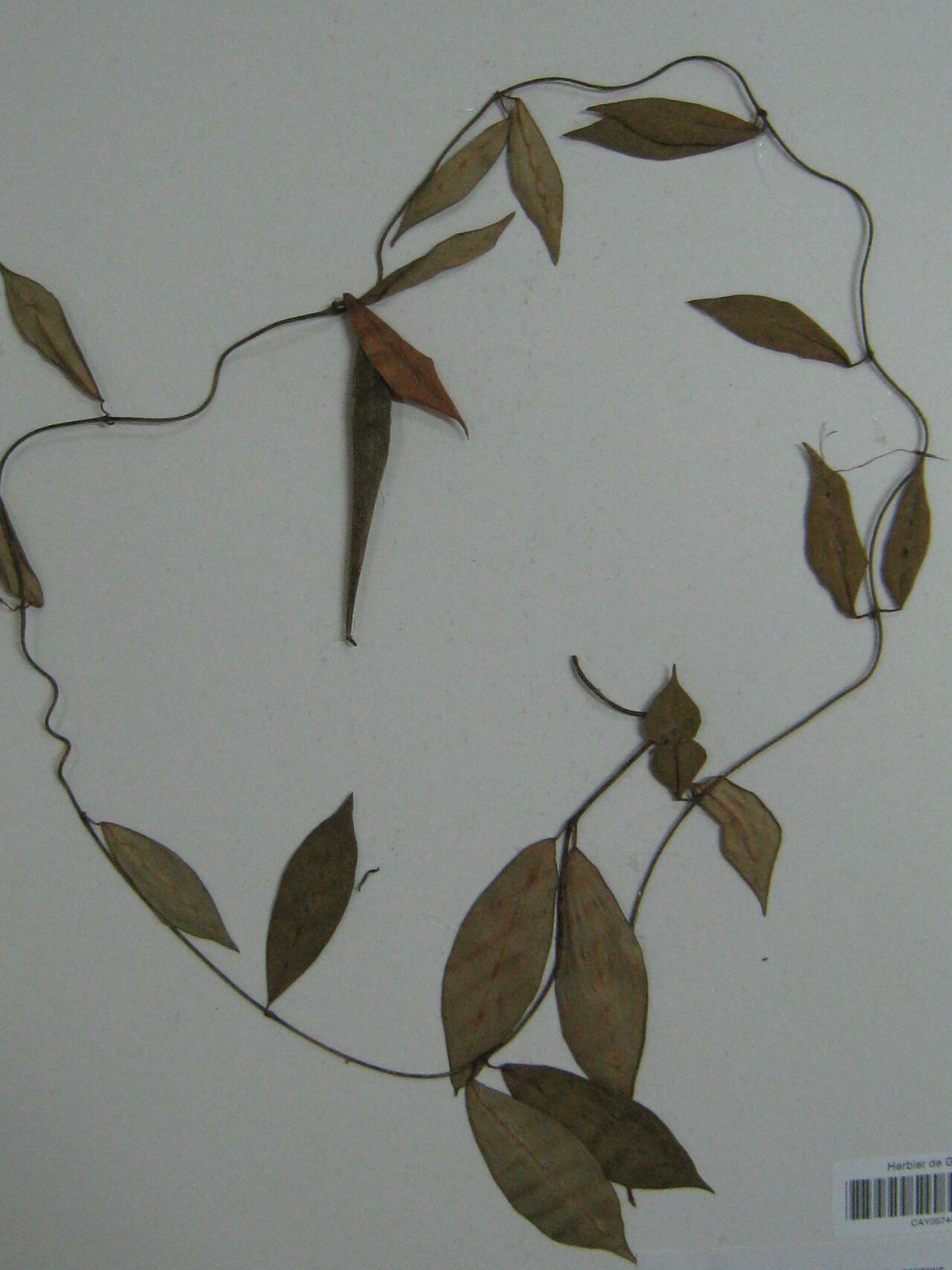
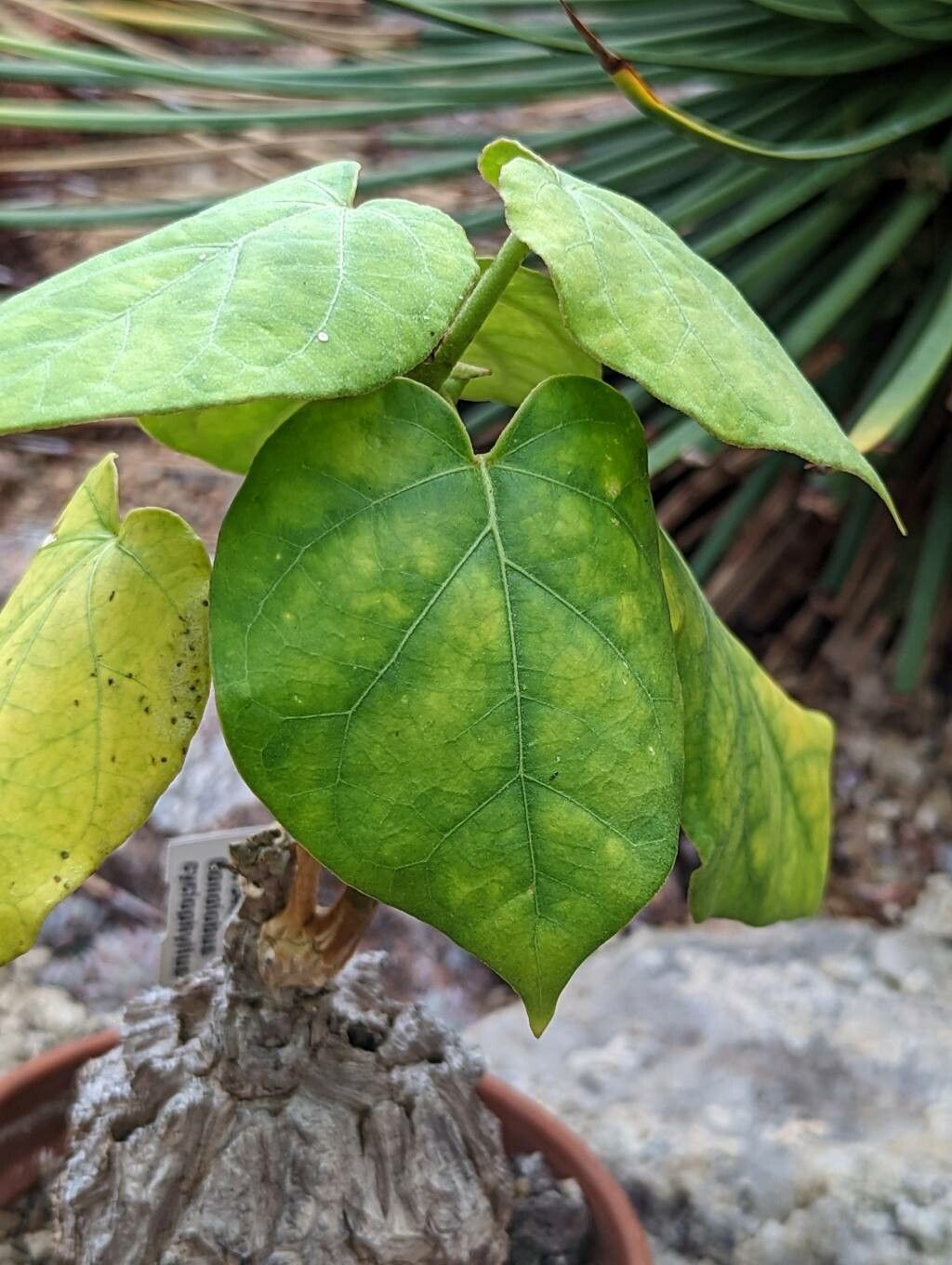
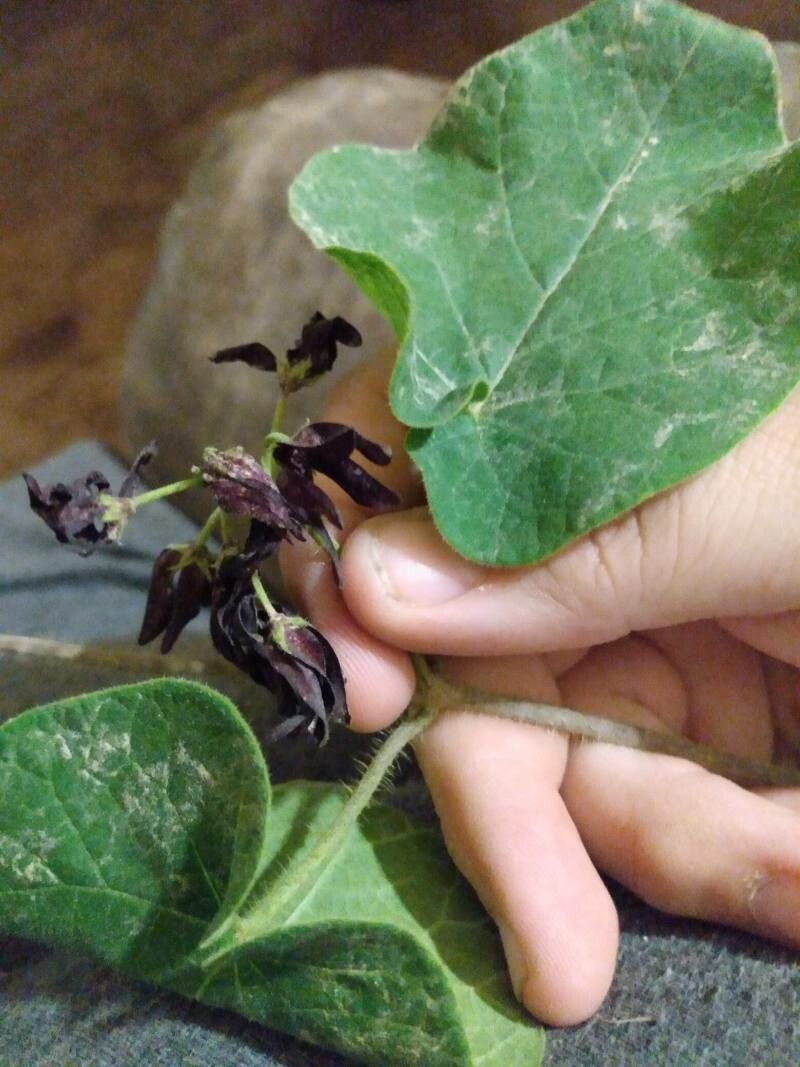
Matelea carolinensis, commonly known as Carolina milkvine, is a perennial vine that belongs to the Apocynaceae family. Native to the southeastern United States, it thrives in diverse habitats, including woodlands, meadows, and roadsides. The plant can grow up to 6 feet in length, with twining stems that climb on other plants for support.
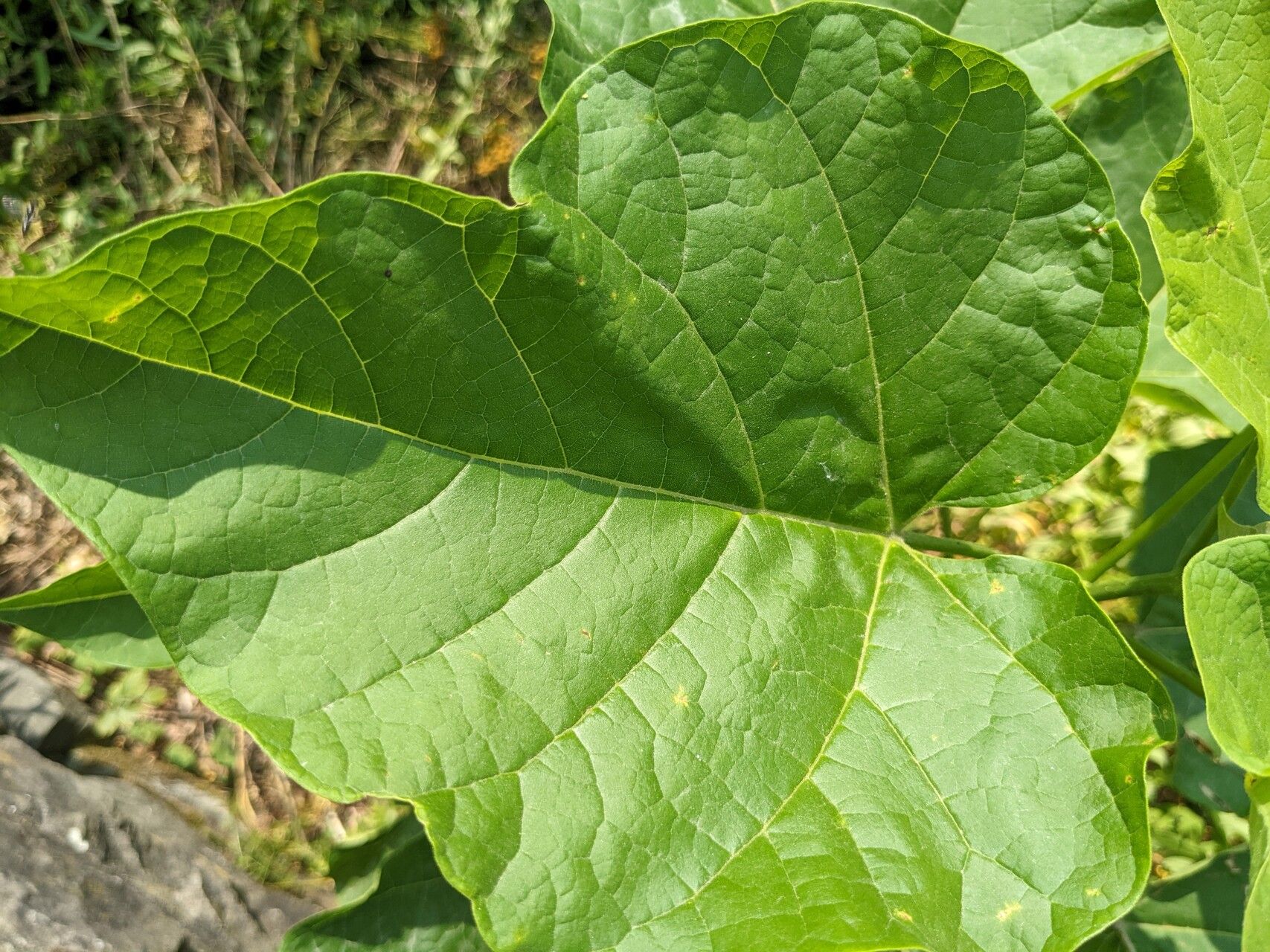
The leaves of Matelea carolinensis are simple, alternate, and glossy green. Its small flowers have a unique shape that resembles an upside-down umbrella or parachute. Blooming from May to August, the flowers appear in clusters of 2-5 and are greenish-yellow or white in color.
The fruit of the Carolina milkvine is a follicle containing numerous seeds that have silky hairs, which aid in wind dispersal. Traditionally, Native Americans have used the plant for medicinal purposes, such as treating snakebites.
Matelea carolinensis plays a vital role in the ecosystem by providing food for various insects, including bees and butterflies, which help pollinate its flowers. The twining stems also offer nesting sites for small animals, like birds.
Overall, Matelea carolinensis is a fascinating plant species with unique features that make it significant both ecologically and culturally within its native range.
Carolina milkvine shows strong resistance to disease and typically does not get sick easily. Still, it can be affected by pests and diseases present in its environment, though such outbreaks are generally mild. Regarding upkeep, this plant needs a moderate level of care. Regular pruning is necessary to preserve an attractive appearance and support healthy growth. Applying fertilizer can also encourage blooming. Carolina milkvine is well suited for people with outdoor areas like gardens or patios and does not demand extensive gardening experience. When kept indoors, it may need more attentive care.
How to keep Matelea Carolinensis.
Light
Carolina milkvine does best in locations that get sun for most of the day, though it can tolerate areas with somewhat reduced sunlight. It benefits from abundant light for optimal growth but will remain healthy in filtered sun. However, both insufficient and excessive sunlight can inhibit its growth.
Water
Carolina milkvine does well in areas with moderate rainfall, needing consistent weekly watering. While it is neither particularly thirsty nor drought-tolerant, this outdoor vine adapts well to seasonal variations. During the rainy season, it absorbs more water to support its vigorous growth.
Humidity
This plant will thrive in moderate humidity, which is probably the level in your home. However, misting it a few times a week can be very beneficial. Make sure the room has good ventilation.
Temperature
In its native environment, carolina milkvine prefers temperate conditions and does best when temperatures stay around 50 to 89.6 °F (10 to 32 ℃). It favors spring and autumn and becomes somewhat sensitive to extreme winter and summer temperatures. Gentle adjustments can help keep it within its comfort zone.
Fertilizer
For Carolina milkvine, the primary time to apply fertilizer is in early spring as the flowers begin to form. Using the appropriate fertilizer promotes stronger blooms and helps the Carolina milkvine develop attractive flowers. Fertilizing in early spring guarantees good flowering throughout the season and supplies energy for its dormant growth periods.
Pruning
The Carolina milkvine is a perennial climbing plant featuring heart-shaped leaves and star-shaped flowers. To keep your plant healthy and attractive, it's best to prune it from early to late spring. Pruning helps remove dead stems, controls the shape of the vine, and improves air circulation. Regular pruning encourages growth, enhances the plant's ornamental appeal, and reduces the risk of disease, ensuring your garden remains vibrant and thriving.
Botanical profile.
- Plant Type
- Herb, Vine
- Life Cycle
- Perennial
- Genus
- Matelea
- Family
- Apocynaceae
- Hardiness Zone
- 6-8
- Mature Height
- 1.83 m to 3.66 m
- Mature Spread
- 0.91 m to 1.83 m
- Leaf Color
- Green, Dark Green
- Leaf Type
- Deciduous
- Flower Color
- Yellow, Green, Purple, Red, Brown
- Flower Size
- 1.02 cm to 2.03 cm
- Bloom Time
- Late spring, Early summer, Mid summer
- Planting Time
- Spring, Summer
- Harvest Time
- Late summer, Early fall, Mid fall
Other names.
Reader questions.
How should I water my Carolina milkvine properly?
To properly water the Carolina milkvine, use filtered water at room temperature or slightly warmer. Tap water may contain harmful particles, so filtered water is a healthier option for this plant. The Carolina milkvine is accustomed to warm environments, so avoid using cold water as it can shock the plant. Overhead watering should be avoided to prevent foliage issues. Instead, apply filtered room temperature water directly to the soil until it is completely soaked. This helps moisten the roots and allows them to spread and gather necessary nutrients.
What are the sunlight requirements for Carolina milkvine?
Carolina milkvine requires full sun, defined as above 6 hours of sunlight daily, for optimal growth, but it can also tolerate partial sun, roughly 3-6 hours of sunlight. It's crucial to observe how sunlight travels through your garden to pick spots offering a harmonious balance of light and shade, ensuring the plant's well-being. Inadequate or excessive sunlight can negatively impact its growth, so monitoring and adjusting the plant's exposure to sunlight is essential for its health.
What are the ideal growing conditions for Carolina milkvine?
Carolina milkvine (Matelea carolinensis) thrives in temperate conditions, favoring temperatures between 50 to 89.6 °F (10 to 32 °C). It flourishes during the spring and autumn seasons and does not prefer the extremes of winter and summer. Despite its strong cold resistance, in climates where winter temperatures are expected to fall below -25°C, it's essential to provide cold protection. This can include covering the plant with soil or straw. Additionally, thoroughly watering the plant before the first frost arrives ensures the soil remains moist throughout the winter, helping the plant avoid drought.
What should I do if I give too much or too little water to my Carolina milkvine?
Both overwatering and underwatering can harm your Carolina milkvine, but overwatering is more common. When this species gets too much water, the stems and leaves may wilt and turn yellow. Overwatering for a long time can also cause diseases like root rot, mold, and mildew, which can kill the plant. Carolina milkvine is less likely to be underwatered because it can tolerate drought. However, it can still happen, and when it does, the leaves will become brittle and brown. It's crucial to notice the signs of overwatering quickly when caring for your Carolina milkvine. Some diseases caused by overwatering, like root rot, won't be fixable if you wait too long. If you see early signs of overwatering, reduce your watering right away. Also, check the soil quality. If it drains poorly, replace it with a loose, well-draining potting mix. If you notice signs of underwatering, simply water more regularly until the signs go away.
How can artificial lighting benefit indoor plants?
Indoor plants, including Carolina milkvine, need adequate lighting to grow optimally. When natural sunlight is insufficient, especially during winter or in less sunny areas, artificial lighting becomes crucial. LED lights are recommended due to their ability to provide specific light wavelengths needed by plants. Full sun plants require 30-50W/sq ft, partial sun plants 20-30W/sq ft, and full shade plants 10-20W/sq ft of artificial light. The light source should be placed 12-36 inches above the plant, mimicking natural sunlight's distance. Moreover, the duration of artificial lighting should match the natural daylight hours needed by the plant species, typically between 8-12 hours per day.
How does Carolina milkvine respond to low temperatures?
Carolina milkvine is known for its cold tolerance, ideally growing in temperatures above 10°C and surviving winters above -15°C. Should the temperature dip below -25°C, the plant may not show immediate damage but could exhibit decreased or no sprouting in the spring. To help the plant recover from such conditions, remove any parts in the spring that have failed to sprout.
How often do I need to water my Carolina milkvine?
If your Carolina milkvine is planted in a pot, the best way to determine if it needs water is to check the soil by sticking your finger into it. If the top two to three inches of soil feel dry, then it's time to water the plant. If you have planted your Carolina milkvine in the ground outdoors, you can use the same method to test the soil. When the top few inches of soil have dried out, it's time to water the plant. Typically, during spring and early fall, watering once a week using this method is sufficient. However, during extremely hot weather, you may need to increase watering frequency to twice or more per week. That being said, mature and well-established Carolina milkvines have a remarkable ability to handle drought.
What are the common symptoms of inadequate lighting for Carolina milkvine?
Symptoms of light deficiency in Carolina milkvine include small leaves, indicating new leaves may grow smaller once matured; leggy or sparse growth, where the spaces between stems or leaves become longer, giving the plant a stretched appearance; faster leaf drop, as the plant sheds older leaves to conserve resources; slower or no new growth, with the plant halting leaf production; lighter-colored new leaves, signaling a lack of chlorophyll; chlorosis, where leaves lose their green color, turning yellow; sunscald, characterized by pale or necrotic areas on the plant caused by intense light exposure; leaf curling, a defense mechanism to minimize water loss; wilting from increased water loss; and leaf scorching, which appears as brown, crispy edges on leaves due to excessive light.
What should I do if my Carolina milkvine experiences high temperatures?
During the summer, it's best to keep Carolina milkvine under 32°C to avoid heat stress. If temperatures exceed 35°C, the plant's leaves may lighten in color, become prone to curling, and may suffer from sunburn, leading to wilting and drying out in severe cases. To mitigate heat damage, trim away sunburned and dried-up parts of the plant. Relocate the plant to a shaded area during midday and afternoon sun or use a shade cloth for protection. Ensure the soil remains moist by watering in the morning and evening.
How much water does my Carolina milkvine require?
To properly water your Carolina milkvine, don't be afraid to be generous with the amount of water you give. Check the top two to three inches of soil and if it's dry, go ahead and water thoroughly. Make sure the water completely soaks the soil, adding enough to let excess water flow out of the drainage holes at the bottom of the pot. If you don't see excess water draining, then you have probably not given enough water. Avoid letting water accumulate in the soil, as it can harm the plant. On the other hand, if water doesn't drain well through the pot, it means the soil is not draining properly, which is not good for the health of the plant. If the plant is outside, about 1 inch of rain per week is enough.
What solutions can be implemented for light-related issues in Carolina milkvine?
For indoor plants, gradually relocating them to sunnier spots weekly until they receive at least 6 hours of direct sunlight daily is advisable. For plants that are large or difficult to move, consider providing additional light with desk, ceiling lamps, or professional plant grow lights for at least 8 hours a day. Outdoors, gradually moving plants to sunnier locations each week can help them adapt without experiencing sunburn. If your plants are growing on the ground and facing sunlight obstruction, consider pruning obstructions like branches or leaves, or transplanting smaller plants during their dormant period to a location with better sunlight and drainage. It's essential to note that parts of the plant that have suffered from insufficient sunlight may not fully recover, but new growth should be healthy with improved light exposure.
How should I water my Carolina milkvine at different times when it is growing?
The water needs of the Carolina milkvine can vary depending on its growth stages. In the first few years of its life or after transplanting to a new location, it requires more water. During this time, the plant focuses on developing new roots to support future growth, which requires extra moisture. As the Carolina milkvine matures, it will require less water. Another stage that requires more water is the bloom period when the flower development utilizes significant amounts of moisture.