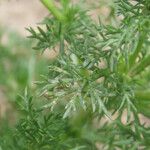
Matricaria discoidea
Pineapple Weed · Wild chamomile · Disc mayweed · Rounded chamomile · Rayless chamomile
Description
Source: leafsnapMatricaria discoidea, commonly known as Pineapple Weed or Wild Chamomile, is a small annual plant in the Asteraceae family. Native to North America, it thrives in various habitats, including roadsides, fields, and disturbed areas. This plant typically grows to a height of 10-30 cm and emits a distinctive pineapple-like aroma when crushed. Its leaves are finely divided into thread-like segments that are alternately arranged along the stem. The flowers are small, yellow-green, and feature a dome-shaped center flanked by white petals. Pineapple Weed has been utilized for medicinal purposes by Native Americans for centuries, thanks to its anti-inflammatory properties. It can be brewed into tea or applied topically as a herbal remedy for ailments such as headaches, stomachaches, and skin irritations. Beyond its medicinal uses, Pineapple Weed is valued in culinary applications, where it adds flavor to teas and baked goods due to its unique aroma. In summary, Matricaria discoidea is a fascinating plant with both medicinal and culinary benefits, making it well worth further exploration!
🌳 Despite what its name implies, pineapple weed isn't a fruit but an herb valued in folk medicine. It is rich in antioxidants that help combat inflammation. The plant's flowers give off a pineapple-like scent that pleases both people and bees, with the bees feeding on its nectar. Pineapple weed is also a source of essential oils used in making scented candles and perfumes. Additionally, the herb can be steeped into a calming tea that adds a hint of the tropics to your cup.
Care Guide
💧 Water Every 3 days
Pineapple weed thrives in semi-arid environments, needing very little moisture due to its drought tolerance. It prefers dry conditions and benefits from weekly watering. As an outdoor herbaceous plant, it relies on sufficient rainfall during its growing season for optimal growth.
How should I water my Pineapple weed?
Pineapple weed can be watered using various tools like a garden hose with a spray nozzle, a watering can, or any common watering tool. It is not too particular about the water source, as it can survive with rainwater, tap water, or filtered water. It's best not to water this plant from overhead to prevent damaging the leaves, flowers, and potential diseases. A drip irrigation system is often recommended for watering this plant, as it ensures even and direct water application to the soil. For container-grown Pineapple weed, you can use a cup, watering can, or tap water to directly water the soil.
What do I do if I give my Pineapple weed too much or too little water?
If your Pineapple weed is not getting enough water, the solution is simple: water it more frequently. On the other hand, overwatering can lead to serious issues, such as diseases that can cause the plant to decline and die. To avoid this, it's important to choose the right growing location. This means finding a spot with ample sunlight that can dry out the soil and has good drainage to prevent water from pooling. If you have overwatered a potted Pineapple weed, you might need to transfer it to a new pot. The previous container might not have had proper drainage, so it's important to use loose soils and a pot that drains efficiently when replanting.
How much should I water my Pineapple weed?
To help your pineapple weed thrive, it's important to water it regularly throughout the growing season. In the spring, watering once a week should suffice. However, as the season progresses and temperatures rise, you may need to increase your watering to two or three times a week. It's important not to exceed this rate, as too much water can harm the plant. Remember to keep the soil moist, but not wet, regardless of how often you water. When it comes to pineapple weed in a pot, you'll need to water it more frequently. Potted soil can heat up and dry out faster than ground soil, so watering a few times a week is typically necessary. In contrast, an in-ground plant only needs to be watered once a week.
How much water does my Pineapple weed require?
There are a few ways to decide how much water to give your Pineapple weed. One way is to check the soil and water until the top six inches feel moist. Another approach is to use a specific measurement, like two gallons per week, adjusted based on temperature and soil dryness. However, be careful not to overwater if your plant needs less. When growing in a container, water until all soil layers are moist or until you see water draining from the holes.
How can I know if I'm giving enough water to my Pineapple weed plant?
Avoiding overwatering your Pineapple weed can be a bit challenging due to conflicting factors. On one hand, these plants have deep roots that should be moistened weekly. However, Pineapple weed is highly prone to root rot, which can also cause browning. Underwatering is less of a concern as these plants can survive without additional watering for some time. However, if they go too long without water, they may wilt and develop dry leaves.
☀️ Light Full sun
Primarily, pineapple weed prospers in full, unobstructed sunlight throughout the day, yet it is capable of surviving under partial shade. Habitually, this plant is exposed to the entire range of the sun's path during the course of the day in its native environment, leading to its best health and expansion. Too much shade or inadequate sunlight can hinder its progress and cut down its vigor, whereas too much sunlight may lead to leaf burn.
What are the sunlight requirements for Pineapple Weed?
Pineapple weed, known botanically as Matricaria discoidea, thrives best in full sun conditions, meaning it requires more than 6 hours of direct sunlight daily. It can also grow in partial sun, which is about 3-6 hours of sunlight a day. It's essential to observe how sunlight moves through your garden to find spots that provide the right balance of light and shade, ensuring the plants' optimal growth and health.
How does sunlight affect Pineapple Weed's growth?
Pineapple weed flourishes under direct, all-day sun exposure in its natural habitat, which supports its health and growth. However, too little sunlight can stunt its growth and vitality, while too much can cause leaf scorching. Observing your garden's sunlight patterns and adjusting plant placement accordingly can help in achieving the best growth conditions.
What artificial lighting requirements do indoor Pineapple Weed plants have?
Indoor Pineapple weed plants require adequate lighting, especially when natural sunlight is scarce, such as during winter or in less sunny spaces. Artificial lighting, like LEDs, can be a vital solution, offering customizable wavelengths needed for the plant's growth. Full sun plants need 30-50W per square foot, partial sun plants require 20-30W per square foot, and full shade plants need 10-20W per square foot of artificial light. The light should be positioned 12-36 inches above the plant, mimicking natural daylight hours for 8-12 hours per day.
What are the symptoms of inadequate light in Pineapple Weed?
When Pineapple weed is grown indoors with insufficient light, it may show symptoms such as smaller new leaves, leggy or sparse growth, early shedding of older leaves, delayed or halted growth, paler new leaves, chlorosis, sunscald, leaf curling, wilting, and leaf scorching. These symptoms indicate either a deficiency or excess of sunlight, affecting the plant's photosynthesis process and general health.
What solutions can help improve Pineapple Weed's growth in inadequate light conditions?
For indoor plants, gradually moving them to sunnier spots or using artificial lighting can optimize growth. Place the plant near a south-facing window or use grow lights for at least 8 hours a day. For outdoor plants, transitioning them gradually to better-lit areas can prevent sunburn. Pruning nearby trees to reduce shade and transplanting smaller plants to sunnier locations during their dormant period can also help. It's crucial to note that parts of the plant already damaged by insufficient light might not recover, but with increased light exposure, new growth should be healthy.
🌡️ Temperature 5–35°C
Pineapple weed originates from regions with a temperate climate and grows best in temperatures ranging from 20 to 35 ℃ (68 to 95 °F). To achieve ideal growth, minor temperature modifications may be needed as seasons change.
What is the native temperature range for pineapple weed to thrive?
Pineapple weed, known botanically as Matricaria discoidea, is native to temperate regions and thrives best in temperatures ranging from 68 to 95°F (20 to 35°C). These temperatures are ideal for optimal growth, although slight adjustments may be necessary during different seasons to maintain these optimal conditions.
How does pineapple weed handle cold temperatures, and what measures should be taken during winter?
Pineapple weed has strong resistance to cold and usually does not require special frost protection measures during winter. However, in extremely cold climates where winter temperatures are expected to drop below -30°C, it's important to provide cold protection. This can include covering the plant with soil or straw and watering it abundantly before the first freeze in autumn to ensure the soil remains moist and enters a frozen state, thus helping prevent drought and water scarcity during winter and early spring.
What are the symptoms of pineapple weed being exposed to low temperatures and their solutions?
Pineapple weed is cold-tolerant and ideally should be kept above 0°C during winter. However, when temperatures fall below -30°C, there might not be noticeable changes during winter, but a decrease in sprouting or even a lack of sprouting might occur in spring. The solution to this issue is to remove any parts of the plant that have failed to sprout in the spring.
How does pineapple weed react to high temperatures, and what are the recommended solutions?
During summer, it's important to ensure that pineapple weed is kept below 35°C. Exposure to temperatures above 38°C can result in the leaves becoming lighter in color, curling, being prone to sunburn, and in severe cases, the entire plant may wilt and become dry. To address this, trimmed away the sunburned and dried-up parts, move the plant to a shaded location during the midday and afternoon sun, or use a shade cloth. Additionally, watering the plant in the morning and evening can help keep the soil moist and reduce stress on the plant.
💨 Humidity dry (<40%)
This plant prefers dry conditions, so don't mist it. However, watering it less often can also thrive in higher humidity.
🪴 Soil 6-7
🌱 Fertilizer
Pineapple weed thrives when it is given small, regular amounts of fertilizer to encourage robust growth of the leaves. It's advisable to fertilize Pineapple weed roughly every month throughout the summer season. Nitrogen is essential for the plant's foliage and supplementation with sources rich in nitrogen assists the Pineapple weed to prosper.
🪴 Pot & Repot
When you're ready to repot Pineapple weed, choose a pot that's 1-2 inches (2.5-5 cm) wider in diameter and ensure that it has efficient drainage. Make use of a high-draining potting mixture and think about incorporating perlite to enhance the drainage even further. The best time to do this is in the spring or early summertime. After repotting, give it a good water, and position it in a place with partial shade to begin with.
✂️ Pruning
🌿 Propagating
🐛 Diseases & pets
☠️ Toxicity
Characteristics
- Plant Type
- Herb
- Life Cycle
- Annual
- Genus
- Matricaria
- Family
- Asteraceae
- Hardiness Zone
- 4-9
- Mature Height
- 5 cm to 25 cm
- Mature Spread
- 30 cm
- Leaf Color
- Green
- Leaf Type
- Deciduous
- Flower Color
- Yellow, White
- Flower Size
- 2.54 cm
- Bloom Time
- Late spring, Early summer, Mid summer
- Planting Time
- Autumn
- Harvest Time
- Early summer, Mid summer
- Native Area
- Denmark