Matricaria recutita
German chamomile · Hungarian Chamomile · Scented Mayweed · Sweet Chamomile · Wild chamomile
Description
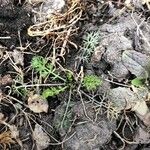
Source: leafsnapMatricaria recutita, commonly known as chamomile, is a small annual plant that belongs to the Asteraceae family. It is native to Europe and Western Asia but has been naturalized in many parts of the world. The plant can grow up to 30 centimeters in height and features feathery leaves finely divided into thread-like segments. The flowers of Matricaria recutita are daisy-like, with white petals and yellow centers. They bloom from June to September and emit a sweet, apple-like fragrance. These flowers are valued for medicinal purposes because they contain essential oils that have anti-inflammatory, antispasmodic, and sedative properties. Chamomile tea is one of the most popular herbal teas worldwide, celebrated for its calming effects on the body. It can alleviate anxiety, insomnia, and digestive issues such as bloating or indigestion. In addition to its medicinal uses, chamomile also has cosmetic applications. It is often included in shampoos and skincare products for its anti-inflammatory properties, which can help soothe irritated skin or scalp. Overall, Matricaria recutita is a versatile plant with many benefits for both health and beauty purposes. It remains an important herb in traditional medicine practices around the world today.
🌳 German chamomile is notable not only for its health benefits but also for several nontraditional uses. Historically it was employed as a piscicide in fishing because of its toxicity to fish. Its essential oil is used in cosmetics, added to skincare products for its anti-inflammatory effects. It is also used in shampoos to enhance blonde highlights, taking advantage of its mild hair‑lightening action.
🎭 Cash, Rest, Affection
Care Guide
💧 Water Every 3 days
Young chamomile plants need about an inch of water per week. The plants become drought tolerant as they mature and become established. Allowing plants to dry out between moderate waterings is ideal. Chamomile, on the other hand, will benefit from a little extra moisture in excessively hot weather.
☀️ Light Full sun
German chamomile thrives best in locations that enjoy plenty of daily sunlight, due to its origins in open spaces. Although it can tolerate a quieter midday sun, its growth could be impeded in environments lacking sufficient light. However, an overexposure can also inflict stressful conditions.
🌡️ Temperature 5–35°C
German chamomile originates from temperate weather conditions and is most content within a temperature spectrum of 68 to 95 °F (20 to 35 ℃). During periods of intense temperatures, minor modifications may be required to secure the plant's longevity and development.
💨 Humidity
🪴 Soil 5-7
🌱 Fertilizer
When the majority of blossoms on the German chamomile have fully unfurled, it's an appropriate time to recommence fertilization. Start a new fertilization cycle every three to four weeks as the climate allows, corresponding with the period of maximum flowering. Once the German chamomile begins to generate fewer fresh blossoms, cease fertilizing. There is no requirement for additional fertilization when the plant has reached its bloom production limit.
🪴 Pot & Repot
While transferring German chamomile to another pot, opt for a container that is 1-2 inches (2.5-5 cm) wider in diameter with adequate drainage. Employ a potting mix with excellent draining properties, and think about incorporating perlite for additional draining capacity. Carry out the repotting activity in the spring or the start of summer, then hydrate the plant completely and place it in a shaded spot for the initial period.
✂️ Pruning
Chamomile flowers just need to be pruned as needed. Because the low-growing Roman chamomile spreads quickly as a ground cover, you may need to clip it back to keep it contained.
🌿 Propagating
🐛 Diseases & pets
☠️ Toxicity
When applied to the skin nightly for up to 6 weeks, oil containing German chamomile is safe for children and teenagers. Allergies to ragweed or related plants: People allergic to the Asteraceae/Compositae family of plants may experience an allergic reaction to German chamomile.
Characteristics
- Plant Type
- Herb
- Life Cycle
- Annual, Biennial
- Genus
- Matricaria
- Family
- Asteraceae
- Hardiness Zone
- 4-9
- Mature Height
- 30 cm to 40 cm
- Mature Spread
- 25 cm to 30 cm
- Leaf Color
- Green
- Leaf Type
- Deciduous
- Flower Color
- White, Yellow
- Flower Size
- 1.78 cm to 2.54 cm
- Bloom Time
- Late spring, Early summer, Mid summer
- Planting Time
- Spring
- Harvest Time
- Mid summer
- Native Area
- Egypt, Turkey, Sweden, India, Austria, Slovakia, Montenegro, Pakistan, Slovenia, Morocco, Croatia, Belarus, Uzbekistan, Russia, Iraq, Germany, Romania, Belgium, Moldova, Portugal, Netherlands, France, Tajikistan, Tunisia, Czech Republic, Cyprus, Bulgaria, Poland, Greece, Ukraine, Serbia, Lebanon, China, Norway, Afghanistan, Syria, Kyrgyzstan, Kazakhstan, Italy, Spain, Switzerland, Denmark, Mongolia, Finland, Iran, Albania, Ireland, United Kingdom, Hungary, Algeria, Azerbaijan