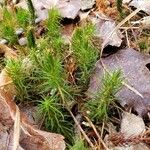
Mayaca fluviatilis
Stream Bogmoss · Bogmoss
Description
Source: leafsnapMayaca fluviatilis is a small aquatic plant native to the southeastern United States as well as parts of Central and South America. It belongs to the family Mayacaceae and is commonly known as riverweed or water nymph. This plant features thin, delicate stems that can grow up to 30 cm in length. Its small, narrow leaves are arranged in whorls around the stem, and it has inconspicuous greenish-white flowers. Mayaca fluviatilis thrives in slow-moving or still water with a neutral pH level. It can be found in ponds, lakes, streams, marshes, and other wetland habitats. The plant serves as an important food source for aquatic animals such as fish and insects, while also providing shelter for smaller organisms like snails. In aquariums, Mayaca fluviatilis is often used as an ornamental plant due to its delicate appearance, but it requires high light intensity for optimal growth. Overall, Mayaca fluviatilis plays a crucial role in its ecosystem and is aesthetically pleasing when used in aquariums, making it a valuable addition both in tanks and in its native natural habitats.
Care Guide
💧 Water Every 7 days
Stream bogmoss, an evergreen plant, thrives in wet conditions and high humidity. To grow well, it requires consistent moisture and needs to be watered weekly. It retains its foliage year-round, much like in its naturally humid habitats, where stable water availability is crucial for its growth.
☀️ Light Full sun
Stream bogmoss is a plant that does well in places with abundant sunlight, although it can tolerate areas with somewhat reduced light. Too much sun does not harm the plant, but insufficient light can slow its healthy growth. These traits reflect its origin in sun-drenched environments.
What are the sunlight requirements for Stream bogmoss?
Stream bogmoss thrives best in environments that offer abundant sunlight, aligning with its origins in sun-drenched areas. It requires full sun, defined as more than 6 hours of sunlight a day, but can also adapt to partial sun, receiving about 3-6 hours of sunlight. The plant does well in excess sunlight and only shows signs of growth impairment when light is insufficient. To ensure your Stream bogmoss is happy, watch the sunlight movement in your garden and place the plant in spots with an ideal balance of light and shade.
How can artificial lighting supplement natural sunlight for Stream bogmoss indoors?
When natural sunlight is lacking, especially in winter or less sunny spaces, artificial lights provide a significant benefit for optimal growth of indoor Stream bogmoss plants. Opt for LED lights as they can offer specific wavelengths needed for the plant's growth. For full sun plants, 30-50 watts per square foot is recommended; partial sun plants need 20-30 watts per square foot, and full shade plants should get 10-20 watts per square foot. The light source should be placed 12-36 inches above the plant to mimic natural sunlight, and ensuring 8-12 hours of light per day can mimic natural daylight hours and promote healthier growth.
What are the symptoms of inadequate light for Stream bogmoss?
Symptoms of light deficiency in Stream bogmoss include smaller new leaves compared to older ones, leggy or sparse growth indicating a stretched appearance due to longer spaces between leaves or stems, faster leaf drop as the plant conserves resources for new growth, slower or halted new leaf production reflecting the plant entering survival mode, paler new leaves or irregular color patterns showing lack of chlorophyll, chlorosis which turns leaves yellow, sunscald causing damage from intense light exposure, leaf curling as a defensive move against extreme light, wilting due to loss of turgor pressure from overexposure, and leaf scorching where edges or patches of leaves turn brown and crispy from excessive light.
How can I ensure my Stream bogmoss receives enough light?
To optimize growth, gradually acclimate your Stream bogmoss to more sunlight by moving it to sunnier spots weekly until it achieves at least 6 hours of direct sunlight daily, using a south-facing window for indoors. If moving the plant is not feasible, consider artificial lighting solutions such as desk lamps or professional grow lights set for at least 8 hours daily. For outdoor plants, ensure a gradual transition to avoid sunburn. Removing obstructions, like pruning trees, can help outdoor plants get better sunlight. If the plant is small enough, transplanting it during its dormant period to a sunnier location can also significantly improve light exposure. Remember, while parts of the plant affected by low light might not recover, new growth should be healthy with improved lighting conditions.
🌡️ Temperature 20–37.8°C
Stream bogmoss comes from tropical areas, where the climate is generally warm and humid. As a result, it is well suited to high temperatures and moisture. It is sensitive to abrupt temperature changes and prefers a constant thermal environment, so avoiding temperature swings indoors is important. It usually cannot tolerate cold and needs warmer conditions to grow. If the surrounding temperature falls too low, the plant may stop growing or even die.
💨 Humidity
🪴 Soil
🌱 Fertilizer
Stream bogmoss needs balanced fertilization every two weeks during its growth period. Be sure to use lighter feeds for younger plants to prevent root burn. In winter, reduce feeding and use half-strength liquid fertilizers, ensuring the substrate stays moist. This approach promotes robust growth and resilience.
🪴 Pot & Repot
✂️ Pruning
Stream bogmoss is an aquatic plant that thrives in moist environments and has moss-like leaves. To promote healthy growth and prevent overcrowding, prune stream bogmoss in the spring by removing no more than one-third of its foliage. This practice improves circulation, increases sunlight exposure, and helps prevent algae buildup.
🌿 Propagating
🐛 Diseases & pets
☠️ Toxicity
Characteristics
- Plant Type
- Herb
- Life Cycle
- Perennial
- Genus
- Mayaca
- Family
- Mayacaceae
- Hardiness Zone
- 9-11
- Mature Height
- 10 cm to 46 cm
- Mature Spread
- 10 cm to 20 cm
- Leaf Color
- Green
- Leaf Type
- Evergreen
- Flower Color
- White
- Flower Size
- 1.27 cm
- Bloom Time
- Late spring, Summer, Early fall
- Planting Time
- Spring, Summer
- Harvest Time
- Mid summer, Late summer, Fall
- Native Area
- Colombia, Belize, Cuba, Honduras, Mexico, Guatemala, Bolivia, Venezuela, Peru, Guyana, Brazil, Nicaragua, Ecuador, Costa Rica, Panama, Jamaica