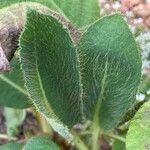
Meconopsis grandis
Blue poppy · Himalayan Blue Poppy
Description
Source: leafsnapMeconopsis grandis, the Himalayan blue poppy, is a species of flowering plant in the poppy family Papaveraceae, native to China (Yunnan), Bhutan, North East India and Nepal.Growing to 1 m (3.3 ft) tall and broad, this hardy herbaceous perennial has a basal rosette of toothed leaves. Large, showy, pure blue flowers with a prominent yellow central boss are produced in late Spring. The plant is valued as an ornamental, but is notably difficult to grow in normal garden conditions. Though perennial it can be short-lived. It prefers an evenly cool temperature and shaded conditions, in somewhat acid soil which remains reliably moist.The following cultivars are recipients of the Royal Horticultural Society's Award of Garden Merit: 'Bobby Masterson' (syn. 'Betty Sherriff's Dream Poppy') 'Mrs Jebb'
Care Guide
💧 Water
Native to moist alpine regions, the blue poppy flourishes in environments with high humidity and cool temperatures. It needs consistent moisture but should not be waterlogged, typically requiring watering once a week. While it is usually cultivated outdoors, the blue poppy enters a dormant phase that calls for reduced watering to match its natural growth cycle.
How should I water my Blue poppy plant?
To properly water the Blue poppy, it is recommended to use filtered water at room temperature. Tap water may contain harmful particles, which is why filtered water is preferable. It is important to use room temperature or slightly warm water because the Blue poppy is adapted to warmer environments and cold water can be a shock to its system. Additionally, overhead watering should be avoided to prevent foliage issues. Instead, it is best to apply filtered room temperature water directly to the soil until it is fully saturated. This helps moisturize the roots and promote their growth and nutrient absorption.
What should I do if I give too much water or too little water to my Blue poppy?
Overwatering is a common issue for Blue poppies and can cause wilting, yellowing, and diseases like root rot. Underwatering is less common but may lead to brittle, brown leaves. It's important to catch signs of overwatering early, as some diseases may be irreversible if not addressed promptly. Reduce watering and check soil quality if overwatering is suspected. If underwatering is the issue, simply water more regularly until symptoms improve.
How often do I need to water my Blue poppy?
If your Blue poppy plant is in a pot, the most accurate way to determine if it needs water is by checking the moisture level of the soil. Simply stick your finger into the soil and if the top two to three inches are dry, it's time to give it some water. If you are growing your Blue poppy outdoors in the ground, you can use a similar method to test the soil. Once again, if the first few inches of soil have dried out, it's time to water. In the spring and early fall, watering once a week is often sufficient. However, during very hot weather, you may need to increase your watering frequency to twice or more per week. However, it is worth noting that mature, well-established Blue poppies have the remarkable ability to tolerate drought and survive without frequent watering.
How much water does my Blue poppy require?
To water your Blue poppy effectively, don't hold back on the amount of water you give. Make sure the top few inches of soil are dry, and then give the plant a good, deep watering. The goal is to saturate the soil completely, so add enough water to see it flowing out of the drainage holes at the bottom of the pot. If you don't see excess water draining, you may be underwatering the plant, which is not good. However, be careful not to let water accumulate in the soil, as that can harm the plant. On the other hand, if water is not draining well, it could be a sign that the soil doesn't drain properly, which is not good for the plant's health. If the plant is outside, it should receive about 1 inch of rain per week, which is sufficient.
How do I water my Blue poppy at different stages of growth?
The water needs of the Blue poppy can vary based on its growth stages. In the first few years or after transplanting, more water is required because the plant is focused on developing new roots for future growth. These roots need extra moisture to thrive. As the Blue poppy matures, it will require less water. However, during the bloom period, additional water may be necessary as the flower development consumes a significant amount of moisture.
☀️ Light Partial sun
The blue poppy naturally occurs in habitats like forest understories or rocky areas, where it receives natural shade. It prefers partial sun but can tolerate full sun or full shade, showing its versatile and hardy nature.
What are the sunlight requirements for Blue Poppy?
Blue Poppy (Meconopsis grandis) thrives in partial sun, requiring about 3-6 hours of sunlight daily. It's native to environments such as forest understories or rocky areas, experiencing natural shade. While it prefers partial sun, it can also tolerate full shade, making it a versatile perennial herbaceous plant. It's important to observe sunlight movement through your garden to find spots offering a balance of light and shade, ensuring the plant's well-being.
How can artificial lighting be used for Blue Poppy?
When natural sunlight is insufficient, especially in winter or less sunny spaces, artificial lighting becomes crucial for Blue Poppy's growth. LED lights are favored for their ability to be customized to the plant's needs, providing specific wavelengths. For full sun plants, 30-50W per square foot is needed; partial sun plants require 20-30W per square foot, and full shade plants need 10-20W per square foot. The light source should be placed 12-36 inches above the plant and turned on for 8-12 hours per day to mimic natural daylight hours.
What are the symptoms of insufficient light for Blue Poppy?
Symptoms of light deficiency in Blue Poppy include smaller new leaves, leggy or sparse growth, faster leaf drop, slower or no new growth, lighter-colored new leaves, chlorosis, sunscald, leaf curling, wilting, and leaf scorching. These symptoms highlight the plant's struggle in adapting to low light conditions, leading to growth issues and potential health decline.
What are the solutions for light deficiencies in Blue Poppy?
To optimize Blue Poppy's growth with insufficient light, gradually adapt it to changing light conditions by shifting it to sunnier spots each week, ensuring 3-6 hours of direct sunlight daily. Use artificial lighting as a supplement, keeping a lamp on for at least 8 hours a day or investing in professional grow lights. Outdoors, gradually move your plants to sunlight-rich spots to prevent sunburn. Prune obstructions like branches to improve sunlight access or transplant smaller plants to sunnier locations during their dormant period for better growth.
🌡️ Temperature 5–32.2°C
💨 Humidity
🪴 Soil 6-8
🌱 Fertilizer
For Blue poppy, the main time to fertilize is in early spring when the flowers are forming. The proper fertilizer promotes better blooms and helps Blue poppy produce lovely flowers. Fertilizing in early spring ensures excellent flowers during the season and supplies energy for dormant growth phases.
Why should I add fertilizer to my Blue poppy?
Properly fertilizing your Blue poppy is crucial for maintaining its stunning leaves and promoting overall health. Fertilization serves two important purposes - enhancing leaf appearance and function, as well as nurturing root growth. By providing the necessary nutrients, your Blue poppy will not only have vibrant leaves with consistent color and a healthy texture but will also develop stronger roots for improved nutrient absorption in the long run.
What is the ideal time to fertilize my Blue poppy?
If you grow your Blue poppy outdoors, it will start growing new leaves in early spring. This is when you should start fertilizing it for the year. Usually, one application of fertilizer is enough for a Blue poppy in the spring. However, if you want it to grow more, you can fertilize it multiple times throughout the spring and early summer. In this case, you can feed it once every month to a month and a half.
When is the best time to not fertilize my Blue poppy?
During the late fall and winter when your Blue poppy goes into a dormant phase, it will stop producing new growth. It is recommended to avoid fertilizing your Blue poppy during this time. If you do choose to fertilize during the spring and summer, you should gradually decrease the amount of fertilizer as summer approaches because the growth rate of your Blue poppy will slow down. It is never a good idea to fertilize your Blue poppy during extremely hot weather or when the soil is very dry, as it can cause stress and premature death.
What kind of fertilizer does my Blue poppy require?
Choosing the best fertilizer for a Blue poppy is actually quite simple. These plants thrive on a general-purpose garden fertilizer with equal amounts of nitrogen, phosphorus, and potassium. Look for a fertilizer with a ratio of 10-10-10 or something similar as it will be highly effective. Avoid fertilizers with excessive amounts of nitrogen if you're unsure. Most recommended fertilizers for Blue poppies come in granular form, offering slow-release benefits. Applying them to the soil is very easy. Additionally, you can enhance the health of your Blue poppy by using organic soil amendments like compost.
How can I give my Blue poppy plant the nutrients it needs to grow?
To ensure the health of your Blue poppy, it is best to wait until the first leaves emerge from the soil in early spring before applying a slow-release fertilizer. Apply the fertilizer to the soil surrounding the base of the plant, rather than directly on the plant itself. If needed, you can repeat this process later in the season. To access the soil around the roots, you may need to move some leaves out of the way. It is also recommended to water your Blue poppy before and after fertilizing.
🪴 Pot & Repot
✂️ Pruning
To encourage growth and vibrant blooms, it is important to prune blue poppies between early and late spring. This involves removing dead stems and spent flowers. While light pruning is essential, be cautious not to prune too heavily, as this can damage the plant's health and appearance. Proper pruning supports lively displays and vigor.
🌿 Propagating
🐛 Diseases & pets
☠️ Toxicity
Characteristics
- Plant Type
- Herb
- Life Cycle
- Perennial, Annual
- Genus
- Meconopsis
- Family
- Papaveraceae
- Hardiness Zone
- 5-8
- Mature Height
- 0.61 m to 1.22 m
- Mature Spread
- 61 cm
- Leaf Color
- Green
- Leaf Type
- Deciduous
- Flower Color
- Blue, Purple
- Flower Size
- 10.16 cm to 15.24 cm
- Bloom Time
- Late spring, Early summer
- Planting Time
- Spring
- Harvest Time
- Mid summer, Late summer