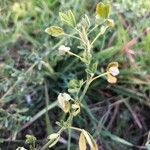
Medicago falcata
Sickle Medick · Yellow alfalfa · Yellow-flower lucerne · Yellow Lucerne · Medick
Description
Source: leafsnapMedicago falcata is a plant species of the genus Medicago. It is native to much of Europe and Asia, but is found throughout the world. It forms a symbiotic relationship with the bacterium Sinorhizobium meliloti, which is capable of nitrogen fixation. Its common names include yellow lucerne, sickle alfalfa, yellow-flowered alfalfa, yellow alfalfa, sickle medick and yellow medick.
💡 Medick is often mistaken for clover. According to a story, while Napoleon was once marching across a grassland, he noticed a medick. Intrigued, he bent down to pick it up. At that moment, a bullet was fired, and by bending down, Napoleon avoided it and survived. Because of this incident, medick has come to be recognized as a symbol of luck.
🌳 Aside from its usual uses, sickle medick serves as high-quality, protein-rich feed for livestock, especially in Europe and Asia. Its tolerance of harsh climatic conditions and its effective nitrogen-fixing ability make it a sustainable option for animal nutrition. Because of its concentrated protein and other beneficial nutrients, sickle medick is increasingly seen as a valuable component of animal diets, providing an alternative to more conventional forage crops.
Care Guide
💧 Water
Sickle medick flourishes in moderately humid environments and exhibits a moderate tolerance to drought. For optimal growth, water it once a week, as it can handle variations in water availability quite well. This herbaceous plant is adaptable and capable of withstanding low rainfall during its growing season.
How should I water my Sickle medick plant?
To water Sickle medick, you have various options such as using a garden hose with a spray nozzle, a watering can, or any other common watering tool. This plant is not too fussy about the source of water, whether it's rainwater, tap water, or filtered water. However, it's generally recommended to avoid watering this plant from overhead as it can harm the leaves and flowers and potentially cause diseases. A drip irrigation system is often the best watering method for Sickle medick, as it ensures even and direct application of water to the soil. If you have Sickle medick in a container, you can follow a similar approach using a cup, watering can, or tap water to water the plant directly at the soil level.
What should I do if I give my Sickle medick plant too much or too little water?
To fix underwatering of Sickle medick, simply water it more regularly when you notice it lacks moisture. Overwatering, on the other hand, can be much worse. If not detected early, it can lead to diseases and the decline and death of the plant. To prevent this, choose a growing location with sunlight to dry the soil and good drainage to avoid water pooling. If your potted Sickle medick is overwatered, consider changing it to a new pot with better drainage. Use loose soil and an efficiently draining pot when repotting.
How frequently should I water my Sickle medick plant?
For the optimal growth of Sickle medick, it is important to provide regular watering throughout the growing season. Initially, in spring, watering once a week is sufficient. However, as the season progresses and temperatures rise, you may need to increase watering to two to three times per week. It is important not to exceed this rate as it can harm the plant. In addition, it is crucial to maintain moist soil without overwatering, regardless of the watering frequency. When it comes to potted Sickle medick, watering frequency should be higher compared to ground-planted ones. Potted soil tends to heat up and dry out faster, so watering a few times per week is usually necessary, unlike the once-a-week watering for ground-planted plants.
How much water does my Sickle medick plant need?
There are a few ways to decide how much water your Sickle medick needs. Some gardeners prefer to check the soil moisture by feeling it. In this method, you should water until the top six inches of soil feel moist. Alternatively, you can use a specific measurement as a guide. Normally, about two gallons per week should be enough, depending on the heat and soil dryness. However, be cautious not to overwater if your plant requires less. When growing Sickle medick in a container, a different approach is needed. To determine the water amount, make sure all layers of soil are moist. You can check by sticking your finger in the soil or by allowing some excess water to drain from the pot.
How can I know if I'm giving my Sickle medick enough water?
Avoiding overwatering your Sickle medick can be a bit challenging. These plants have deep roots and need the soil to be moistened weekly, but they are also prone to root rot and browning if overwatered. Underwatering is less likely as these plants can survive without additional watering for a while. However, if you go too long without watering, the plant will likely wilt and you may notice dry leaves.
☀️ Light Full sun
For optimal growth, sickle medick needs plentiful exposure to sunlight. Its native environment offers naturally abundant sun, and it does not have any particular tolerance for limited light. Both overly intense and too little sunlight can influence the plant's growth, so a consistent amount of sun is important for its overall health.
What are the sunlight requirements for Sickle medick?
Sickle medick thrives in an environment that receives full sun, defined as more than 6 hours of sunlight daily. It's crucial to observe how sunlight moves through your garden to ensure your plants are placed in locations that offer an ideal balance of light and shade. This careful placement ensures the plants' well-being by providing them with the necessary conditions for optimal growth.
What are the essentials for growing Sickle medick?
To grow healthily, Sickle medick requires a significant amount of sunlight, mirroring its native habitat that is rich in natural light. Lack of sufficient sunlight or excessive exposure can adversely affect its growth. In scenarios where natural sunlight is not enough, especially during winter or in less sunlit areas, artificial lighting can be a game-changer. LED lights are recommended for indoor plants as they can be tailored to emit specific light wavelengths needed by the plants. Depending on the plant's natural habitat, the wattage for artificial lighting varies; full sun plants need 30-50W/sq ft, partial sun plants require 20-30W/sq ft, and full shade plants need 10-20W/sq ft. The correct positioning of the light source and duration of exposure are crucial for mimicking natural light conditions.
What are the symptoms of inadequate light in Sickle medick?
When Sickle medick does not receive enough light, it manifests several symptoms: smaller new leaves that may grow in comparison to older ones, leggy or sparse growth indicating inadequate light, premature leaf drop to conserve resources, halted or no new growth as the plant shifts to survival mode, lighter-colored new leaves due to insufficient sunlight affecting chlorophyll production, and various symptoms of too much light, such as chlorosis, sunscald, leaf curling, wilting, and leaf scorching. These symptoms signal either an excess or deficiency in sunlight exposure, affecting the plant's health.
What are the solutions for light-related issues in Sickle medick?
For indoor Sickle medicks experiencing light deficiency, a gradual shift to a sunnier spot is recommended until the plant receives at least 6 hours of direct sunlight daily. Utilizing a south-facing window can help maximize sunlight exposure. If moving the plant isn't feasible, consider artificial lighting, keeping it on for a minimum of 8 hours each day. For outdoor plants, a gradual transition to sunnier locations is advisable to prevent sunburn, emphasizing the avoidance of abrupt light intensity changes. Additionally, for ground-planted Sickle medicks, identify and reduce obstructions like overhanging branches that block sunlight, or consider transplanting smaller plants during their dormant phase to more sunlit locations with good drainage, ensuring healthier growth.
🌡️ Temperature 0–35°C
Sickle medick can tolerate a wide range of temperature conditions, but its distribution may still be restricted by particular combinations of water and heat. It does best in warm summer climates with sufficient rainfall or watering. Extended periods of cloudy, rainy weather, as well as prolonged high temperatures, can raise the chance of Sickle medick dying. In winter, suitable protection from cold can increase the plant's survival rate.
What is Sickle medick?
Sickle medick, known botanically as Medicago falcata, is a species of the Medicago genus. Its name derives from the characteristic sickle shape of its pods. Unfortunately, there were no details provided about its essentials or symptoms related to this plant within the provided information.
💨 Humidity
🪴 Soil 6-7
🌱 Fertilizer
Regular, light applications of fertilizer encourage healthy leaf growth in Sickle medick. You should fertilize Sickle medick roughly once a month during the summer. Nitrogen is vital for foliage, and supplying nitrogen-rich sources helps Sickle medick thrive.
🪴 Pot & Repot
✂️ Pruning
Sickle medick is known for its distinctive sickle-shaped seed pods and bright yellow flowers. To keep the plant in good shape, promote healthy growth, and enhance flowering, it is important to prune it regularly from early to late spring. Make sure to use clean, sharp tools to ensure precise cuts and to promote the plant’s overall vigor.
🌿 Propagating
🐛 Diseases & pets
☠️ Toxicity
Characteristics
- Plant Type
- Herb
- Life Cycle
- Annual, Perennial
- Genus
- Medicago
- Family
- Fabaceae
- Hardiness Zone
- 3-9
- Mature Height
- 0.2 m to 1.22 m
- Mature Spread
- 40 cm to 61 cm
- Leaf Color
- Green, Dark Green
- Leaf Type
- Deciduous
- Flower Color
- Yellow
- Flower Size
- 0.51 cm to 1.02 cm
- Bloom Time
- Late spring, Early summer, Mid summer
- Planting Time
- Spring, Autumn
- Harvest Time
- Mid summer
- Native Area
- Turkey, Sweden, India, Austria, Slovakia, Montenegro, Pakistan, Slovenia, Croatia, Belarus, Uzbekistan, Russia, Germany, Estonia, Romania, Latvia, Belgium, Moldova, Portugal, Nepal, Netherlands, France, Tajikistan, Czech Republic, Bulgaria, Armenia, Poland, Greece, Ukraine, Serbia, Lebanon, Lithuania, Norway, China, Syria, Kyrgyzstan, Kazakhstan, Italy, Spain, Switzerland, Denmark, Mongolia, Finland, Albania, Ireland, United Kingdom, Hungary, Azerbaijan, Turkmenistan