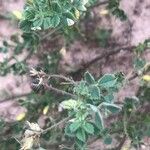
Medicago littoralis
Shore medick · Strand medic · Water medick · Strand medick · Harbinger's medick
Description
Source: leafsnapMedicago littoralis, commonly known as the seashore medick, is a species of flowering plant in the legume family. Native to coastal regions of Europe and North Africa, it has also been introduced to other parts of the world. The plant typically grows in sandy or rocky soils near the coast and can tolerate salt spray. Medicago littoralis is a low-growing annual or perennial herb that can reach up to 30 cm in height. It features trifoliate leaves that are green-grey in color and small yellow flowers that bloom from May to September. These flowers are followed by small pods containing seeds. Historically, the seashore medick has been used for centuries as a medicinal herb to treat various ailments, including respiratory problems, digestive issues, and skin conditions. Additionally, it serves as an important food source for livestock grazing in coastal areas. Beyond its medicinal properties, Medicago littoralis plays a crucial role in coastal ecosystems. Its deep root system helps stabilize sand dunes, while the plant provides habitat for insects such as bees. Overall, Medicago littoralis is a valuable plant species with ecological significance along coastlines worldwide, offering both traditional medicinal benefits and important environmental contributions.
💡 Medick is often mistaken for clover. According to a story, while Napoleon was once marching across a grassland, he noticed a medick. Intrigued, he bent down to pick it up. At that moment, a bullet was fired, and by bending down, Napoleon avoided it and survived. Because of this incident, medick has come to be recognized as a symbol of luck.
Care Guide
💧 Water Every 7 days
Coastal medick, native to seaside areas, adapts well to environments with different moisture levels. It should be watered moderately once a week and is best grown outdoors. Applying mulch is advantageous, as it helps retain soil moisture and mimics the plant's natural habitat. This practice boosts the plant's resilience and tolerance to drought.
How can I water my Coastal medick plant in the best way?
There are several ways to water Coastal medick, including using a garden hose with a spray nozzle or a watering can. This plant is not too particular about its water source and can thrive with rainwater, tap water, or filtered water. It's best to avoid watering this plant from above as it can harm the leaves and flowers and potentially cause disease. Instead, setting up a drip irrigation system is often the most effective watering method for Coastal medick. This system applies water evenly and directly to the soil. If you have a container-grown Coastal medick, you can use a cup, watering can, or tap water to water it directly into the soil.
What do I do if I give my Coastal medick plant too much water or too little water?
To remedy underwatering Coastal medick, simply start watering it more regularly when you notice it lacks moisture. On the other hand, overwatering can be a more serious problem, leading to diseases and the plant's decline. To prevent this, choose a proper location with plenty of sunlight to dry the soil and good drainage to avoid waterlogged soil. If you have overwatered a potted medick, consider transferring it to a new pot with better drainage and loose soil.
How often should I give water to my Coastal medick?
Coastal medick requires regular watering throughout the growing season. In spring, aim to water it once a week. As the season progresses and gets warmer, consider increasing watering to two or three times per week. However, be cautious about exceeding this rate as it could harm the plant. Keep in mind that the soil should remain moist but not overly wet, regardless of the watering frequency. When it comes to Coastal medick in pots, watering needs are slightly different. Potted plants tend to dry out faster, so you may need to water them more frequently. In most cases, plan for a few times per week compared to only once a week for plants in the ground.
How much water does my Coastal medick plant need?
Determining the appropriate amount of water for your Coastal medick can be approached in a few different ways. One method involves judging the moisture in the soil by feel. In this case, you would water until the top six inches of soil are moist. Alternatively, you can use a specific measurement to guide your watering. Generally, Coastal medick needs about two gallons of water per week, but factors like temperature and soil dryness may affect this amount. It is important to note that strictly following these guidelines without considering your plant's specific needs could lead to overwatering. When growing Coastal medick in a container, a different approach is necessary. You should water until all layers of soil have dried out, and you can test this by sticking your finger in the soil. Another indicator is when you see a small amount of excess water draining from the pot's holes.
How do I know if I am giving enough water to my Coastal medick plant?
Avoiding overwatering your Coastal medick can be somewhat difficult. On one hand, these plants need weekly watering to keep their deep roots moistened. However, Coastal medick is highly susceptible to root rot, which can cause browning of the plant. Underwatering is less likely to occur, as these plants can survive without supplemental watering for a while. However, if you wait too long to water, the plant will begin to wilt and you may notice dry leaves.
☀️ Light Full sun
Coastal medick comes from bright, open habitats and does best in full sun. It tolerates partial sun but favors direct sunlight for optimal growth. This annual or biennial plant is noted for its sun-loving character.
What are the sunlight requirements for Coastal medick?
Coastal medick, known botanically as Medicago littoralis, thrives in environments that offer full sun, requiring above 6 hours of sunlight daily for optimal growth. It can also tolerate partial sun, needing about 3-6 hours of sunlight. However, for the plant to truly flourish, direct sunlight is preferred. Observing the movement of sunlight through your garden and choosing locations that provide a balance of light and shade will contribute to the health and happiness of your plants.
How does artificial lighting support plant growth indoors?
Indoor plants, including those requiring full sun like Coastal medick, can benefit significantly from artificial lighting, especially when natural sunlight is insufficient. This is often the case in winter or in less sunny spaces. Artificial lights, such as LED lights, are favored for their ability to mimic the necessary wavelengths of light needed by plants. For plants requiring full sun, 30-50W per square foot is recommended, 20-30W per square foot for partial sun plants, and 10-20W per square foot for full shade plants. The light source should be placed 12-36 inches above the plant, mimicking natural sunlight's distance, and plants typically need 8-12 hours of light per day to mimic natural daylight hours effectively.
What are the symptoms of light deficiency in Coastal medick?
When Coastal medick is grown indoors or in conditions with inadequate light, it may exhibit several symptoms indicating light deficiency. These include smaller new leaves, leggy or sparse growth, accelerated leaf drop, slower or halted new growth, and the development of pale or irregularly colored new leaves. Conditions like chlorosis, where leaves lose their green color, sunscald from too much light, leaf curling as a defensive mechanism against excessive light, wilting due to loss of water, and leaf scorching characterized by brown, crispy leaf edges are also observable symptoms.
What solutions are available for managing insufficient sunlight for Coastal medick?
To manage insufficient sunlight for Coastal medick, both indoor and outdoor strategies can be employed. Indoors, gradually increasing direct sunlight exposure to at least 6 hours or using artificial light for large or non-movable plants is advised. A desk or ceiling lamp turned on for 8 hours daily, or professional plant grow lights can provide ample light. Outdoors, gradually moving plants to sunnier locations each week helps, avoiding sudden changes to prevent sunburn. Obstructions like trees may be pruned to allow more sunlight to reach the plants. For smaller plants, transplanting during the dormant period (late winter or early spring) to a sunnier location with good drainage can be effective. Note that while parts of the plant affected by light deficiency may not recover, new growth after adjusting light exposure should be healthy.
🌡️ Temperature 15–37.8°C
Coastal medick can tolerate a wide range of temperatures, though its range may still be restricted by varying combinations of moisture and heat. It performs best in warm summer conditions with sufficient rainfall or irrigation. Extended periods of cloudy, rainy weather or prolonged high temperatures can raise the likelihood of Coastal medick dying. In winter, adequate protection from cold can increase the plant's chances of survival.
💨 Humidity
🪴 Soil 6-7
🌱 Fertilizer
Coastal medick benefits from regular, weak applications of fertilizer to encourage healthy leaf growth. Fertilize Coastal medick about once a month during the summer. Nitrogen is essential for foliage, and adding nitrogen-rich sources helps Coastal medick thrive.
🪴 Pot & Repot
✂️ Pruning
Coastal medick is a low-growing, drought-resistant legume that benefits from strategic pruning between early and late spring. This practice encourages new growth and helps maintain the plant's shape. Regularly removing dead or damaged stems improves air circulation and promotes healthy growth, which in turn extends the plant's lifespan.
🌿 Propagating
🐛 Diseases & pets
☠️ Toxicity
Characteristics
- Plant Type
- Herb
- Life Cycle
- Annual
- Genus
- Medicago
- Family
- Fabaceae
- Hardiness Zone
- 8-11
- Mature Height
- 10 cm to 30 cm
- Mature Spread
- 20 cm to 49 cm
- Leaf Color
- Green, Dark Green
- Leaf Type
- Semi-evergreen
- Flower Color
- Yellow
- Flower Size
- 0.51 cm to 0.76 cm
- Bloom Time
- Mid spring, Late spring, Early summer
- Planting Time
- Spring, Summer
- Harvest Time
- Summer
- Native Area
- Libya, Egypt, Turkey, Tunisia, Montenegro, Cyprus, Bulgaria, Greece, Croatia, Morocco, Lebanon, Portugal, Syria, Italy, Spain, Iran, Albania, Azerbaijan, Algeria, France