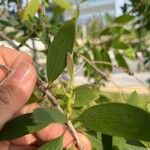
Melaleuca cajuputi
Cajaput · Cajaput-tree · Cajeput · Cajuput · Paperbark teatree
Description
Source: wikipedia (CC BY-SA)Melaleuca cajuputi, commonly known as cajuput or white samet is a plant in the myrtle family, Myrtaceae and is widespread in Australia, Southeast Asia, New Guinea and the Torres Strait islands. It is a medium to tall tree with papery bark, silvery new growth and white or greenish flower spikes. It has important uses as a source of cajuput oil.
Care Guide
💧 Water
☀️ Light Full sun
Cajuput is a vegetation that flourishes when exposed to plenty of sunlight, promoting robust growth. The plant can also survive in partially shaded areas, but this condition could potentially retard its growth. It is usually found in areas teeming with sunlight. Too much or too little sunlight can influence its health, as insufficient light can inhibit growth while too much of it might lead to leaf scorch.
🌡️ Temperature 0–37.8°C
Cajuput originates from areas where temperature varies between 32 to 100.4 °F (0 to 38 °C). It thrives in moderate climates with ample sunlight. To ensure the best health of the plant, its environment should reflect these conditions, making seasonal changes as needed.
💨 Humidity
🪴 Soil 6-7
🌱 Fertilizer
The timing of fertilizing Cajuput is vital. You should start in the early spring and continue on a monthly basis until the start of summer. Fertilizer not only aids in the growth of beautiful blossoms but also imparts energy during the periods of rest and vigorous growth.
🪴 Pot & Repot
✂️ Pruning
🌿 Propagating
🐛 Diseases & pets
☠️ Toxicity
Characteristics
- Plant Type
- Tree
- Life Cycle
- Perennial
- Hardiness Zone
- 2-11
- Mature Height
- 35.05 m to 46.02 m
- Mature Spread
- 1.22 m to 1.52 m
- Leaf Color
- Dark Green, Gray
- Leaf Type
- Evergreen
- Flower Color
- White
- Flower Size
- 1.02 cm
- Bloom Time
- Summer, Early fall, Mid fall
- Planting Time
- Summer, Autumn
- Harvest Time
- Fall, Early winter, Mid winter