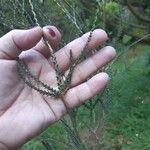
Melaleuca huegelii
Chenille honey myrtle · Chenille honeymyrtle · Honey myrtle
Description
Source: leafsnapMelaleuca huegelii, commonly known as chenille honey-myrtle, is a plant in the myrtle family, Myrtaceae and is endemic to the south-west coastal areas of Western Australia. It has small, almost scale-like leaves and flower spikes sometimes more than 100 millimetres (4 in) long on the ends many of its branches.
Care Guide
💧 Water
☀️ Light Full sun
Chenille honeymyrtle comes from open habitats, like sunny meadows and forest margins, where light is plentiful. It does best in Full Sun but can also tolerate Partial Sun, adjusting well to different light conditions.
What are the sunlight requirements for a Chenille honeymyrtle?
Chenille honeymyrtle (Melaleuca huegelii) thrives in various sunlight conditions. For 'Full sun', it requires above 6 hours of sunlight per day, ensuring the plant receives plenty of light for optimal growth. For 'Partial sun', about 3-6 hours of sunlight per day is adequate, allowing it to flourish with a mix of light and shade. It's important to observe how sunlight moves through your garden, selecting spots that provide a harmony of light and shade to meet the needs of your Chenille honeymyrtle, ensuring its wellbeing.
🌡️ Temperature 5–25°C
Chenille honeymyrtle is highly adaptable to different climate conditions, from very hot summers to cold winters. Still, it has a preferred temperature range for growth. If temperatures get too high, the plant is vulnerable to heat and humidity stress, which can lead to its death. In areas where temperatures approach the lower limit of its cold tolerance, it is important to provide insulation to protect the plant.
What is the botanical name of the Chenille honeymyrtle?
The botanical name for Chenille honeymyrtle is Melaleuca huegelii.
💨 Humidity
🪴 Soil 6-7
🌱 Fertilizer
Proper timing is important when fertilizing Chenille honeymyrtle. Apply fertilizer in early spring and repeat it monthly until early summer. Fertilizer encourages attractive blooms and supplies energy during both dormant and active growth phases.
🪴 Pot & Repot
✂️ Pruning
Prune your chenille honeymyrtle during its dormant period, from early to late winter, to maintain its shape and promote new growth. Use sharp shears to remove any dead branches and thin out dense areas to improve air circulation. Regular pruning not only increases flowering vigor but also helps control the plant's size, ensuring its overall health and aesthetic appeal.
🌿 Propagating
🐛 Diseases & pets
☠️ Toxicity
Characteristics
- Plant Type
- Shrub
- Life Cycle
- Perennial
- Genus
- Melaleuca
- Family
- Myrtaceae
- Hardiness Zone
- 4
- Mature Height
- 5 m
- Mature Spread
- 2.13 m to 3.05 m
- Leaf Color
- Green
- Leaf Type
- Evergreen
- Flower Color
- White, Cream, Pink
- Flower Size
- 1.02 cm to 1.52 cm
- Bloom Time
- Mid fall, Late fall, Early winter
- Planting Time
- Spring, Summer, Autumn
- Harvest Time
- Mid winter, Late winter, Early spring