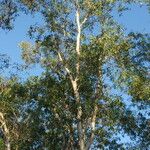
Melaleuca leucadendra
Cajaput-tree · Longleaf paperbark · Paperbark · Paperbark teatree · Paperbark-tree
Description
Source: leafsnapMelaleuca leucadendra, commonly known as weeping paperbark, long-leaved paperbark or white paperbark is a plant in the myrtle family, Myrtaceae and is widespread in northern Australia, Southeast Asia, New Guinea and the Torres Strait Islands. It is a tree, sometimes growing to more than 20 m (70 ft) with a trunk covered with thick, white, papery bark and weeping thinner branches. It has a long flowering season, can flower at almost any time of the year and is often grown as a tree in parks and on roadsides. It was the first melaleuca to be described and was described from a specimen growing in Indonesia.
Care Guide
💧 Water
The weeping paperbark is a drought-tolerant plant that needs watering every 2-3 weeks when cultivated. It thrives in soil conditions that replicate its natural habitat, which often includes areas near watercourses. Its root system is highly adaptable to changing water levels, making it an excellent choice for riparian landscapes.
☀️ Light Full sun
The weeping paperbark grows exceptionally well with plenty of sunlight but can also tolerate moderate light. Its vigorous development is largely due to its native habitat, which is high in sunlight. Excessive sun can cause the leaves to yellow, while too little light leads to a less vigorous plant.
What are the sunlight requirements for the Weeping Paperbark (Melaleuca leucadendra)?
The Weeping Paperbark requires generous sunlight exposure to thrive, ideally flourishing under full sun conditions with more than 6 hours of sunlight daily. However, it can also manage well under partial sun, which means about 3-6 hours of sunlight each day. It's essential to observe your garden's lighting throughout the day to find the perfect balance of light and shade for optimal plant health. The plant's native environment is rich in sunlight, contributing to its robust growth. Nevertheless, too much sunlight may lead to leaf yellowing, while insufficient sun could make the plant less vigorous.
How can artificial lighting be used for the Weeping Paperbark indoor?
Indoor Weeping Paperbarks require adequate lighting for optimal growth, especially when natural sunlight is insufficient. Artificial lighting, such as LED lights, can be an excellent solution, supporting faster and healthier growth. Full sun plants, including the Weeping Paperbark, need 30-50W/sq ft of light, with the light source placed 12-36 inches above the plant to mimic the natural sun. It's also crucial to mimic natural daylight hours, ensuring most plants receive 8-12 hours of light per day, to cater to the Weeping Paperbark's lighting needs indoors.
What are the symptoms of inadequate sunlight exposure in Weeping Paperbark?
Weeping Paperbarks exhibit various symptoms when they don't receive adequate sunlight. These include smaller new leaves than the previous ones, leggy or sparse growth due to longer spaces between leaves or stems, and faster leaf drop as a resource conservation measure. The plant may also experience slower or no new growth, lighter-colored new leaves indicating a lack of chlorophyll, and conditions like chlorosis where leaves lose their green color. Excessive sunlight, conversely, can cause symptoms like sunscald, leaf curling as a defense against water loss, wilting from excessive transpiration, and leaf scorching characterized by brown, dry edges on leaves.
What solutions are available for dealing with insufficient sunlight for Weeping Paperbark?
For Weeping Paperbarks facing insufficient sunlight, gradual relocation to sunnier spots is advisable, striving for at least 6 hours of direct sunlight daily. Indoors, this can be achieved by utilizing south-facing windows and keeping them unobstructed during the day. Artificial lighting, such as desk or ceiling lamps, can also supplement light exposure for 8 hours daily. Outdoors, it's important to move plants gradually to prevent sunburn. Additionally, reducing obstructions like pruning trees or relocating plants can improve sunlight access. However, it's crucial to note that parts of the plant already affected by low light might not recover, but new growth will be healthy with improved lighting conditions.
🌡️ Temperature 20–37.8°C
Weeping paperbark comes from tropical areas, where the climate is generally warm and humid. As a result, it is adapted to high temperatures and humidity. It dislikes sudden temperature changes and prefers a stable temperature environment, so avoiding temperature fluctuations indoors is important. It generally cannot tolerate cold and needs higher temperatures to grow. If the environmental temperature becomes too low, the plant may stop growing or even die.
What is the botanical name of the Weeping paperbark?
The botanical name of the Weeping paperbark is Melaleuca leucadendra.
💨 Humidity
🪴 Soil 5-7
🌱 Fertilizer
The best time to fertilize a Weeping paperbark is in early spring, as it comes out of dormancy. Doing so encourages overall growth and flower development. Fertilization improves the foliage, stems, and branches and promotes flowers that are larger, more vibrant, and longer-lasting. It helps move nutrients from the roots to the flowers and enhances the plant’s health and resistance to disease.
🪴 Pot & Repot
✂️ Pruning
The weeping paperbark is known for its graceful, cascading foliage and distinctive exfoliating bark. To keep it healthy, prune the tree from early to late winter, concentrating on removing dead branches to improve airflow. Light pruning is beneficial as it encourages new growth while preserving the tree’s shape. Always use clean tools to prevent the spread of disease. Proper pruning not only enhances the health of the weeping paperbark but also improves its ornamental beauty.
🌿 Propagating
🐛 Diseases & pets
☠️ Toxicity
Characteristics
- Plant Type
- Tree
- Life Cycle
- Perennial
- Genus
- Melaleuca
- Family
- Myrtaceae
- Hardiness Zone
- 10-12
- Mature Height
- 20.12 m to 29.87 m
- Mature Spread
- 20.12 m
- Leaf Color
- Green
- Leaf Type
- Evergreen
- Flower Color
- White
- Flower Size
- 2.54 cm to 3.05 cm
- Bloom Time
- Summer, Early fall, Mid fall
- Planting Time
- Spring, Summer, Autumn
- Harvest Time
- Fall, Early winter, Mid winter
- Native Area
- Vietnam, Laos