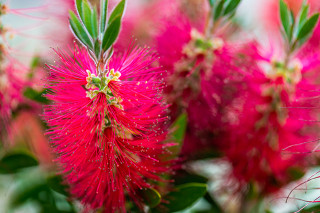
Melaleuca viminalis
Red bottlebrush · Weeping bottlebrush · Creek bottlebrush · Drooping bottlebrush · Dawson River
Description
Source: leafsnapA fast-growing tree famed for its cascading branches and fiery red blossoms, the Red Cascade weeping bottlebrush is also known as the "firework tree." The red blooms, which are cylindrical and resemble bristles, are most common in the spring and summer but can also be seen sporadically in the fall. Hummingbirds, bees, and butterflies are attracted to the spiky blossoms because of their beautiful, conspicuous stamens. Small animals are drawn to the plant's brown, spherical, hard fruits and eat them. The slender, gray-green leaves of this tree, sometimes known as Red Cascade, are evergreen. Bark that is scruffy and gray-green covers the branches that are weeping.
Care Guide
💧 Water
☀️ Light
🌡️ Temperature
Although a weeping bottlebrush may withstand a brief freeze, it dislikes frost, especially when it is young. Wrapping your plant in plastic will help keep it warm over the winter and prevent frost. To minimize diseases like leaf spot and powdery mildew, keep the plant well-ventilated. If you're growing a weeping bottlebrush in a container, keep it indoors until the last frost to protect it from freezing.
💨 Humidity
🪴 Soil
🌱 Fertilizer
Weeping bottlebrushes benefit from routine fertilizing much like other plants. Early spring is the best time to use a general-purpose fertilizer to encourage flowering and sound growth. During the warmer months, treat your plants with a phosphorus-rich fertilizer once a month to promote blossom development. High nitrogen fertilizers should be avoided since they promote foliage growth at the expense of flower production.
🪴 Pot & Repot
✂️ Pruning
Light pruning aids in plant form maintenance, while it is not required. Weeping bottlebrush can be softly pruned at any time of the year, but heavier pruning should only be done in late winter or early spring just before blossoming. If you wish to shape your weeping bottlebrush, use a pair of clean, sharp pruning shears to cut away any stray branches and dead or diseased wood.
🌿 Propagating
🐛 Diseases & pets
☠️ Toxicity
The bottlebrush buckeye's leaves and seeds in particular are extremely poisonous, and consumption by humans or animals can be lethal. Prickly bottlebrush, often known as bottlebrush, is a leafy evergreen that can be grown as a tree or shrub and has stunning crimson blossoms. The bottlebrush is a well-liked landscaping element in the Southwest and is not poisonous to cats or dogs.
Characteristics
- Plant Type
- Tree, shrub
- Genus
- Melaleuca
- Family
- Myrtaceae
- Hardiness Zone
- 9-11
- Bloom Time
- Spring, summer
- Native Area
- Australia