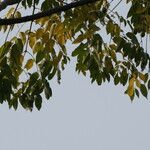
Melia dubia
Ceylon cedar · Malabar Neem
Description
Source: wikipedia (CC BY-SA)Melia dubia, commonly known as Malabar Neem, Maha Neem, Gora Neem, or Barma Dhek, is one of the most important industrial tree species that has rapidly expanded in the Indian subcontinent in recent decades. It belongs to the family Meliaceae and is widely cultivated for its industrial and medicinal qualities.
🌳 Examining the Chinaberry tree shows it is resilient and full of surprises. Dubbed the "nightmare tree" for bugs, its foliage acts as a natural insect deterrent, confirmed by research. Beads made from the Chinaberry tree underscore its unexpected role in artistic pursuits. Its untapped potential includes extracting oil from its seeds, which could aid skin conditions.
🎭 Suppression, optimism, resilience
Care Guide
💧 Water
☀️ Light Full sun
The chinaberry tree grows best with plenty of sunlight but can also tolerate reduced light. Native to areas with abundant sun, it withstands a range of light conditions without hindering its growth. An imbalance in light, however, can adversely affect its vigor and overall health.
🌡️ Temperature 15–37.8°C
Chinaberry trees are native to tropical regions and do best in temperatures from 59 to 100 °F (15 to 38 °C). In cooler conditions they may drop their leaves but will grow them back when it becomes warmer. It isn't necessary to alter temperatures with the seasons, though they should be protected from frost or extreme heat.
💨 Humidity
🪴 Soil 6-7
🌱 Fertilizer
Fertilize your Chinaberry tree in early spring to encourage healthy growth. Consistent feeding improves the tree’s overall health, leading to strong growth, increased tolerance of harsh conditions, and enhanced resistance to pests and diseases. Keep a regular fertilization routine for your Chinaberry tree to maintain richly colored, vibrant foliage and a full, lush look.
🪴 Pot & Repot
✂️ Pruning
🌿 Propagating
🐛 Diseases & pets
☠️ Toxicity
Characteristics
- Plant Type
- Tree
- Life Cycle
- Perennial
- Genus
- Melia
- Family
- Meliaceae
- Hardiness Zone
- 7-11
- Mature Height
- 7.01 m to 11.89 m
- Mature Spread
- 9.14 m to 11.89 m
- Leaf Color
- Green
- Leaf Type
- Deciduous
- Flower Color
- Lavender
- Flower Size
- 1.52 cm to 1.78 cm
- Bloom Time
- Late spring, Early summer, Mid summer
- Planting Time
- Spring, Autumn
- Harvest Time
- Mid summer, Late summer, Fall
- Native Area
- Nepal, Sri Lanka, India, Malaysia, Philippines, Bangladesh, Pakistan, Laos, Indonesia, Cambodia, Vietnam, Myanmar, Japan, Papua New Guinea, Bhutan, Thailand