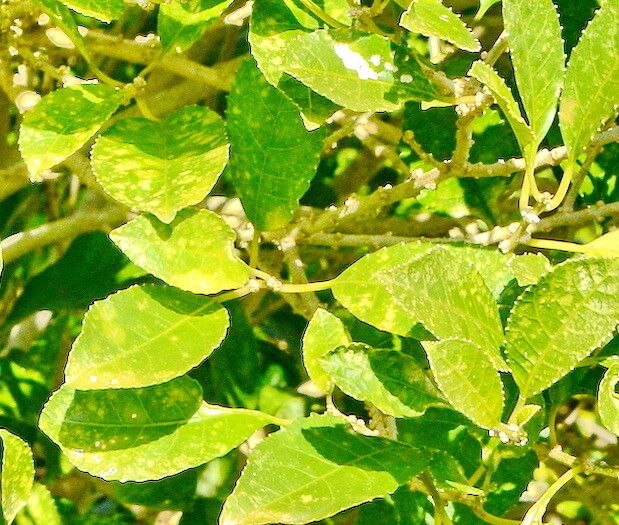
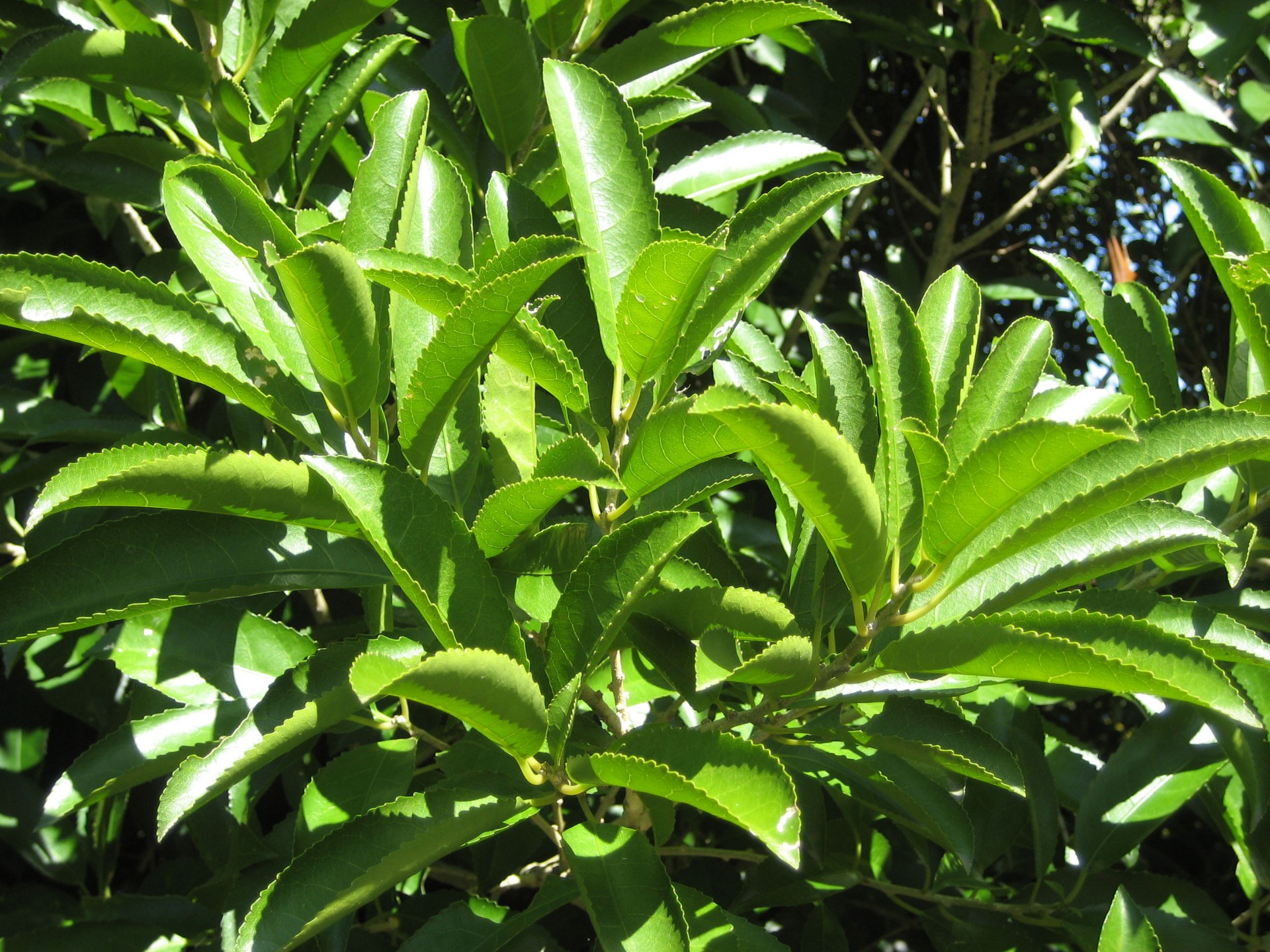
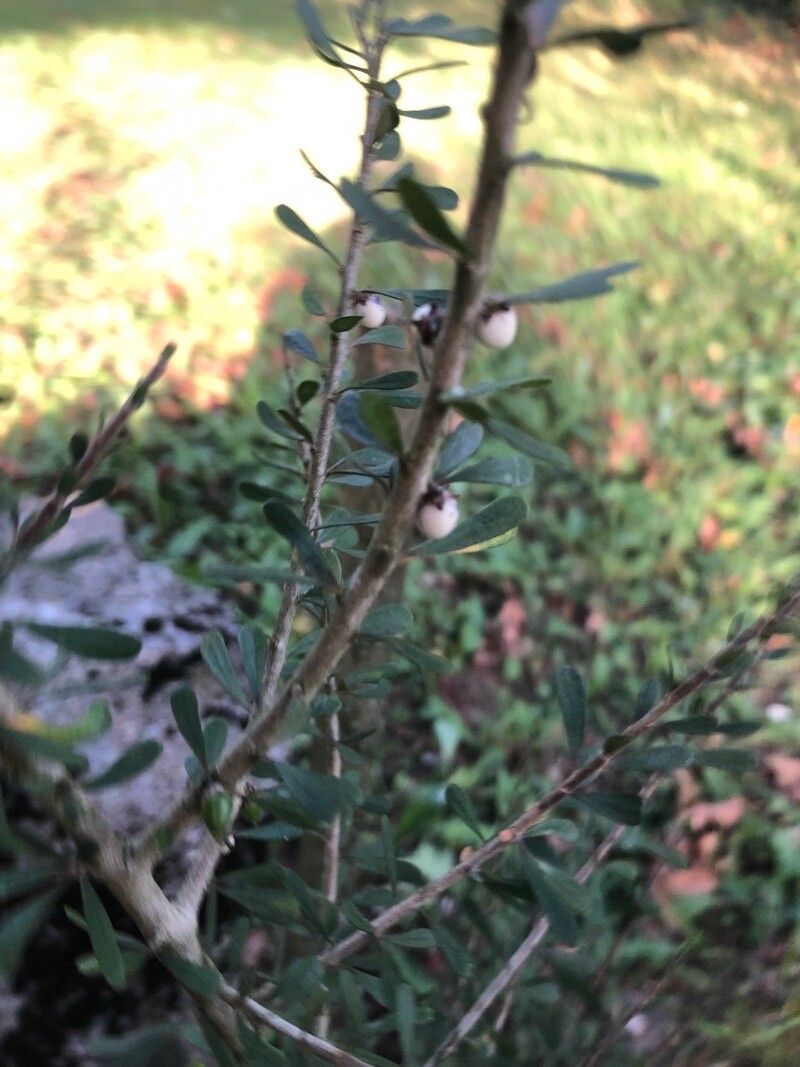
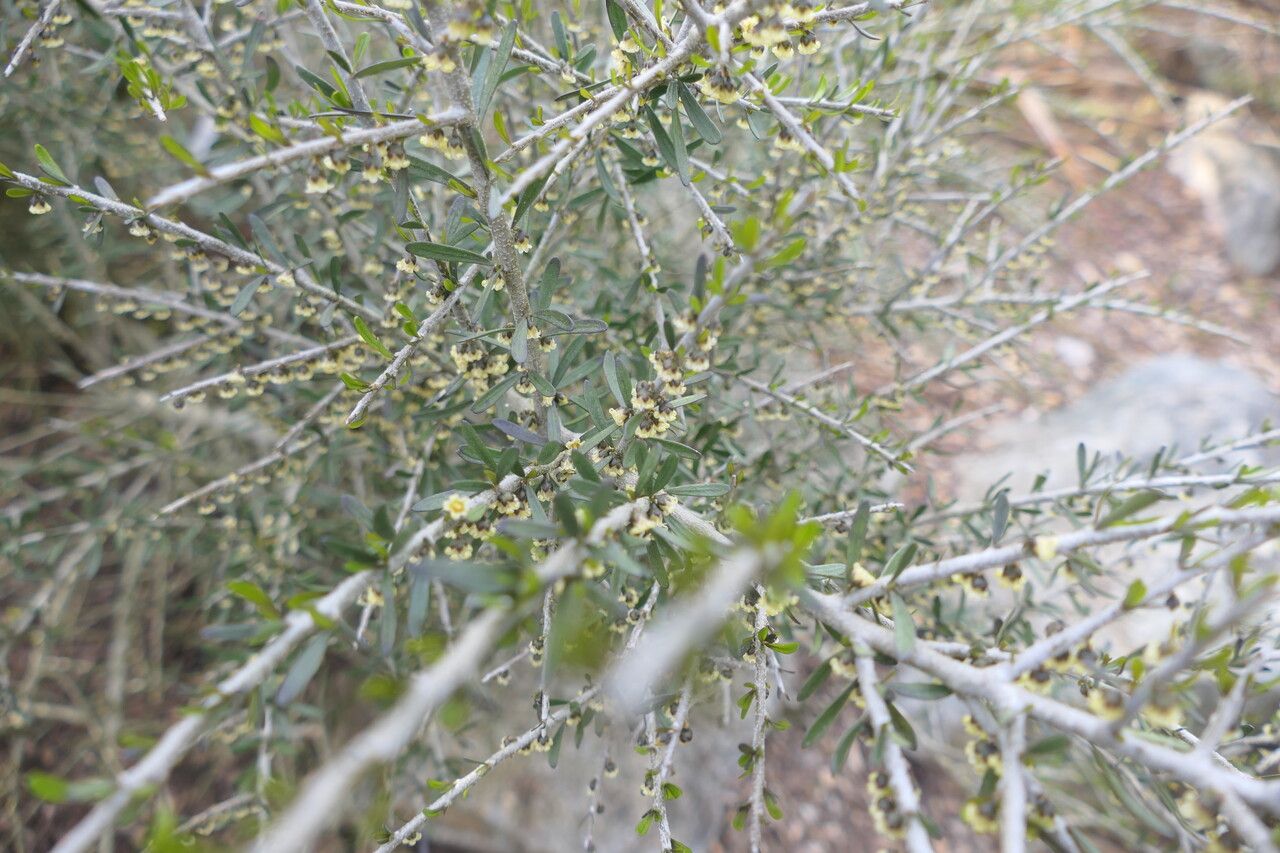
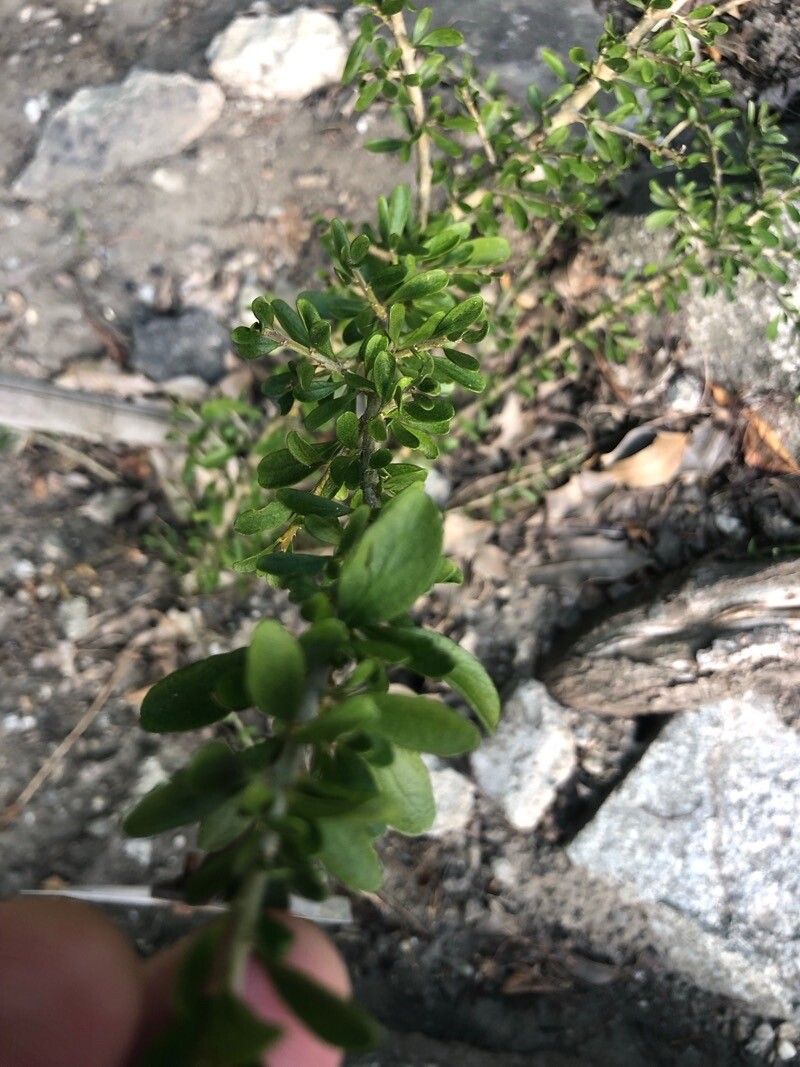
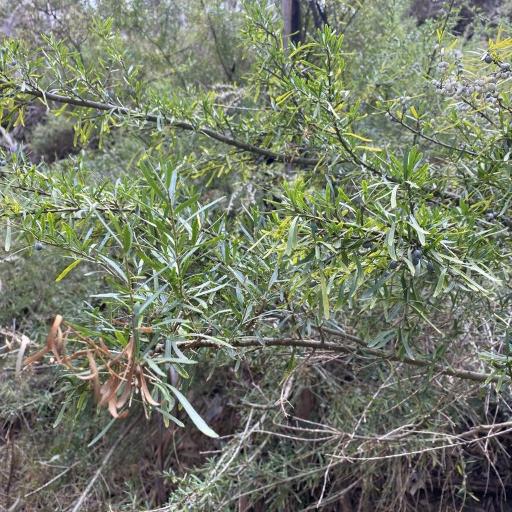
Melicytus ramiflorus (mahoe (Māori: māhoe), or whiteywood) is a small tree of the family Violaceae endemic to New Zealand. It grows up to 10 metres high with a trunk up to 60 cm in diameter, it has smooth, whitish bark and brittle twigs. The dark-green "alternate" leaves are 5–15 cm long and 3–5 cm wide and their edges are finely serrated (although this feature is less pronounced in younger plants).The plants are dioecious and the small flowers are yellowish in colouration, between 3 and 4 mm in diameter and occur in fascicles, growing straight out from naked twigs- these flowers have a strong, pleasant fragrance. The berries are a striking violet colour when ripe and are more or less spherical with a diameter of between 3 and 4 mm. Flowering occurs in late spring ( southern hemisphere )- and on into summer while the berries appear later on in summer and also in autumn. The berries of M. ramiflorus are eaten by a number of native birds, including kererū and tui, while geckos of the genus Naultinus have also been observed to supplement their primarily insectivorous diet with consumption of these berries. It is also a host species for the caterpillars of the New Zealand endemic moth Austramathes purpurea. It is ubiquitous throughout lower altitude New Zealand forests and is frequently seen in areas of regenerating forest.
Whiteywood shows good resistance to diseases and is generally not susceptible to them. Regarding care, the plant is fairly low-maintenance. When grown outdoors it needs only minimal watering, and larger plants typically do not require pruning. However, smaller plants should be pruned after they have bloomed. Whiteywoodt is appropriate for anyone with an outdoor space, such as a garden or deck, and does not require much care experience.
How to keep Melicytus Ramiflorus.
Light
Whiteywood flourishes in brightly lit surroundings and tolerates locations with moderately reduced sunlight. Its native habitat gets abundant sun exposure, which supports optimal growth. However, excessive or insufficient light can negatively affect whiteywood's health, potentially causing damage or stunted development.
Water
Whiteywood, a plant native to the temperate forests of New Zealand, thrives in environments with moderate humidity. It requires consistent moisture and should be watered every 2-3 weeks. While it is commonly grown outdoors, using mulch can be beneficial to help retain moisture, similar to the natural leaf litter found in its habitat.
Temperature
Whiteywood is naturally adapted to climates with temperatures between 59 and 100.4 °F (15 to 38 ℃). They flourish under these moderate conditions typical of their native habitat. In regions with seasonal variation, gradual adjustments to their environment will promote their growth.
Fertilizer
Fertilize your Whiteywood in early spring to encourage healthy growth. Regular fertilization improves overall health, producing vigorous growth, increased resilience to harsh conditions, and enhanced resistance to diseases and pests. Follow a specific fertilization schedule for your Whiteywood to keep the foliage vibrant with deep color and a lush appearance.
Pruning
Whiteywood boasts lush foliage and glossy leaves. For best results, prune the plant during its winter dormancy to remove any damaged branches and to improve air circulation. Regular pruning promotes healthy growth and encourages flowering, which helps to maintain the plant's overall health and appearance. By using these techniques, you can ensure optimal results.
Botanical profile.
- Plant Type
- Tree
- Life Cycle
- Perennial
- Genus
- Melicytus
- Family
- Violaceae
- Hardiness Zone
- 8-11
- Mature Height
- 10.06 m
- Mature Spread
- 4.57 m to 7.62 m
- Leaf Color
- Dark Green
- Leaf Type
- Evergreen
- Flower Color
- White
- Flower Size
- 2.54 cm
- Bloom Time
- Early spring, Mid spring, Winter
- Planting Time
- Spring
- Harvest Time
- Late spring, Early summer, Mid summer
Other names.