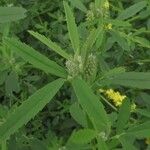
Melilotus altissimus
Tall melilot · Tall yellow sweet-clover · Yellow Melilot · Tall yellow sweetclover · Golden melilot
Description
Source: leafsnapMelilotus altissimus, known by the common names tall yellow sweetclover, tall melilot and golden melilot is a plant species of the genus Melilotus.
Care Guide
💧 Water
Tall yellow sweetclover thrives in moist environments, preferring consistent hydration. Though it has some drought tolerance, it truly flourishes in soil that remains evenly moist. For optimal health, it is recommended to water it weekly. This herbaceous plant is usually grown outdoors, where it can benefit from natural rainfall during its active growing season.
How should I water my Tall yellow sweetclover plant?
To properly water the Tall yellow sweetclover plant, use filtered water at room temperature or slightly warmer. Tap water may contain harmful particles for the plant's health. The plant prefers warm water as it is accustomed to a warm environment, avoiding the shock of cold water. Additionally, overhead watering should be avoided as it can result in foliage issues. Instead, focus on watering the soil directly with filtered room temperature water until it is completely soaked. This helps the roots absorb nutrients and facilitates their spread through the soil.
What do I need to do if I give my Tall yellow sweetclover plant too much or too little water?
Both overwatering and underwatering can harm the health of your Tall yellow sweetclover, but overwatering is more common. When this plant gets too much water, its stems and leaves may wilt and turn yellow. Overwatering for a long time can also cause diseases like root rot, mold, and mildew, which can kill the plant. Underwatering is less common because this plant tolerates drought well. However, it is still possible, and if it happens, you'll notice the leaves becoming brittle and brown. It's important to spot signs of overwatering early. Some diseases caused by overwatering, like root rot, may not be fixable if you wait too long. If you see early signs, reduce watering right away. You should also check the soil quality where the plant grows. If it drains poorly, replace it with well-draining potting mix. On the other hand, if you see signs that the plant isn't getting enough water, simply water it more regularly until the signs go away.
How often should I give water to my Tall yellow sweetclover plant?
If your Tall yellow sweetclover plant is in a pot, the most precise way to determine if it needs water is by checking the soil moisture. Simply plunge your finger into the soil and if the top two to three inches are dry, it's time to water. For those growing the Tall yellow sweetclover outdoors in the ground, you can use a similar method to test the soil. Again, if the top few inches have dried out, it's a sign to water. Generally, during the spring and early fall, watering once a week will suffice. However, in extremely hot weather, you may need to water twice or even more frequently per week. It's worth noting that mature and well-established Tall yellow sweetclover plants possess an impressive ability to withstand drought.
How much water does my tall yellow sweetclover plant need?
To properly water your Tall yellow sweetclover, don't hold back on the amount of water you give. Make sure the top two to three inches of soil are dry before watering thoroughly. The goal is to completely saturate the soil, allowing excess water to flow out of the drainage holes at the bottom of the pot. If you don't see any excess water draining, it means you haven't watered enough. However, be careful not to let water accumulate inside the soil, as that can harm the plant. On the other hand, if water doesn't drain well from the pot, it may indicate poorly draining soil, which is not good for the plant's health. In outdoor conditions, the plant will usually be fine with about 1 inch of rain per week.
How much water does my Tall yellow sweetclover need at each stage of growth?
The watering needs of the Tall yellow sweetclover vary based on its growth stages. Initially, in the first few years or after transplanting, it requires more water to support root development and future growth. As the plant matures, it will need less water. Additionally, during the bloom period, more water may be necessary to support flower development.
☀️ Light Full sun
Tall yellow sweetclover does best when it gets a generous amount of sunlight each day. Its ability to tolerate reduced sun shows its adaptability. However, too much shade can inhibit vigorous growth. Originating from open habitats where sunlight is plentiful has prepared it well for these conditions. Both insufficient and excessive light can reduce its vitality.
What are the sunlight requirements for Tall Yellow Sweetclover?
Tall yellow sweetclover requires a generous amount of sun exposure each day to thrive, ideally above 6 hours of sunlight, categorizing it as a full sun plant. It can also tolerate partial sun, about 3-6 hours of sunlight, due to its flexible nature originating from open environments with abundant sunlight. However, excessive shade can hinder its growth, and it's crucial to observe the movement of sunlight through your garden to choose the optimal spots for planting, ensuring a balance of light and shade for the plant's happiness.
How can artificial lighting benefit indoor plants like Tall Yellow Sweetclover?
Indoor plants, including Tall Yellow Sweetclover, require adequate lighting for optimal growth, especially when natural sunlight is insufficient, such as during winter or in less sunny spaces. Artificial lights offer a vital solution, promoting faster, healthier growth. LED lights are a popular choice because they can provide specific wavelengths needed by plants. For full sun plants, 30-50W/sq ft of artificial light is recommended; partial sun plants need 20-30W/sq ft, and full shade plants require 10-20W/sq ft. Position the light source 12-36 inches above the plant to mimic natural sunlight and ensure it receives 8-12 hours of light per day.
What are the symptoms of inappropriate light exposure in Tall Yellow Sweetclover?
Symptoms of inappropriate light exposure in Tall Yellow Sweetclover include small leaves, leggy or sparse growth, faster leaf drop, slower or no new growth, and lighter-colored or yellowing leaves (chlorosis). Excessive sunlight can lead to sunscald, leaf curling, wilting, and leaf scorching. These signs indicate either a deficiency or an excess of light, affecting the plant's ability to photosynthesize and maintain its health. Adjusting the light exposure can mitigate these symptoms and promote healthier growth.
How can I address light exposure issues for my Tall Yellow Sweetclover?
For indoor Tall Yellow Sweetclover plants experiencing light exposure issues, gradually move them to a sunnier location until they receive at least 6 hours of direct sunlight daily, using a south-facing window for maximum sunlight exposure. If moving the plant is not feasible or for additional light, consider using artificial lighting, keeping it on for at least 8 hours daily. For outdoor plants, move them to progressively sunnier spots each week to avoid sunburn. It's also beneficial to minimize obstructions like overhanging branches to allow more sunlight through. Transplanting smaller plants during their dormant period to a location with better light and drainage can also be effective. Note that parts of the plant affected by light deficiency may not recover, but new growth should be healthy once the light situation improves.
🌡️ Temperature 5–37.8°C
Tall yellow sweetclover is native to temperate regions and prefers temperatures between 68 and 100.4 °F (20 to 38 ℃). As a temperate species, it tolerates cooler periods, though it may require protection in severe winters or during very hot summers.
What is the ideal temperature range for Tall Yellow Sweetclover?
Tall yellow sweetclover, known botanically as Melilotus altissimus, thrives in moderate climates with an ideal temperature range between 68°F (20°C) to 100.4°F (38°C). This plant prefers temperate conditions and can endure cooler seasons. Although it possesses strong cold resistance, it might require protection against extreme weather conditions such as harsh winters or excessively hot summers to ensure its health and survival.
What measures should be taken to protect Tall Yellow Sweetclover in winter?
To protect tall yellow sweetclover during winter, especially if temperatures are forecasted to plummet below -30°C, it's advisable to cover the plant with protective materials like soil or straw. Additionally, watering the plant abundantly before the first freeze in autumn is recommended. Keeping the soil moist allows it to enter a frozen state, which helps prevent drought and water scarcity for the plant during the winter and the early part of spring.
How does low temperature affect Tall Yellow Sweetclover, and what can be done?
Tall yellow sweetclover is cold-tolerant and flourishes best when the temperature remains above 20°C. Keeping the plant’s environment above 0°C during winter is crucial. When temperatures dip below -30°C, the plant may not show immediate distress, but the decrease in or lack of sprouting in the following spring could be a problem. To manage this, removing parts that failed to sprout in spring is a viable solution.
What are the symptoms of high temperature stress on Tall Yellow Sweetclover, and how can they be mitigated?
When exposed to high temperatures, especially above 38°C and reaching 43°C, the Tall yellow sweetclover exhibits signs of stress such as leaves becoming lighter, curling, and being prone to sunburn. In severe cases, the entire plant may wilt and dry out. Mitigating these effects involves trimming away sunburned and dried-up parts, relocating the plant to a shaded area or using a shade cloth to protect it from midday and afternoon sun, and watering the plant in the morning and evening to keep the soil moist.
💨 Humidity
🪴 Soil 6-7
🌱 Fertilizer
Tall yellow sweetclover are regarded as heavy nutrient feeders. They require frequent small applications of nitrogen and potassium fertilizers and occasional additions of phosphorus, micronutrients, sulfur, and magnesium to sustain healthy growth and bright coloration. Continuous fertilization during the growing season is necessary to prevent deficiency symptoms and maintain optimal growth.
🪴 Pot & Repot
✂️ Pruning
Prune tall yellow sweetclover from early to late spring to promote healthy regrowth. Concentrate on removing dead stems to improve air circulation and prevent disease. Tip-pruning helps foster bushier growth, enhancing both vigor and appearance while also keeping the plant from becoming invasive. Make sure to use clean, sharp tools to reduce stress and the risk of disease.
🌿 Propagating
🐛 Diseases & pets
☠️ Toxicity
Characteristics
- Plant Type
- Herb
- Life Cycle
- Biennial, Perennial
- Genus
- Melilotus
- Family
- Fabaceae
- Hardiness Zone
- 4-11
- Mature Height
- 0.61 m to 1.52 m
- Mature Spread
- 30 cm to 61 cm
- Leaf Color
- Green
- Leaf Type
- Semi-evergreen
- Flower Color
- Yellow
- Flower Size
- 0.51 cm to 0.76 cm
- Bloom Time
- Summer
- Planting Time
- Spring, Summer, Autumn
- Harvest Time
- Late summer, Early fall, Mid fall
- Native Area
- Sweden, Austria, Czech Republic, Slovakia, Montenegro, Poland, Greece, Croatia, Slovenia, Ukraine, Serbia, Russia, Lithuania, Norway, Hungary, Germany, Italy, Spain, Switzerland, Denmark, Estonia, France, Albania, Romania, Latvia, Belgium, Netherlands