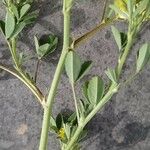
Melilotus indicus
یونجه زرد هندی · Small Melilot · California lucerne · King Island melilot · King Island-clover
Description
Source: leafsnapMelilotus indicus, commonly known as Indian sweet clover, is a species of flowering plant in the Fabaceae family. Native to Asia, it has spread to other parts of the world, including North America and Europe. The plant can grow up to 1 meter tall and produces yellow flowers that bloom from June to September. Its trifoliate leaves have serrated edges and emit a sweet fragrance when crushed. Indian sweet clover has been utilized in traditional medicine for its anti-inflammatory properties and as a diuretic. It is also valued as a forage crop for livestock due to its high protein content. However, it is considered an invasive species because of its ability to grow rapidly in disturbed areas such as roadsides, fields, and waste places. Its capacity to fix nitrogen from the atmosphere allows it to outcompete native plants. Overall, while Melilotus indicus offers several beneficial uses, it should be carefully monitored when introduced into regions outside of its natural range.
🎭 Hope, and of holy places of divinity
Care Guide
💧 Water Every 3 days
Annual yellow sweet clover is well-suited for arid regions due to its drought tolerance. For optimal growth, it benefits from weekly watering. This annual herb thrives particularly well outdoors, making it an excellent choice for xeriscaping—a landscaping method designed to reduce the need for irrigation.
How should I water my Annual yellow sweet clover plant?
To water Annual yellow sweet clover, you have various options such as using a garden hose with a spray nozzle, a watering can, or any other common watering tool. This plant is not too particular about how it receives water and can survive on rainwater, tap water, or filtered water. However, it is best to avoid watering from above as it can harm the leaves and flowers and potentially cause disease. Instead, it is recommended to use a drip irrigation system, which applies water evenly and directly to the soil. For container-grown Annual yellow sweet clover, you can use a cup, watering can, or tap to water it directly onto the soil.
What should I do if I give my Annual yellow sweet clover too much or too little water?
To help your Annual yellow sweet clover thrive, it's important to pay attention to its watering needs. Underwatering is easily fixed by increasing the frequency of watering. On the other hand, overwatering can be more harmful. It can cause diseases that weaken and eventually kill the plant. To avoid overwatering, choose a suitable spot for your sweet clover that gets enough sunlight and has good drainage. This will help the soil dry out properly and prevent water from pooling. If you have overwatered your sweet clover in a pot, it may be necessary to change to a new pot with better drainage. Use loose, well-draining soil and ensure the new pot allows water to properly drain.
How often do I need to water my yellow sweet clover plant each week?
To keep your Annual yellow sweet clover healthy, water it regularly throughout the growing season. In the spring, water it once per week. As it gets warmer, increase the watering to two to three times per week, but be careful not to overwater. The soil should be moist but not wet. If your Annual yellow sweet clover is in a pot, it will need more frequent watering than if it's in the ground. Typically, water a potted plant a few times per week compared to just once per week for a plant in the ground.
How much water does my yellow sweet clover need each year?
Determining the amount of water to give to your Annual yellow sweet clover can be approached in a few different ways. Some gardeners rely on checking the moisture of the soil by feeling it, suggesting that watering should continue until the top six inches of soil are moist. Alternatively, you can establish a set measurement to determine how much water to provide, typically around two gallons per week, considering factors like temperature and soil dryness. However, following rigid guidelines may result in overwatering if the plant requires less than two gallons weekly. Growing Annual yellow sweet clover in a container requires a different method. Water should be applied to moisten all dry layers of soil, which can be tested by feeling the soil with your finger or observing a slight excess water flow from the pot's drainage holes.
How do I know if I'm watering my yellow sweet clover plant enough?
Avoiding overwatering your Annual yellow sweet clover can be challenging. These plants have deep roots, so watering the soil weekly is necessary. However, they are prone to root rot and browning if overwatered. Underwatering is less of a concern as they can survive without additional watering for a period of time. However, if not watered for too long, wilting and dry leaves may occur.
☀️ Light Full sun
Annual yellow sweet clover needs many hours of sunlight to grow well, a requirement that comes from its background in open habitats. It can, however, persist in places with only moderate light. Both too much and too little sun can diminish the plant's vigor.
What are the sunlight requirements for annual yellow sweet clover?
Annual yellow sweet clover thrives in conditions where it can receive ample sunlight, aligning with its natural habitat in open landscapes. For robust growth, it demands considerable hours of exposure to the sun, specifically above 6 hours daily for full sun. It can also survive in partial sun conditions, which consist of about 3-6 hours of sunlight. However, whether in full sun or partial sun environments, it's crucial to observe the movement of sunlight in your garden to ensure spots are chosen that provide the ideal balance of light and shade, promoting the plant's overall happiness and health.
How do I use artificial lighting for indoor plants?
For indoor plants, especially during less sunny seasons or in less sunny spaces, artificial lighting becomes essential for compensating the lack of natural sunlight. LED lights are recommended due to their capability to be customized to the specific light wavelengths needed by plants. Full sun plants should have 30-50W per square foot, partial sun plants require 20-30W per square foot, and full shade plants need 10-20W per square foot. The artificial light source should be placed 12-36 inches above the plant to mimic natural sunlight, with most plants benefiting from 8-12 hours of artificial light per day. This approach promotes healthier and faster growth by ensuring optimal light exposure.
What symptoms indicate my Annual Yellow Sweet Clover is receiving insufficient light?
When Annual Yellow Sweet Clover, a plant accustomed to thriving in full sunlight, experiences inadequate light conditions, several symptoms may manifest. These include the development of smaller leaves than normal, leggy or sparse growth with increased distances between leaves or stems, and more rapid leaf drop as the plant conserves resources. Growth may slow down or completely halt, and new leaves may appear lighter in color or show signs of chlorosis, where they lose their green hue. Providing adequate light is crucial to prevent these issues and ensure the health and vigor of your Annual Yellow Sweet Clover.
How can I address sunlight deficiencies for my plants?
To correct sunlight deficiencies, gradually acclimate plants to more sunlight, aiming for at least 6 hours of direct sunlight daily, if possible. For indoor plants not easily moved or too large, consider supplementing with artificial light, keeping lamps on for a minimum of 8 hours daily. Outdoors, adjust plant positioning gradually to avoid shock and sunburn. Obstructions to sunlight, like tree branches, should be minimized by pruning, or for smaller plants, consider transplanting during their dormant period to a more sunlit location with good drainage. While parts of the plant already affected may not recover, new growth should appear healthy with these adjustments.
🌡️ Temperature 5–35°C
Annual yellow sweet clover is native to areas where temperatures typically range from 68 to 95°F (20 to 35℃). It prefers moderately warm conditions. Seasonal shifts in temperature can be important for achieving optimal growth.
What is the indigenous temperature range for Annual Yellow Sweet Clover?
Annual Yellow Sweet Clover, scientifically known as Melilotus indicus, is indigenous to regions where temperatures generally fluctuate between 68 to 95°F (20 to 35°C). It thrives best in moderately warm environments, and making seasonal temperature adjustments can be crucial for its optimal growth. Despite its strong cold resistance, in environments where winter temperatures are expected to dip below -25°C, implementing cold protection measures like covering the plant with soil or straw is advised to safeguard against frost damage.
How should I protect Annual Yellow Sweet Clover in winter?
To protect Annual Yellow Sweet Clover during the winter, especially when temperatures are forecasted to fall below -25°C, it's important to take steps to insulate the plant. Prior to the first freeze of autumn, it's recommended to water the plant abundantly so that the soil remains moist and freezes in this state, which can help prevent both drought and water scarcity for the plant throughout the winter and into early spring. Covering the plant with insulating materials such as soil or straw can also provide necessary cold protection against severe frost.
What are the symptoms and solutions for low temperature in Annual Yellow Sweet Clover?
Annual Yellow Sweet Clover is quite cold-tolerant, flourishing when temperatures remain above 20°C and ideally kept above 0°C during winter. If temperatures drop below -25°C, the plant may show no immediate distress during winter; however, it could lead to decreased sprouting or even a complete lack of sprouting come spring. The solution for such an event is to carefully remove any parts of the plant that have failed to sprout in the spring, aiding the growth of new, healthy parts.
How do high temperatures affect Annual Yellow Sweet Clover and what are the remedies?
In summer, it's crucial to keep the temperature of Annual Yellow Sweet Clover below 35°C. Exposure to temperatures above 38°C can cause the leaves to lighten in color, curl, become prone to sunburn, or in severe cases, lead to the entire plant wilting and drying out. To mitigate these high-temperature impacts, remove sunburned and dried parts of the plant. Relocate the plant to a shaded area or use a shade cloth to protect it from midday and afternoon sun. Ensuring the plant is watered in the morning and evening will help keep the soil moist and the plant hydrated.
💨 Humidity
🪴 Soil 6-7
🌱 Fertilizer
Annual yellow sweet clover benefits from regular, light applications of fertilizer to encourage healthy leaf development. You should apply fertilizer to Annual yellow sweet clover about once a month during the summer. Nitrogen is vital for foliage, and providing nitrogen-rich sources helps Annual yellow sweet clover thrive.
🪴 Pot & Repot
✂️ Pruning
🌿 Propagating
🐛 Diseases & pets
☠️ Toxicity
Characteristics
- Plant Type
- Herb
- Life Cycle
- Annual
- Genus
- Melilotus
- Family
- Fabaceae
- Hardiness Zone
- 5-9
- Mature Height
- 10 cm to 49 cm
- Mature Spread
- 30 cm to 61 cm
- Leaf Color
- Green
- Leaf Type
- Deciduous
- Flower Color
- Yellow
- Flower Size
- 2.54 cm
- Bloom Time
- Late spring, Early summer, Mid summer
- Planting Time
- Spring
- Harvest Time
- Early summer, Mid summer
- Native Area
- Libya, Djibouti, Egypt, Turkey, Malaysia, India, Slovakia, Montenegro, Pakistan, Slovenia, Morocco, Croatia, Uzbekistan, Russia, Iraq, Indonesia, Oman, Qatar, Portugal, Nepal, Saudi Arabia, France, Tajikistan, Tunisia, Cyprus, Bulgaria, Bangladesh, Turkmenistan, Greece, Serbia, Lebanon, China, Afghanistan, Syria, Italy, Spain, Myanmar, Bhutan, Iran, Albania, Algeria, Thailand