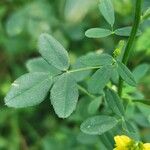
Melilotus officinalis
Sweetclover · Common melilot · Field melilot · Yellow melilot · Ribbed melilot
Description
Source: leafsnapMelilotus officinalis, commonly known as yellow sweet clover, is an herbaceous plant in the Fabaceae family. Native to Europe and Asia, this plant has been introduced and naturalized in many regions around the globe. It can grow up to 1 meter tall and features trifoliate leaves with serrated edges. The small, yellow flowers are densely packed in spikes at the ends of branches. Yellow sweet clover is renowned for its medicinal properties due to the presence of coumarin compounds, which possess anticoagulant effects. Traditionally, it has been used to treat various ailments, including respiratory problems, digestive disorders, skin conditions, and inflammation. In agriculture, yellow sweet clover is valuable because it can fix atmospheric nitrogen into a form that other plants can use, making it an essential component of crop rotation systems. However, the plant can also have negative impacts on ecosystems where it becomes invasive, outcompeting native plants and altering soil chemistry. Therefore, its cultivation should be carefully managed to prevent adverse effects on biodiversity. In summary, Melilotus officinalis is a versatile plant with significant medicinal and agricultural benefits, but it requires careful management to mitigate its potential invasive effects in new environments.
🌳 Yellow sweet clover functions as a bioindicator, its presence pointing to soil deficiencies—especially low nitrogen—and prompting farmers to reassess their soil management. It also has an ecological role, drawing beneficial insects by supporting pollinators such as bees and providing habitat for predatory insects that aid in pest control. This dual role illustrates yellow sweet clover’s value beyond farming, contributing to biodiversity and ecological balance.
🎭 A four-leaf clover brings great luck, and people say that wearing one in your hat will let you see fairies.
Care Guide
💧 Water Every 3 days
Yellow sweet clover flourishes in grasslands, where it demonstrates a preference for moderate moisture while also displaying a tolerance for drought. This adaptability to varying rainfall conditions makes it well-suited to such environments. To support its growth, it benefits from weekly watering, and it makes efficient use of seasonal rains during its active growing season.
How should I water my Yellow sweet clover?
There are several ways to water Yellow sweet clover, such as using a garden hose with a spray nozzle, a watering can, or any common watering tool. This plant is not very particular about the type of water it receives, as it can thrive on rainwater, tap water, or filtered water. However, it's best to avoid watering it from above as this can harm the leaves and flowers and potentially lead to disease. For optimal watering, setting up a drip irrigation system is recommended as it evenly and directly applies water to the soil. When watering a Yellow sweet clover grown in a container, you can follow a similar approach but adjust the tools used, such as using a cup, watering can, or tap to water the soil directly.
What should I do if I give my Yellow sweet clover too much water or too little water?
When your Yellow sweet clover plant is not getting enough water, simply start watering it more frequently. Underwatering is an easy fix. On the other hand, overwatering can be a serious problem if you don't catch it early. Overwatered plants can develop diseases that can cause them to decline and die. To prevent this, choose a location with plenty of sunlight to help dry the soil, and make sure the soil has good drainage so excess water can drain instead of causing waterlogged soil. If you are overwatering a potted Yellow sweet clover, you may need to change the pot. The previous container may not have had good drainage or enough drainage holes. When repotting an overwatered plant, use loose soil and a pot that drains efficiently.
How frequently should I water my Yellow sweet clover?
To take care of your yellow sweet clover, it is important to water it regularly throughout the growing season. In the spring, watering once a week is sufficient. However, as the weather gets warmer, you may need to increase the frequency to two or three times per week. Be careful not to overwater it though, as this can harm the plant. Regardless, it is important to keep the soil relatively moist but not overly wet. If you have a potted yellow sweet clover, you will need to water it more often than if it were planted in the ground. Potted soil tends to dry out faster, so it's best to water the plant a few times per week instead of just once.
How much water does my Yellow sweet clover plant need?
Determining the right amount of water for your Yellow sweet clover can be approached in a few different ways. Some gardeners rely on feeling the soil for moisture, suggesting that watering should be done until the first six inches of soil feel moist. Another option is to use a specific measurement, such as giving your Yellow sweet clover around two gallons of water per week. This amount can vary based on factors like heat and the soil's drying speed, so it's important to adjust accordingly. However, following strict guidelines can result in overwatering if your plant needs less than two gallons per week. When growing Yellow sweet clover in a container, a different method is needed. It is recommended to water enough to moisten all dry layers of soil. You can check this by inserting your finger into the soil to feel for moisture, or by watering until you see a small amount of excess water draining from the pot's drainage holes.
How do I know if I'm watering my Yellow sweet clover enough?
It can be a bit challenging to avoid overwatering your Yellow sweet clover. On one hand, these plants have deep roots, so the soil needs to be moistened once a week. However, Yellow sweet clover is highly prone to root rot, which can cause browning of the plant. Underwatering is less likely to be an issue, as these plants can survive without extra water for a while. But if you go too long without watering, they may start wilting and their leaves may become dry.
☀️ Light Full sun
Yellow sweet clover does best when it gets plenty of daylight. To encourage healthy growth, it should receive abundant sunlight. This applies from germination all the way to full bloom. In its native habitat it evolved to need substantial light; too little leads to weaker growth, while too much can sometimes cause wilting.
What are the sunlight requirements for yellow sweet clover?
Yellow sweet clover, known botanically as Melilotus officinalis, thrives in conditions where it can absorb ample sunlight. It requires 'full sun' which means it needs above 6 hours of sunlight daily or 'partial sun' about 3-6 hours of sunlight. It's important to observe how sunlight moves through your garden and choose spots that provide a perfect balance of light and shade, ensuring the plants' happiness and healthy growth. From germination to full bloom, ample light is critical. In its natural habitat, yellow sweet clover developed a need for ample light, and insufficient exposure results in less vigorous growth, while excessive exposure can risk wilting.
How can artificial lighting support yellow sweet clover's growth indoors?
When natural sunlight is insufficient, especially during winter or in less sunny indoor spaces, artificial lighting becomes vital for yellow sweet clover's growth. Indoor plants require adequate lighting for optimal growth, which can be provided by artificial lights, promoting faster, healthier growth. LED lights are recommended because they can be customized to provide specific wavelengths needed by the plants. Full sun plants need 30-50W/sq ft, partial sun plants 20-30W/sq ft, and full shade plants 10-20W/sq ft of artificial light. The light source should be placed 12-36 inches above the plant, mimicking natural sunlight's distance, and plants generally need 8-12 hours of light per day.
What are the common symptoms of inadequate sunlight in yellow sweet clover?
When yellow sweet clover doesn't receive enough sunlight, especially when grown indoors, several symptoms might appear. These include small leaves, leggy or sparse growth, faster leaf drop, slower or no new growth, and lighter-colored new leaves. These symptoms indicate light deficiency, impacting the plant's ability to photosynthesize and maintain healthy growth. Chlorosis, or the loss of green leaf color, sunscald, leaf curling, wilting, and leaf scorching are other signs that can occur with both insufficient and excessive sunlight exposure, each affecting the plant's overall health.
How can one address and prevent sunlight-related issues in yellow sweet clover?
To address sunlight-related issues in yellow sweet clover, it's crucial to ensure the plants receive adequate light, whether indoors or outdoors. Gradually moving the plants to sunnier locations to receive at least 6 hours of direct sunlight daily is recommended, using south-facing windows or artificial light sources if necessary. Outdoors, avoiding sudden changes in light intensity helps prevent sunburn. Minimizing obstructions like trees or buildings through pruning or relocation helps increase sunlight exposure. Transplanting smaller plants during their dormant period to sunnier locations with good drainage can also be beneficial. Note that parts of the plant affected by insufficient sunlight may not recover, but new growth following increased light exposure will be healthy.
🌡️ Temperature 5–35°C
Yellow sweet clover thrives in temperate climates, preferring temperatures of 68 to 95 °F (20 to 35 ℃). Minor temperature adjustments may occasionally be needed to maintain optimal growth through the seasons.
What is the ideal temperature range for Yellow sweet clover?
Yellow sweet clover thrives in a temperate environment, with an ideal temperature range of 68 to 95 °F (20 to 35 °C). Despite its strong cold resistance, in situations where the temperature is expected to drop below -30°C, protective measures are advisable. Pre-winter watering to ensure the ground enters a frozen state moist helps prevent drought stress during colder months, requiring occasional temperature adjustments throughout different seasons for optimal growth.
How does Yellow sweet clover react to low temperatures?
Yellow sweet clover is cold-tolerant and prefers temperatures above 20°C. It can generally withstand winters without special frost protection measures unless temperatures are expected to fall below -30°C. In such extreme cold, while the plant may not show noticeable damage during winter, it might face sprouting issues or fail to sprout in spring. The recommended solution for sprouting issues in spring is the removal of any parts that have failed to sprout.
What should be done if Yellow sweet clover is exposed to high temperatures?
During hot summers, it is crucial to ensure that Yellow sweet clover's temperature does not exceed 35°C. Exposing the plant to temperatures above 41°C can lead to lighter leaf coloration, curling, sunburn, and in severe cases, wilting and drying. To mitigate these issues, trim away sunburned and dried up parts of the plant, move it to a shade or use shade cloth to protect it from midday and afternoon sun, and water it during cooler times of the day to keep the soil moist.
💨 Humidity
🪴 Soil 6-7
🌱 Fertilizer
Yellow sweet clover does well with regular, light applications of fertilizer to encourage healthy leaf development. Fertilize Yellow sweet clover about once a month during the summer. Nitrogen is essential for foliage, and adding nitrogen-rich sources helps Yellow sweet clover thrive.
🪴 Pot & Repot Every 12 months
✂️ Pruning
🌿 Propagating
🐛 Diseases & pets
☠️ Toxicity
Characteristics
- Plant Type
- Herb
- Life Cycle
- Annual, Biennial
- Genus
- Melilotus
- Family
- Fabaceae
- Hardiness Zone
- 4-10
- Mature Height
- 40 cm to 91 cm
- Mature Spread
- 1.83 m
- Leaf Color
- Green
- Leaf Type
- Deciduous
- Flower Color
- Yellow
- Flower Size
- 0.51 cm to 0.76 cm
- Bloom Time
- Late spring, Early summer, Mid summer
- Planting Time
- Autumn, Winter, Spring
- Harvest Time
- Mid summer
- Native Area
- India, Turkey, Austria, Slovakia, Montenegro, Pakistan, Croatia, Slovenia, Belarus, Uzbekistan, Russia, Iraq, Germany, Estonia, Romania, Latvia, Moldova, Netherlands, Portugal, France, Tajikistan, Czech Republic, Bulgaria, Armenia, Poland, Greece, Ukraine, Serbia, Lebanon, Lithuania, Afghanistan, Syria, Kyrgyzstan, Kazakhstan, Italy, Spain, Switzerland, Iran, Albania, Azerbaijan, Hungary, Turkmenistan