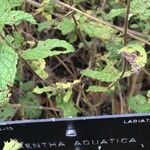
Mentha aquatica
Water mint · Bergamot Mint · Lemon Mint · Bishop's wort · Fish mint
Description
Source: leafsnapMentha aquatica, commonly known as water mint, is a perennial herbaceous plant that belongs to the Lamiaceae family. It is native to Europe and Asia but has been introduced and naturalized in many parts of the world. Water mint thrives in damp areas such as marshes, riverbanks, and wetlands. The plant features a square stem that can grow up to 1 meter tall. Its leaves are opposite, lance-shaped, and toothed. The leaves are dark green with a slightly hairy texture on the top, while the undersides are a lighter shade of green. From July to September, water mint produces small pink or lilac flowers in dense clusters at the top of its stem. These flowers attract bees, butterflies, and other pollinators. Historically, water mint has been used for medicinal purposes due to its antiseptic properties, making it useful for treating digestive issues such as bloating or indigestion. It can also be applied externally to wounds or insect bites because of its anti-inflammatory qualities. In cooking, water mint is valued for its refreshing flavor. It can be used fresh or dried in various dishes, including salads and teas. Overall, Mentha aquatica is an attractive perennial herb with multiple uses both medicinally and culinarily. It makes an excellent addition to any garden space near water sources like ponds, streams, and other damp areas where it thrives best.
💡 Water mint is an excellent choice for herbal tea, offering a delightful aroma. This tea is known for its calming effects and is often used to relieve cramps, digestive issues, and nausea. To prepare the tea, use fresh or dried healthy leaves.
🌳 The aromatic water mint is ideal for planting near ponds or in consistently moist soil. It not only adds fragrance and color to the garden landscape, but also attracts wildlife. In addition to its aesthetic benefits, horticulturists use this plant to improve the quality of soil and pond water.
🎭 Moral goodness, Protection (against illness), Emotional warmth
Care Guide
💧 Water Every 3 days
Water mint flourishes in moist environments and thrives in consistent humidity. To maintain its evergreen growth, water it weekly. Commonly found along streams and in marshes, water mint needs regular hydration, even during its dormant periods. As a result, it is less tolerant of dry conditions compared to plants adapted to arid environments.
How should I water my Water mint?
To properly water the Water mint, follow these steps: 1. Use filtered water at room temperature. This helps to avoid any harmful particles that may be present in tap water. 2. Ensure that the water is not cold because the Water mint is adapted to warm environments and cold water can be a shock to it. 3. Instead of using overhead watering, apply the filtered water directly to the soil. 4. Keep watering until the soil is completely soaked. This is beneficial for the plant as it helps to keep the roots moist and allows them to spread and absorb nutrients effectively.
What do I do if I give my Water mint too much or too little water?
Water mint can be negatively impacted by both overwatering and underwatering, but overwatering is more common. When there is too much water, the stems and leaves may wilt and turn yellow. Overwatering for a long period can also cause root rot, mold, and mildew, which can be fatal for the plant. Underwatering is less likely for Water mint because it can handle drought to some extent. However, it can still happen, and in those cases, the leaves may become brittle and brown. It's important to promptly identify signs of overwatering. Some diseases caused by overwatering, like root rot, may not be reversible if you delay treatment. If you notice early signs of overwatering, reduce your watering schedule and check the soil drainage. Replace the soil if it drains poorly. On the other hand, if your Water mint shows signs of insufficient water, simply increase the frequency of watering until the signs improve.
How often do I need to water my Water mint?
If you have Water mint in a pot, the most precise way to determine if it needs water is to check the soil by sticking your finger into it. If the top two to three inches of soil are dry, it's time to water the plant. For Water mint grown outdoors in the ground, you can use a similar method to test the soil. Again, when the top few inches of soil have dried out, it's time to provide water. Usually, during spring and early fall, you'll need to water this plant once a week. However, in extremely hot weather, you may need to increase watering to twice or more per week. Despite this, mature and well-established Water mint plants can tolerate drought well.
How much water does my Water mint plant require?
When watering your Water mint, don't be afraid to give it a generous amount of water. Wait until the first two to three inches of soil are dry before watering, and then make sure to thoroughly soak the soil. You want to add enough water that it flows through the drainage holes at the bottom of the pot. If you don't see any excess water draining, you have likely not watered enough. However, you also don't want to let water accumulate in the soil, as that can harm the plant. On the other hand, if water is not draining through the pot, it may indicate poorly draining soil, which is not good for the plant's health. If the plant is outside, getting about 1 inch of rain per week should be adequate.
When should I water my Water mint as it grows?
The water needs of Water mint can vary depending on its growth stages. In the first few years or after transplanting, more water than usual should be provided. During these stages, the plant focuses on developing new roots for future growth, which requires a higher level of moisture. As the plant matures, its water requirements decrease. However, during the bloom period, additional water might be necessary, as the development of flowers utilizes a significant amount of moisture.
☀️ Light Full sun
Water mint grows most vigorously with plenty of sunlight, which supports its strong growth and vigor. It can tolerate some shade, but too little light may impede its development. This preference for light is apparent in its native habitat, where it favors areas with abundant sunlight.
What are the sunlight requirements for Water Mint?
Water Mint, known botanically as Mentha aquatica, thrives best under conditions of full sun, which means it requires more than 6 hours of sunlight daily. It can also grow in partial sun, approximately 3-6 hours of sunlight. However, ensuring the right balance of light and shade is crucial for the plant's health and growth. Inadequate sunlight can lead to development issues, highlighting the importance of selecting planting spots that meet these light exposure needs.
How does sunlight exposure affect Water Mint's growth?
Sunlight exposure significantly influences the growth and vitality of Water Mint. Ample sun exposure leads to robust growth, while a somewhat shaded position is tolerable, though not ideal, as it may hamper the plant's development. This preference for abundant sunlight is rooted in the plant's natural habitat, indicating its optimal growing conditions involve substantial light irradiation. When natural sunlight is insufficient, especially for indoor plants, artificial lighting such as LED lights, providing 30-50W/sq ft for full sun plants and 20-30W/sq ft for partial sun plants, can be a solution, ensuring plants receive 8-12 hours of light per day at a distance of 12-36 inches above the plant.
What are the signs of insufficient light in Water Mint?
Water Mint exhibits several symptoms when it does not receive enough light. These include small and mature leaves growing smaller than previous ones, leggy or sparse growth with longer spaces between leaves or stems, faster leaf drop to conserve resources, halted growth as the plant enters survival mode, lighter-colored or irregularly patterned new leaves indicating chlorophyll and nutrient deficiencies, and symptoms of too much light such as chlorosis, sunscald, leaf curling, wilting, and leaf scorching. These symptoms reflect the plant's struggle to adapt to inadequate lighting conditions.
How can you address Water Mint's light needs indoors and outdoors?
To meet Water Mint's light needs, gradually acclimatize the plant to receiving at least 6 hours of direct sunlight daily by moving it to sunnier spots each week. For indoor plants that are large or not easily movable, consider supplementing with artificial light, keeping a desk or ceiling lamp on for at least 8 hours daily, or investing in plant grow lights. Outdoors, avoid sudden light intensity changes to prevent sunburn. If necessary, prune trees or other obstructions to improve sunlight access, or transplant smaller plants during their dormant period to a location with better light exposure and drainage. However, note that parts of the plant damaged by previous light conditions may not recover, but new growth should be healthy.
🌡️ Temperature 5–35°C
Water mint grows naturally in wetlands with cool to warm temperatures, preferring 41 to 95 ℉ (5 to 35 ℃). During colder seasons it can tolerate lower temperatures, but precautions should be taken to prevent freezing. In warmer seasons it may need extra moisture to stay cool and thrive.
What is the native environment for water mint?
Water mint is native to wetlands and thrives in environments with cool to warm temperatures, ranging between 41 to 95°F (5 to 35°C). It is well-suited to areas that maintain moisture and can adjust to colder temperatures in the colder seasons, provided it is protected against freezing conditions.
Does water mint need frost protection in winter?
While water mint possesses strong cold resistance, frost protection may become necessary if winter temperatures are expected to drop below -25°C. Protecting the plant can be done by covering it with soil or straw. It's also advisable to water the plant abundantly before the first freeze in autumn to ensure the soil stays moist and enters a frozen state, helping to prevent drought and water scarcity during the winter and early spring.
How does low temperature affect water mint, and what are the solutions?
Water mint is cold-tolerant and performs best when the temperature is kept above 5°C. It should remain above -20°C during winter. If temperatures fall below -25°C, there may not be immediate noticeable damage during winter, but a decrease in springtime sprouting or a complete lack of sprouting could occur. As a solution, any parts that have failed to sprout by spring should be removed.
What should be done if water mint is exposed to high temperatures?
During summer, it's vital to ensure the temperature around water mint doesn't exceed 35°C. Exposure to temperatures above 38°C can result in lighter leaf coloration, leaves becoming prone to curling, vulnerability to sunburn, and in severe cases, the whole plant might wilt and dry. To mitigate these issues, trim away sunburned and dried parts, relocate the plant to a shadier spot or use a shade cloth to protect it from intense midday and afternoon sun. Regularly watering the plant in the morning and evening will help keep the soil moist.
What is water mint and its botanical name?
Water mint, scientifically known as Mentha aquatica, is a plant species native to wetlands and is recognized for its adaptability to a wide range of temperatures. It thrives in cool to warm environments and can survive colder seasons with some care against freezing conditions.
💨 Humidity
🪴 Soil 6-7
🌱 Fertilizer
Generally, a single fertilizer application in spring is adequate for Water mint, though additional feedings can increase growth. Feed every one to one-and-a-half months. Fertilization improves the leaves' appearance and function, helping them retain uniform color and a healthy texture. It also promotes root development and nutrient uptake for the plant's long-term health.
Why should I put plant food on my water mint plant?
Water mint primarily consists of leaves, which play a crucial role in both appearance and function. By fertilizing it properly, you can enhance the appearance of the leaves, ensuring they maintain a consistent color and a healthy texture. Fertilization also has benefits beneath the soil surface, as it stimulates the growth of new roots and helps maintain the existing ones in the root system. This not only keeps your plant healthy currently but also improves its ability to absorb soil nutrients in the long term.
What is the best time to add fertilizer to my Water mint plant?
If you grow Water mint outdoors, it will start growing new leaves in early spring, which is a signal to begin fertilizing. Usually, one application of fertilizer in spring is sufficient, but if you want to maximize growth, you can fertilize multiple times during spring and early summer. In this case, you can feed the Water mint roughly once every month to a month and a half.
When is it not a good idea to put fertilizer on my Water mint?
During the late fall and winter, your Water mint goes into a dormant phase, stopping new growth. So, it's important not to fertilize it during this time. In the spring and summer, if you choose to fertilize, start reducing the amount as summer approaches because the growth rate of your Water mint also slows down. Generally, it's not a good idea to fertilize your Water mint when the weather is unusually hot or the soil is extremely dry. Fertilizing in these conditions can stress the plant and make it die earlier.
What kind of fertilizer does my Water mint need?
Choosing the best fertilizer for Water mint is fortunately a straightforward task. These plants do well with a general-purpose garden fertilizer that contains equal amounts of nitrogen, phosphorus, and potassium. A fertilizer with a ratio of 10-10-10 or something similar will work effectively. It is important to avoid fertilizers high in nitrogen if you are unsure. Most of the recommended fertilizers for Water mint come in a granular form that is easy to apply. These fertilizers should also be slow-release. Additionally, feeding your Water mint with an organic soil amendment like compost can be beneficial.
How do I give nutrients to my Water mint?
1. Wait until early spring when you see the first leaves of your Water mint poking through the soil's surface. 2. Once you notice this sign, apply a granular slow-release fertilizer with a balanced formula to the soil around the base of your Water mint. 3. If desired, you can repeat this process later in the season. 4. Remember to apply the fertilizer to the soil at the base of the plant, not directly onto the plant itself. You may need to move some leaves aside to access the soil above the roots. 5. It's also a good idea to water your Water mint before and after feeding it.
🪴 Pot & Repot 2-3 years
When repotting Water mint, pick a pot 1-2 inches (2.5–5.1 cm) larger with ample drainage. Use a well-draining, potting mix. Repot in spring or fall, ensuring the root ball is positioned slightly lower than the rim of the flower pot. Water thoroughly after repotting and place in a warm spot with indirect sunlight.
✂️ Pruning
Water mint is a hardy, fragrant perennial with oval, toothed leaves and mauve flowers. To encourage bushier growth, improve airflow, and lower the risk of disease, prune it from early to late spring. This timing aligns with the plant's active growth phase, ensuring optimal recovery and health.
🌿 Propagating
🐛 Diseases & pets
☠️ Toxicity
Characteristics
- Plant Type
- Herb
- Life Cycle
- Perennial
- Genus
- Mentha
- Family
- Lamiaceae
- Hardiness Zone
- 5-9
- Mature Height
- 91 cm to 91 cm
- Mature Spread
- 91 cm
- Leaf Color
- Green
- Leaf Type
- Deciduous
- Flower Color
- Lavender
- Flower Size
- 0.25 cm to 0.51 cm
- Bloom Time
- Early summer, Mid summer
- Planting Time
- Spring
- Harvest Time
- Mid summer
- Native Area
- Lesotho, Angola, Austria, Turkey, Sweden, Slovakia, Namibia, Montenegro, Rwanda, Croatia, Slovenia, Kenya, Belarus, Uganda, Tanzania, Russia, Germany, Estonia, Ethiopia, Romania, Latvia, Belgium, Botswana, Portugal, Netherlands, Malawi, France, Czech Republic, South Africa, Cyprus, Bulgaria, Poland, Armenia, Greece, Ukraine, Serbia, Lebanon, Lithuania, Norway, Syria, Italy, Kazakhstan, Spain, Switzerland, Denmark, Mongolia, Finland, Eswatini, Iran, Ireland, United Kingdom, Hungary, Azerbaijan, Albania