Mentha canadensis
American corn mint · Japanese corn mint · Japanese mint · Corn mint · Chinese mint
Description
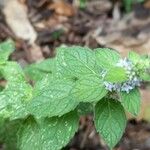
Source: wikipedia (CC BY-SA)Mentha canadensis is a species of mint native to North America and the eastern part of Asia. In North America, it is commonly known as Canada mint, American wild mint, and in Asia as Chinese mint, Sakhalin mint, Japanese mint, and East Asian wild mint. The flowers are bluish or have a slight violet tint. The plant is upright, growing to about 30–60 cm (12–24 in) tall. The leaves are opposite, and flower clusters appear in the upper leaf axils. This mint grows in wet areas but not directly in water, so it will be found near marshes, and lake and river edges. Plants bloom from July to August in their native habitats.
💡 Hades fell in love with the beautiful elf Minthe, which stirred the jealousy of his wife, Persephone. To make her husband forget Minthe, Persephone transformed her into a humble grass, trodden by people along the roadside. However, even as a plant, the resilient and kind-hearted Minthe emitted a cool and enchanting fragrance. The more she was stepped on, the stronger her scent became. Despite her transformation into grass, she won the admiration of many. Today, we know this plant as mint. Although mint appears plain, it holds a sense of hope. Its refreshing taste revitalizes every pore, bringing happiness and comfort to those who feel lost.
🌳 Beyond its use in cooking, american wild mint leaves yield aromatic essential oils for the fragrance industry, and their capacity to indicate certain soil metal levels gives them potential for biomonitoring. Because of its bioactive compounds, american wild mint may also be promising for the manufacture of natural pesticides or repellents.
🎭 Love me once more
Care Guide
💧 Water Every week
American wild mint thrives in moist environments and needs regular watering for optimal growth, ideally once a week. While it has some drought tolerance, it benefits from consistent moisture to maintain its aromatic foliage and prevent root rot. Achieving the right balance is crucial for its healthy growth.
☀️ Light Full sun
American wild mint prosper in full sun yet can tolerate moderate light. It comes from habitats with plentiful sunshine. Too little light can lead to weak growth, while excessive exposure may stress the plant. Its sunlight requirements may stay consistent through its stages of growth.
🌡️ Temperature 5–32.2°C
American wild mint is native to areas where temperatures commonly fall between 41 and 89.6 °F (5 to 32 °C). In colder or warmer seasons, adjust temperatures to keep them within this range for healthy growth.
What is the ideal temperature range for growing American wild mint?
American wild mint, also known by its botanical name Mentha canadensis, thrives in environments with temperatures ranging from 41 to 89.6 °F (5 to 32 °C). To ensure healthy growth, it's crucial to maintain these temperatures, especially during colder or hotter seasons. During winter, it's beneficial to keep the temperature above 5°C and always above the freezing point to prevent damage to the plant. If the outdoor temperature drops to -5°C (25°F), consider bringing your American wild mint indoors or protect it using a temporary greenhouse or materials such as plastic film or fabric.
How does low temperature affect American wild mint and what are the solutions?
American wild mint has a moderate tolerance to low temperatures, performing best between 5°C and 32°C, but should be protected from temperatures lower than -25°C. At temperatures below -30°C, leaves may darken, exhibit water-soaked necrosis, wilt, droop, and eventually turn brown. If frost damage occurs, trim the affected parts and move the plant to a warmer indoor setting or set up a makeshift greenhouse. Ensure the plant is placed near a south-facing window for sunlight, and use supplemental lighting if natural light is insufficient.
How does high temperature affect American wild mint and what are the solutions?
During summer, it's important to keep American wild mint below 32°C to avoid inhibiting its growth. Temperatures exceeding 35°C can lighten leaf color and increase susceptibility to sunburn. To mitigate damage, trim away sunburned and dried parts of the plant. Relocate the plant to a shaded area, particularly from the harsh afternoon sun, and ensure the soil is kept moist by watering in the morning and evening.
💨 Humidity
🪴 Soil 6-7
🌱 Fertilizer
To maximize American wild mint's yield and flavor, supply ample nitrogen throughout the entire growth cycle, including before planting and at harvest. Plants that are well watered and adequately fertilized develop abundant, healthy leaves and are less prone to bitterness. Before planting, enrich the soil with organic matter such as compost or manure, preferably 2 to 8 weeks in advance.
🪴 Pot & Repot Every 12 months
✂️ Pruning
American wild mint is a perennial herb known for its aromatic leaves and square stems. To encourage bushy growth, improve air circulation, and reduce the risk of disease, it's best to prune it from early to late spring. Cut back one-third of the stems during this time. Always use sharp, clean tools to minimize stress on the plant.
🌿 Propagating
🐛 Diseases & pets
☠️ Toxicity
Characteristics
- Plant Type
- Herb
- Life Cycle
- Perennial
- Genus
- Mentha
- Family
- Lamiaceae
- Hardiness Zone
- 4-8
- Mature Height
- 49 cm to 91 cm
- Mature Spread
- 0.91 m to 1.52 m
- Leaf Color
- Green, Red
- Leaf Type
- Deciduous
- Flower Color
- White
- Flower Size
- 1.78 cm
- Bloom Time
- Early summer, Mid summer
- Planting Time
- Spring
- Harvest Time
- Mid summer
- Native Area
- Sri Lanka, Malaysia, Mexico, Philippines, Laos, China, Russia, Indonesia, Cambodia, Vietnam, Myanmar, Mongolia, Japan, Thailand