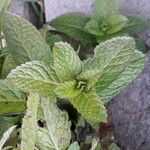
Mentha spicata
نعناع · نعناع دشتی، · Spearmint · Wild mint · Garden mint
Description
Source: leafsnapMentha spicata, commonly known as spearmint, is a perennial herb belonging to the Lamiaceae family. Native to Europe and Asia, it has been widely cultivated across many parts of the world. The plant typically grows to a height of 30-100 cm and features square stems with green, oblong leaves that have serrated edges. Spearmint produces small pink or white flowers that bloom from June to September. It prefers moist soil and partial shade but can also thrive in full sun with adequate watering. Spearmint is renowned for its medicinal properties, as it contains essential oils such as menthol, carvone, limonene, cineol, and rosmarinic acid. These oils possess antiseptic qualities that help alleviate digestive issues like bloating, gas, and indigestion. The leaves of spearmint are also prized for their refreshing flavor, making them an excellent addition to salads, teas, and drinks such as mojitos. Beyond its medicinal and culinary uses, spearmint has been employed for centuries in traditional medicine practices worldwide due to its anti-inflammatory properties, which help relieve pain caused by arthritis or muscle soreness. Overall, Mentha spicata is a versatile herb with a wide range of applications, from medicinal to culinary, making it an important plant species globally.
💡 Spearmint is well-known for its use as a flavoring in toothpastes, chewing gum, and other breath-freshening products. This is not a new trend; in fact, there is evidence of spearmint being used in toothpaste as early as the 14th century.
🌳 Spearmint finds a variety of uses, from imparting flavor to toothpaste to acting as a natural pest repellent. This illustrates spearmint's versatility outside of culinary contexts and points to its potential in organic farming and household products.
🎭 I hope we meet again. Warm feelings.
Care Guide
💧 Water Every 3 days
Spearmint, which comes from temperate regions, thrives in moist environments and can withstand moderate drought. To keep the plant properly hydrated, it's best to water it twice a week. When grown outdoors, using mulch helps retain soil moisture and regulate temperature during the active growing season.
When Should I Water My Spearmint?
Watering your spearmint correctly is essential for its health and growth. Look out for signs like drooping or wilting leaves, which often indicate the plant needs water. Similarly, a color change in leaves to yellow or brown can signal watering needs, though it's important to differentiate this from over-watering symptoms. Check the soil moisture by inserting your finger into the soil up to the first knuckle; dry or crumbly soil means it's time to water your spearmint. A slowdown in the plant's growth or fewer new leaves can also suggest a need for more water. It's crucial to avoid over or under-watering to prevent issues like root rot or stunted growth.
How Should I Water My Spearmint?
Proper watering is vital for spearmint, which thrives in moist soil conditions but can be harmed by over-watering or waterlogged conditions. Utilize a watering can with a narrow spout for controlled watering, and consider using a moisture meter to check soil moisture. Bottom-watering is recommended to allow spearmint to absorb moisture directly into its roots, preventing over-saturation. Occasional misting can also benefit spearmint due to its preference for high humidity, but don't overdo it to avoid leaf mildew. Focus on watering at the base of the plant and avoid wetting the foliage directly to prevent potential leaf rot or disease.
How Much Water Does Spearmint Really Need?
Spearmint requires moist soil, mimicking its natural habitat of wet, fertile environments in Europe and Asia. The amount of water needed depends on factors such as pot size, with larger pots retaining moisture longer and requiring less frequent watering, and plant size, with larger plants needing more water. Ensure thorough watering so it reaches the depth of the pot to properly hydrate the roots. Monitor the plant for bright, green leaves, an indicator of proper watering. Adjust watering levels if you observe yellow leaves (a sign of over-watering) or wilting and browning (signs of under-watering). Both over and under-watering come with risks; root rot from too much water and moisture stress from too little can both be fatal for the plant.
What Kind of Water is Best for Spearmint?
Spearmint is adaptable when it comes to the type of water used but thrives best with rainwater due to its soft quality. Tap water is usually acceptable, though distilled or filtered water can be preferable in areas with highly chlorinated or fluoridated water. Be mindful of the chlorine and fluoride content, which can cause issues like burnt leaf tips. Letting tap water sit for 24 hours allows chlorine to evaporate, and utilizing activated carbon filters can help reduce fluoride levels. Watering with room temperature water is ideal to avoid shocking the plant's root system.
How Do Spearmint's Watering Needs Change with the Seasons?
Seasonal changes affect the watering needs of spearmint. In spring, as the plant exits dormancy, maintain consistently moist soil to support new growth. Hot summer months will increase water demand due to evaporation, so ensure frequent watering to prevent wilting. Autumn brings a slowdown in growth; reduce watering frequency accordingly but avoid letting the soil completely dry out. During winter, the plant's dormancy period means significantly less water is needed; water sparingly to keep the roots slightly damp without causing cold damage or root rot.
☀️ Light Full sun
Spearmint prefers abundant light but is fairly forgiving if it doesn't get the full amount. While its natural habitat provides ample sun, it can cope in settings with lower light. However, too much or too little light can affect its healthy growth, causing it to become leggy or stunted.
What are the sunlight requirements for Spearmint?
Spearmint requires various levels of sunlight depending on its growth condition. Full sun exposure, which is defined as above 6 hours of sunlight daily, is ideal but it can also thrive in partial sun, meaning about 3-6 hours of sunlight. It's important to observe how sunlight moves through your garden to find spots that offer the right balance of light and shade, ensuring the plant's well-being.
How does insufficient light affect Spearmint's growth?
Insufficient light can impact Spearmint in several ways. It can cause the plant to have leggy or sparse growth, where the spaces between leaves or stems lengthen, giving the plant a stretched-out appearance. The plant may also experience slower or no new growth, as it enters a survival mode with poor light conditions. Symptoms such as chlorosis, sunscald, leaf curling, wilting, and leaf scorching can arise from inappropriate light exposure, affecting the plant's photosynthesis process and overall health.
What can be done to ensure Spearmint receives adequate sunlight?
To ensure Spearmint receives adequate sunlight, gradually move plants to sunnier locations, aiming for at least 6 hours of direct sunlight daily when indoor. Using a south-facing window and keeping curtains open during the day can help maximize sunlight exposure. For outdoor plants, gradual relocation to sunnier spots is key to avoid sunburn, focusing on gradual adaptation to changing light intensities. Additionally, using artificial light can supplement natural sunlight, especially when natural light is insufficient, by keeping a lamp on for at least 8 hours daily or investing in plant grow lights.
What solutions exist for Spearmint plants affected by too much or too little sunlight?
For Spearmint plants affected by inappropriate light levels, there are several solutions. Indoors, increasing sunlight exposure either gradually or through artificial lighting can help. Outdoors, the key is to move plants to optimal sunlight spots gradually. For all plants, minimizing obstructions like branches or leaves that block sunlight can improve conditions. If necessary, transplanting to a location with ample sunlight and good drainage should be done during the plant’s dormant period. It's important to note that while parts of the plant damaged by insufficient sunlight may not recover, new growth should be healthy with improved light conditions.
🌡️ Temperature 0–35°C
Spearmint is a woody plant suited to temperate climates and prefers temperatures between 32 and 95 ℉ (0 to 35 ℃). Native to temperate areas, it requires evenly moist soil and partial shade to do well. During colder months, the plant can be set to a cooler temperature of 50 to 60 ℉ (10 to 15 ℃) to promote dormancy.
What are the ideal growing conditions for Spearmint?
Spearmint, botanically known as Mentha spicata, thrives in temperate climates, preferring a temperature range between 32 to 95 °F (0 to 35 °C). For optimal growth, it requires an evenly moist soil and partial shade. To encourage dormancy, during the colder months, you can adjust the surrounding temperature to be within 50 to 60 °F (10 to 15 °C). Spearmint possesses strong cold resistance, thus special frost protection measures are not typically necessary. However, for extremely low temperatures dropping below -35°C, providing some form of cold protection, such as covering the plant with soil or straw, is advisable. Before the arrival of the first freeze in autumn, it is recommended to water the plant abundantly, which helps ensure the soil remains moist and prevents drought and water scarcity during winter and early spring.
What should be done if Spearmint is exposed to temperatures below its tolerance level?
Spearmint plants are highly cold-tolerant, performing best when the temperature stays above 0°C and should be kept above -30°C during winter. If temperatures fall below -35°C, although spearmint may not show immediate signs of damage during winter, there might be a noticeable decrease in sprouting or, in some cases, no sprouting at all when spring arrives. To address this, remove any parts of the plant that have failed to sprout in the spring as a solution to the potential damage caused by extreme cold.
How to care for Spearmint during high temperature conditions?
During summer, it's important to ensure that the temperatures around your Spearmint plant remain below 35°C. If temperatures exceed 41°C, you might observe that the leaves of the plant may start to lighten in color, become prone to curling, and may be susceptible to sunburn. In severe cases, the whole plant may wilt and dry out. To mitigate these effects, trim away the sunburned and dried-up parts of the plant. Relocate the plant to an area that is shaded during the midday and afternoon sun, or make use of a shade cloth to protect it from direct sunlight. Additionally, water the plant in the morning and evening hours to maintain soil moisture and help alleviate stress from the heat.
💨 Humidity normal (40-60%)
This plant will thrive in moderate humidity, which is probably the level in your home. However, misting it a few times a week can be very beneficial. Make sure the room has good ventilation.
🪴 Soil 6-7
🌱 Fertilizer
Generally, one fertilizing in spring is enough for Spearmint, though repeated feedings can maximize growth. Apply fertilizer every one to one and a half months. Fertilization improves the leaves’ appearance and function, helping maintain even color and a healthy texture. It also promotes root development and better nutrient uptake for long-term plant health.
Why should I add fertilizer to my Spearmint plant?
Ensuring that the leaves of the Spearmint plant look great and function properly involves effective fertilization. This process has numerous benefits for the plant, both above and below the soil's surface. Proper fertilization results in consistent leaf color and a healthy texture, while also promoting the growth of new roots and maintaining existing ones. By fertilizing your Spearmint plant, you not only keep it healthy in the present but also enhance its ability to absorb soil nutrients in the future.
When should I put fertilizer on my Spearmint plant?
If you grow your Spearmint outdoors, it will start new growth in early spring. When you see the leaves emerge, it's time to fertilize. Usually, one application of fertilizer in the spring is enough for a healthy Spearmint. But if you want to maximize growth, you can fertilize multiple times in the spring and early summer. In this case, feed your Spearmint every month to a month and a half.
When is it best not to put fertilizer on my Spearmint?
During the late fall and winter, your Spearmint will go into a dormant phase and stop producing new growth. It's important not to fertilize your Spearmint during this time. In the spring and summer, if you decide to fertilize, gradually reduce the amount of fertilizer as summer approaches because the growth rate of your Spearmint will also slow down. It's never a good idea to fertilize your Spearmint when the weather is unusually hot or when the soil is extremely dry as this can stress your plant and cause it to die prematurely.
What kind of fertilizer should I use for my Spearmint plant?
Choosing the best fertilizer for Spearmint is actually quite simple. These plants thrive on a general-purpose garden fertilizer that contains equal amounts of nitrogen, phosphorus, and potassium. Look for a fertilizer with a ratio of 10-10-10 or something similar, as this will be highly effective. Keep in mind that it's best to avoid fertilizers with high nitrogen levels if you're unsure. Granular fertilizers are most commonly used for Spearmint, as they are slow-release and easily applied to the soil. Additionally, including organic soil amendments like compost can be beneficial when feeding your Spearmint.
How can I properly fertilize my Spearmint plant?
To ensure proper growth of your Spearmint, wait until you see the first leaves emerge in early spring before applying a granular slow-release fertilizer. Make sure to apply the fertilizer to the soil around the base of the plant, rather than directly onto the plant itself. If necessary, move some leaves aside to access the soil above the roots. You can repeat this process later in the season if desired. Additionally, it's a good idea to water your Spearmint before and after fertilizing.
🪴 Pot & Repot 2-3 years
When repotting Spearmint, select a pot 1-2 inches (2.5–5.1 cm) larger that offers ample drainage. Use a well-draining potting mix. Repot in spring or fall, making sure the root ball sits slightly lower than the rim of the flower pot. Water thoroughly after repotting and place in a warm spot with indirect sunlight.
✂️ Pruning
Spearmint, known for its fragrant leaves and rapid growth, benefits greatly from regular pruning. To achieve the best results, trim the tops to encourage bushier growth and remove any damaged stems. The ideal time for pruning is from early to late spring. Be sure to use clean tools to reduce stress on the plant and promote healthy foliage.
🌿 Propagating
🐛 Diseases & pets
☠️ Toxicity
Characteristics
- Plant Type
- Herb
- Life Cycle
- Perennial
- Genus
- Mentha
- Family
- Lamiaceae
- Hardiness Zone
- 3-10
- Mature Height
- 0.3 m to 1.22 m
- Mature Spread
- 0.91 m to 1.52 m
- Leaf Color
- Green
- Leaf Type
- Deciduous
- Flower Color
- White
- Flower Size
- 0.25 cm to 0.25 cm
- Bloom Time
- Early summer, Mid summer
- Planting Time
- Spring
- Harvest Time
- Mid summer
- Native Area
- Europe and Asia