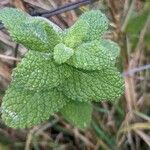
Mentha suaveolens
Apple mint · Pineapple mint · Round-leaf mint · Round-leaved Mint · Timijja
Description
Source: leafsnapMentha suaveolens, commonly known as apple mint, is a perennial herb belonging to the Lamiaceae family. Native to Europe and Asia, it has been widely cultivated around the world. This plant can grow up to 1 meter tall and features square stems with opposite, ovate leaves that have a slightly hairy texture. The leaves of Mentha suaveolens are highly aromatic, emitting a sweet, apple-like scent, which makes them popular for culinary uses. They are commonly used as ingredients in teas, salads, sauces, and desserts. Beyond its culinary uses, Mentha suaveolens also offers medicinal benefits. The plant contains essential oils, such as menthol, which possess antiseptic properties that can help alleviate digestive issues like bloating and indigestion. Mentha suaveolens thrives in moist soil with partial shade but can also tolerate full sun exposure. It is easy to grow from seeds or cuttings and requires regular pruning to prevent it from becoming too bushy. Overall, Mentha suaveolens is an attractive herb that not only adds flavor but also provides numerous health benefits, making it an excellent addition to any garden or kitchen windowsill!
🌳 Apple mint is used beyond culinary purposes, finding a place in aromatherapy for its calming fragrance and in horticulture as a natural insect repellent. Its essential oil is employed in the perfume industry and in personal care products, illustrating its utility beyond the kitchen garden.
🎭 Insight, safeguarding, clear thinking
Care Guide
💧 Water Every 3 days
Apple mint flourishes in moist, humid environments and needs consistent moisture without becoming waterlogged. Watering the plant twice a week helps it grow optimally. When it receives the right amount of hydration, apple mint attracts pollinators, which enhances its lush foliage and pleasant aroma in the garden.
When Should I Water My Apple Mint?
To ensure the health and development of apple mint, it's critical to water it properly. The right time to water apple mint is when the soil moisture is low. This can be checked by inserting your finger into the soil up to a depth of 1 to 2 inches; if it feels dry, it's time to water the plant. Pay attention to wilting leaves and changes in leaf color, as these are signs of the plant needing water. The weight of the pot can also serve as an indicator; a lighter pot suggests the need for watering. Specifically, during the pre-flowering stage and in conditions of high temperature and sunlight exposure, apple mint needs more frequent watering. However, be careful not to water too early or too late to avoid root diseases or dehydration. Keeping these signs in mind will help you manage the watering schedule for apple mint effectively.
How Should I Water My Apple Mint?
Watering apple mint optimally involves a few specific techniques. Bottom-watering is recommended over traditional top-watering to prevent over-saturation and root rot. The process involves placing the plant in a container of water to let the roots absorb moisture for about 30-40 minutes. If the soil surface isn't moist afterward, a light sprinkle of water from the top may be necessary. To provide humidity without risking leaf rot, occasional misting of the leaves can also be beneficial, although direct foliage wetting should be avoided. Utilize a moisture meter to gauge the soil's water content accurately, and ensure that while watering, you avoid direct contact with the plant's base to prevent stem rot. Regular use of a watering can with a narrow spout is advised for precision.
How Much Water Does Apple Mint Really Need?
Apple mint requires a measured amount of water to thrive, reflecting its moderate hydration need based on its natural habitat which includes moist and shady locations. For an average-sized plant in a 6-8 inch pot, about 0.5-1 liter of water per session is typically sufficient. Signs that you're watering the plant correctly include lush and green leaves, and soil that is moist but not waterlogged. To prevent issues like root rot or dehydration, it's crucial to find the right balance in watering. Regular checks for soil moisture and ensuring good drainage will help maintain the right watering amount.
What Kind of Water is Best for Apple Mint?
The ideal types of water for apple mint are rainwater and distilled water, as they are free from harmful elements that could affect the plant's growth. If these aren't available, filtered tap water is a suitable alternative. Apple mint is sensitive to chlorine and fluoride; thus, if tap water is used, it should be left to stand for 24-48 hours to allow chlorine to dissipate, and efforts should be made to use water with low fluoride content. Ensuring the water is at room temperature before watering the plant will prevent shock and support optimal growth.
How Do Apple Mint's Watering Needs Change with the Seasons?
Apple mint's watering needs vary with the seasons. In spring, the active growth phase requires consistent soil moisture, so regular watering is necessary. During summer, which may bring a dormancy period, reduce the watering frequency, allowing the soil to dry slightly between waterings. As autumn approaches and the plant prepares for dormancy, gradually decrease watering while keeping the soil lightly moist. In winter, water sparingly, allowing the topsoil to dry out between sessions. Season changes significantly affect the plant's water needs, necessitating adjustments to the watering schedule.
☀️ Light Full sun
Apple mint grows best with plenty of sunlight, which it needs for optimal growth and vigor. It can, however, tolerate conditions that receive only part of the day's sun. Too much or too little light can harm the plant, causing stress or stunted development. In its original natural habitat it experienced substantial daily sunlight.
What are the sunlight requirements for apple mint?
Apple mint, or Mentha suaveolens, requires abundant sun exposure to thrive, ideally more than 6 hours of sunlight a day for full sun, or about 3-6 hours for partial sun. It's important to observe the movement of sunlight through your garden to find spots that offer the right balance of light and shade. This ensures the plant's optimal growth and health. Apple mint is adaptable and can also grow in areas with only a portion of the day's solar light, but excessive or insufficient light can cause stress or stunted growth.
How does artificial lighting support apple mint growth?
Artificial lighting can be crucial for apple mint, particularly when natural sunlight is insufficient, like during winter or in less sunny spaces. Indoor plants require adequate lighting for optimal growth. LED lights are recommended because they can be customized to provide specific wavelengths needed by the plants. Full sun plants need 30-50W/sq ft, partial sun plants need 20-30W/sq ft, and full shade plants 10-20W/sq ft of artificial light. The light source should be placed 12-36 inches above the plant, for 8-12 hours per day to mimic natural daylight hours, promoting healthier growth.
What are the symptoms of improper lighting for apple mint?
Symptoms of improper lighting on apple mint include leggy or sparse growth, indicating the plant is stretching towards a light source and resulting in a thinner appearance. Slower or no new growth suggests the plant is in survival mode due to inadequate light. Chlorosis, or the yellowing of leaves, occurs when the plant fails to photosynthesize properly, often due to excessive sunlight. Sunscald, leaf curling, wilting, and leaf scorching are also symptoms indicating that the apple mint is receiving too much direct sunlight, leading to damage and reduced health.
What remedies can help apple mint adjust to light conditions?
To help apple mint adjust to light conditions, indoors, gradually move the plant to sunnier locations until it gets at least 6 hours of direct sunlight, using a south-facing window. Artificial lighting, such as desk lamps or plant grow lights, can also supplement light exposure for at least 8 hours a day. Outdoors, transition the plants gradually to avoid sunburn. Reducing obstructions such as pruning trees can improve sunlight access. For smaller plants, consider relocating them during their dormant period, late winter or early spring, to a spot with more sunlight and good drainage. Note that parts of the plant affected by insufficient light may not recover, but new growth will be healthy with better light exposure.
🌡️ Temperature 5–35°C
Apple mint develops best at temperatures from 41 °F (5 °C) to 95 °F (35 °C). It originates from places with cool summers and moist soils and can endure light winter frosts. During colder periods, protect the plant from freezing by bringing it indoors or covering it with a protective layer.
What temperature range is optimal for the growth of Apple Mint?
Apple mint, also known by its botanical name Mentha suaveolens, thrives in a temperature range of 41°F (5 °C) to 95°F (35 °C) for optimal growth. It originates from regions that exhibit cool summers and moist soils, displaying a strong resistance to cold. Although apple mint can tolerate light frost during winter, it's advisable to safeguard the plant from freezing conditions by either bringing it indoors or covering it with a protective material. This plant has adapted to conditions where special frost protection measures are typically unnecessary, but in environments where winter temperatures plummet below -25°C, additional precautions, such as using soil or straw covers, are essential. Furthermore, watering the plant abundantly before the first freeze in autumn, to maintain soil moisture, helps in avoiding drought and water scarcity throughout the winter and early spring.
How does Apple Mint react to low temperatures and what are the solutions?
Apple mint possesses a notable cold tolerance and performs best when the temperature remains above 5°C (41°F). During the winter season, it is crucial to ensure that temperatures do not fall below -20°C (-4°F) to facilitate healthy plant growth. If temperatures descend below -25°C (-13°F), the plant may not exhibit immediate distress; however, this extreme cold could result in a reduced sprouting rate or complete lack of sprouting come spring. To mitigate these issues, removing any parts of the plant that fail to sprout in spring is a recommended solution.
How should Apple Mint be cared for in high temperatures?
During the summer months, it's important to ensure that Apple mint is not exposed to temperatures exceeding 35°C (95°F). Exposure to temperatures above 41°C (106°F) can lead to the plant's leaves becoming lighter in color, curling, becoming susceptible to sunburn, and in severe cases, the plant may wilt, dry out, and die. To care for Apple mint in such conditions, it is advisable to trim away any sunburned or dried parts of the plant. Relocating the plant to a shaded area or employing a shade cloth to protect it from the midday and afternoon sun can be beneficial. Additionally, watering the plant in the morning and evening to maintain soil moisture can help prevent heat stress.
💨 Humidity normal (40-60%)
This plant will thrive in moderate humidity, which is probably the level in your home. However, misting it a few times a week can be very beneficial. Make sure the room has good ventilation.
🪴 Soil 6-7
🌱 Fertilizer
A single spring fertilizer application is typically enough for Apple mint, though multiple feedings can maximize growth. Fertilize once every month to six weeks. This feeding improves the leaves' appearance and function, helping maintain uniform color and a healthy texture. It also promotes root development and nutrient uptake for the plant's long-term health.
Why should I add fertilizer to my Apple mint?
The main structure of Apple mint is made up of its leaves. Fertilization is important for keeping these leaves looking great and functioning properly. It not only helps maintain consistent color and healthy texture, but also supports the growth of new roots and maintenance of existing ones. This ensures the plant remains healthy and improves its ability to absorb nutrients from the soil in the long run.
When should I fertilize my Apple mint?
To ensure optimal growth of your outdoor Apple mint plant, keep an eye out for the emergence of new leaves in early spring. This signals that it's the perfect time to start fertilizing for the year. While a single application of fertilizer during the spring is typically enough for the plant to thrive, you have the option to maximize growth by feeding it multiple times throughout the spring and early summer. If you choose this approach, aim to fertilize your Apple mint approximately once every month to a month and a half.
When is the best time to not use fertilizer on my Apple mint?
During late fall and winter, your Apple mint will become dormant and stop producing new growth. It's best to avoid fertilizing during this period. In spring and summer, if you decide to fertilize, start reducing the amount as summer approaches because the growth rate of your Apple mint will also decrease. It's never a good idea to fertilize when it's unseasonably hot or the soil is extremely dry, as this can stress your Apple mint and cause it to die prematurely.
What kind of fertilizer should I use for my Apple mint?
Choosing the best fertilizer for Apple mint is luckily a straightforward task. These plants thrive on a general-purpose garden fertilizer with equal amounts of nitrogen, phosphorus, and potassium. A fertilizer with a ratio of 10-10-10 or similar will work effectively. When unsure, avoid fertilizers with high nitrogen content. Most recommended fertilizers for Apple mint come in granular form. These should be slow-release and easy to apply to the soil. It's also beneficial to feed your Apple mint using organic soil amendments like compost.
How should I add fertilizer to my Apple mint plant?
To ensure optimal growth for your Apple mint, start by waiting until its first leaves emerge in early spring. Once you spot these leaves, apply a granular slow-release fertilizer with a balanced formula to the soil surrounding the base of the plant. If desired, you can repeat this process later in the season. Remember to always fertilize the soil at the base of the plant instead of directly on the plant itself, which may require gently moving some leaves aside. It's also beneficial to water your Apple mint before and after fertilizing.
🪴 Pot & Repot 2-3 years
When repotting Apple mint, select a pot 1-2 inches (2.5–5.1 cm) larger with adequate drainage. Use a well-draining potting mix. Repot in spring or fall, making sure the root ball sits slightly below the rim of the flower pot. Water thoroughly after repotting and place in a warm spot with indirect sunlight.
✂️ Pruning
To help apple mint thrive, it's best to prune it regularly, ideally from early to late spring. Trim about one-third of the plant to improve its bushiness, air circulation, and appearance. Make sure to use clean, sharp tools to prevent disease. For additional guidance, consider consulting resources like the Royal Horticultural Society (RHS) or university extension services.
🌿 Propagating
🐛 Diseases & pets
☠️ Toxicity
Characteristics
- Plant Type
- Herb
- Life Cycle
- Perennial
- Genus
- Mentha
- Family
- Lamiaceae
- Hardiness Zone
- 5-10
- Mature Height
- 30 cm to 91 cm
- Mature Spread
- 8.84 m
- Leaf Color
- Green, Variegated
- Leaf Type
- Deciduous
- Flower Color
- Purple, White, Pink
- Flower Size
- 0.51 cm
- Bloom Time
- Early summer, Mid summer
- Planting Time
- Spring
- Harvest Time
- Mid summer
- Native Area
- Southern and western Europe