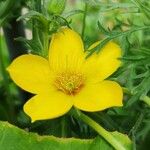
Mentzelia lindleyi
Golden bartonia · Blazingstar · Lindley's Blazing-star · Lindley's blazingstar · Lindley stickleaf
Description
Source: leafsnapMentzelia lindleyi, commonly known as golden bartonia, Lindley's blazingstar, evening star, or blazing star, is an annual wildflower of western North America.
Care Guide
💧 Water
☀️ Light Full sun
Golden bartonia prefers plentiful light. In its natural environments it thrives under strong illumination that is not blocked by buildings or plant cover. It is not naturally suited to low-light conditions; without enough rays its growth can slow. Although rare, extreme overexposure can also damage golden bartonia.
What are the sunlight requirements for Golden Bartonia?
Golden Bartonia, also known by its botanical name Mentzelia lindleyi, thrives in environments with abundant exposure to light. It requires full sun, meaning it should receive above 6 hours of sunlight daily for optimal growth. In its native habitat, it flourishes under strong, unobstructed sunlight. However, it is not inherently adept at handling scarce light conditions and its growth can stagnate without sufficient illumination. Although rare, overexposure to sunlight can also adversely affect Golden Bartonia if exposure levels reach extremes. It's important to watch how sunlight moves through your garden and choose spots that provide a balance of light and shade for your plants.
How can artificial lighting be used for Golden Bartonia?
When natural sunlight is insufficient, artificial lighting presents a viable solution to ensure adequate light exposure for Golden Bartonia, especially during winter or in less sunny spaces. Here are key tips for using artificial light effectively: Choose LED lights as they can be customized to meet the specific light wavelength needs of your plants. Depending on the plant's sunlight requirements, full sun plants need 30-50W/sq ft, partial sun plants need 20-30W/sq ft, and full shade plants need 10-20W/sq ft of artificial light. Position the light source 12-36 inches above the plant to mimic natural sunlight conditions and determine the duration of exposure, aiming for 8-12 hours of light per day to imitate natural daylight hours.
What are the symptoms of inadequate light for Golden Bartonia?
When grown indoors or under inadequate light conditions, Golden Bartonia may display several symptoms indicating light deficiency. These include smaller new leaves, leggy or sparse growth, faster leaf drop, slower or halted new growth, lighter-colored new leaves, chlorosis (leaves turning yellow due to breakdown of chlorophyll), sunscald (damage from intense sunlight exposure), leaf curling (to minimize water loss and damage from excessive sunlight), wilting (due to increased transpiration from overexposure to sunlight), and leaf scorching (characterized by brown, dry, and crispy leaf edges). These symptoms suggest the plant is either not receiving enough light or is being overexposed to it.
What are the solutions for Golden Bartonia facing light-related issues?
To address light-related issues in Golden Bartonia, it's essential to gradually move the plant to a location with adequate sunlight, especially if it's indoors. If it's a large or non-movable plant, consider using artificial light or a desk or ceiling lamp for at least 8 hours daily. For outdoor plants, carefully increase their exposure to sunlight by moving them gradually each week to a sunnier location. Avoid abrupt changes in light intensity as it may cause sunburn. Reducing obstructions such as pruning tree branches can also help. For smaller plants, consider transplanting them during their dormant period to a sunnier spot with good drainage. Although parts of the plant affected by insufficient sunlight may not recover, new growth should be healthy with improved light exposure.
🌡️ Temperature 0–35°C
Golden bartonia is native to habitats with moderate temperatures between 68 and 95 °F (20 and 35 ℃). It grows optimally within that temperature range. During colder seasons, adjustments are likely needed, keeping golden bartonia in warmer locations to meet its temperature requirements.
What is the optimal temperature range for Golden Bartonia?
Golden Bartonia (Mentzelia lindleyi) thrives in environments with moderate temperatures, ideally between 68 to 95 °F (20 to 35 °C). It experiences optimal growth within this temperature range.
Does Golden Bartonia require special frost protection measures during winter?
Golden Bartonia has strong cold resistance, so it generally does not require special frost protection measures during winter. However, if temperatures are expected to drop below -35°C, it is important to protect the plant from the cold by covering it with soil or straw. Additionally, watering the plant abundantly before the first freeze in autumn helps to ensure the soil remains moist and enters a frozen state, which is crucial for preventing drought and water scarcity during winter and early spring.
How does low temperature affect Golden Bartonia and what are the solutions?
Golden Bartonia is cold-tolerant and fares best when the temperature remains above 20°C. If temperatures drop below -35°C, you may not notice changes during the winter, but there could be a decrease in sprouting or even no sprouting during the spring. The solution is to remove any parts of the plant that have failed to sprout in the spring.
What are the effects of high temperature on Golden Bartonia and how can it be mitigated?
During summer, it is important to keep Golden Bartonia below 35°C to avoid heat stress. Temperatures above 41°C can cause the leaves to lighten in color, curl, become prone to sunburn, and, in severe cases, cause the plant to wilt and dry out. To mitigate these issues, trim away sunburned and dried-up parts of the plant, move the plant to a shaded location during the midday and afternoon sun, or use a shade cloth. Additionally, watering the plant in the morning and evening can help keep the soil moist.
💨 Humidity
🪴 Soil 6-7
🌱 Fertilizer
When most of Golden bartonia's blooms have fully opened, resume fertilizing. At the time the flowers are at peak production, feed every three to four weeks, weather permitting. Once Golden bartonia begins producing fewer new blooms, stop fertilizing; there's no reason to fertilize when the plant can no longer produce additional blooms.
🪴 Pot & Repot
✂️ Pruning
Golden bartonia flourishes with its vibrant yellow blooms when it is regularly pruned from early to late spring. During pruning, make sure to remove damaged stems, deadhead the flowers, and thin out crowded areas to improve air circulation. Proper pruning promotes growth and resilience. For the best techniques, consult horticultural guidelines.
🌿 Propagating
🐛 Diseases & pets
☠️ Toxicity
Characteristics
- Plant Type
- Herb
- Life Cycle
- Annual
- Genus
- Mentzelia
- Family
- Loasaceae
- Hardiness Zone
- 3-10
- Mature Height
- 30 cm to 91 cm
- Mature Spread
- 30 cm
- Leaf Color
- Green, Light Green
- Leaf Type
- Semi-evergreen
- Flower Color
- Yellow, Gold
- Flower Size
- 5.08 cm to 7.62 cm
- Bloom Time
- Late spring, Summer
- Planting Time
- Spring, Summer
- Harvest Time
- Mid summer, Late summer, Early fall, Mid fall