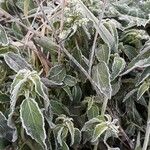
Mercurialis annua
Herb mercury · Annual mercury · French mercury · Annual Dog's Mercury · Mockery
Description
Source: leafsnapMercurialis annua, commonly known as annual mercury or mercury weed, is an annual herbaceous plant in the Euphorbiaceae family. Native to Europe and Asia, it has since spread and become naturalized in many parts of the world. The plant can grow up to 50 cm tall, featuring a slender stem and opposite leaves that are either ovate or lanceolate in shape. Its small flowers, which are greenish-yellow, appear in clusters at the ends of branches. Annual mercury thrives in moist soils and is often found along roadsides, in fields, gardens, waste areas, and disturbed habitats such as construction sites. It is considered a weed because it can grow rapidly under favorable conditions. For centuries, the plant has been used for medicinal purposes due to its diuretic properties, which help increase urine production. It was also traditionally used to treat skin conditions such as eczema and psoriasis. However, it is important to note that Mercurialis annua contains toxic compounds like saponins, which can cause skin irritation or even poisoning if ingested by humans or animals. In conclusion, Mercurialis annua is an interesting herbaceous plant with medicinal properties, but it should be handled with caution due to its toxic nature when consumed by humans or animals.
🌳 Annual mercury may not be the first plant people think of for commercial applications, but it demonstrates promising potential for bioremediation. Its capacity to grow in metal-contaminated soils has generated interest in employing it for phytoremediation, the process by which plants remove contaminants from the environment. That capability could be used to clean up areas polluted with heavy metals, turning an otherwise overlooked plant into an eco-friendly tool for environmental restoration.
Care Guide
💧 Water Every 3 days
Annual mercury thrives in consistently moist soil and benefits from weekly watering. Although it is moderately drought-tolerant, it prefers stable humidity levels. This adaptable plant does well in various climates but flourishes best when rain coincides with its growth cycles, reflecting its origins in moist woodland understories.
How should I water my Annual mercury plant?
To water Annual mercury, you have a few options: using a garden hose with a spray nozzle, a watering can, or any other typical watering tool. This plant isn't particularly fussy about its water source, as it can thrive with rainwater, tap water, or filtered water. However, it's generally best to avoid watering this plant from above to prevent leaf and flower damage or potential disease. For optimum watering, consider setting up a drip irrigation system, which delivers water evenly and directly to the soil. When it comes to watering a container-grown Annual mercury, you can follow a similar approach using a cup, watering can, or tap water to directly apply water to the soil.
What should I do if I give my Annual mercury plant too much or too little water?
If you notice that your Annual mercury plant lacks moisture, the remedy is simple: water it more regularly. However, overwatering can cause more serious problems, including diseases that can lead to the decline and death of the plant. To prevent this, choose a growing location with plenty of sunlight to dry the soil and good drainage to prevent water from pooling. If you have overwatered your Annual mercury in a pot, consider repotting it into a new pot with better drainage and loose soil.
How often should I water my Annual mercury plant?
During the growing season, it is important to regularly water your Annual mercury. In the spring, watering once a week is sufficient. As the season progresses and temperatures rise, you may need to water two to three times per week. However, overwatering can harm the plant, so it is important to keep the soil moist, but not wet. If your Annual mercury is in a pot, you will need to water more frequently as the soil in pots can dry out quicker. In most cases, watering a container-grown Annual mercury a few times per week is recommended, compared to just once per week for a plant in the ground.
How much water does my yearly mercury need?
There are multiple ways to determine the correct amount of water for your Annual mercury. One method is to feel the soil for moisture and water until the top six inches are moist. Another option is to use a specific measurement, such as two gallons per week, taking into account temperature and soil dryness. However, these guidelines could lead to overwatering if your plant needs less. For container-grown Annual mercury, you can test moisture by touching the soil or watering until there is a slight trickle of excess water from the drainage holes.
How can I know if I'm giving enough water to my Annual mercury plant?
Avoiding overwatering your Annual mercury can be somewhat challenging. On one hand, these plants need weekly watering to keep the soil moist due to their deep roots. However, Annual mercury plants are highly vulnerable to root rot and may also develop browning when overwatered. Unlike underwatering, which is less likely to occur as these plants can survive without extra watering for some time, neglecting to provide water for too long can cause wilting and dry leaves in your Annual mercury.
☀️ Light Partial sun
Annual mercury grows best in locations where it gets plenty of light throughout the day. It does not require a specific type of light and can tolerate different conditions. Too much or too little light can impair its growth, though this also depends on other environmental factors. It originated in environments with abundant daily light.
What are the sunlight requirements for Annual Mercury?
Annual Mercury thrives when exposed to more than 6 hours of sunlight each day, requiring spots in your garden that strike the perfect balance between light and shade to ensure the best growth. The plant is quite adaptable, capable of growing in various light conditions, though its growth can be negatively impacted by both excessive and insufficient light, depending on other environmental factors.
How does artificial lighting affect the growth of indoor Annual Mercury plants?
Indoor Annual Mercury plants benefit significantly from adequate artificial lighting, especially when natural sunlight is scarce, such as during winter or in less sunny spaces. Artificial lights, like LED lights, can be customized to provide specific wavelengths necessary for optimal growth. The amount of artificial light required varies with the type of plant; full sun plants need 30-50W/sq ft, partial sun plants need 20-30W/sq ft, and full shade plants need 10-20W/sq ft. The light source should be placed 12-36 inches above the plant, mimicking natural sunlight as closely as possible for 8-12 hours per day.
What are some symptoms of insufficient light in Annual Mercury?
When Annual Mercury is grown indoors under poor light conditions, it may show several signs of distress. New leaves may grow smaller, and the plant might exhibit leggy or sparse growth, with elongated spaces between leaves or stems. You might notice a quicker drop of older leaves, a slowdown or cessation of new growth, lighter-colored or yellowing new leaves indicating a lack of chlorophyll, and even damage from too much sunlight, such as sunscald, leaf curling, wilting, or leaf scorching.
How can I address insufficient light for my Annual Mercury, whether indoor or outdoor?
To combat insufficient light for Indoor Annual Mercury, gradually relocate your plants to sunnier spots until they achieve at least 6 hours of direct sunlight daily. Utilize south-facing windows and keep curtains open during the day. If the plant is too large or not easily movable, artificial lighting, such as desk lamps or professional plant grow lights, can be used for at least 8 hours a day. For outdoor plants, move them gradually to avoid shock and sunburn. Pruning nearby trees can reduce obstructions, and for smaller plants, consider transplanting during their dormant period to a location with better sunlight and drainage.
🌡️ Temperature 5–37.8°C
Annual mercury originates from temperate regions and prefers temperatures between 68 and 100°F (20 to 38℃). To maintain its best health, it is advisable to modify its environment in winter so the temperature remains at least 68°F (20℃).
What is the native climate for Annual mercury?
Annual mercury, scientifically known as Mercurialis annua, is native to areas with temperate climates. It thrives in temperatures that range from 68 to 100°F (20 to 38°C). To ensure the plant remains healthy, it's important to adjust its environment in winter to maintain a minimum temperature of 68°F (20°C). The plant demonstrates strong cold resistance, indicating that special frost protection measures are typically unnecessary during winter. Nevertheless, if winter temperatures are anticipated to plummet below -25°C, taking steps to protect the plant from cold by covering it with protective materials like soil or straw is crucial. Additionally, watering the plant abundantly before the first freeze in autumn to keep the soil moist helps to prevent drought and water scarcity during winter and early spring.
How does Annual mercury respond to low temperatures?
Annual mercury is remarkably tolerant to cold, flourishing best when temperatures are maintained above 20°C. Throughout the winter season, it's vital to ensure the temperature does not drop below 0°C. However, if temperatures descend beneath -25°C, the plant may exhibit no noticeable changes during winter but might face a decline in sprouting or potentially not sprout at all come springtime. The recommended solution for these situations is to remove any plant parts in spring that have failed to sprout, fostering healthier growth.
What should I do if Annual mercury is exposed to high temperatures?
In the summer months, it's crucial to keep Annual mercury below 38°C to prevent stress due to excessive heat. Should temperatures exceed 43°C, the plant's leaves are likely to lighten in color, become prone to curling, sustain sunburn, and, in severe cases, the entire plant may wilt and dry out. To mitigate these issues, sunburned and dried-up parts of the plant should be trimmed away. Additionally, moving the plant to a shaded area or utilizing a shade cloth to protect it from the midday and afternoon sun is beneficial. Ensuring the soil remains moist by watering the plant in the morning and evening is also key to helping it survive and thrive through high temperatures.
💨 Humidity normal (40-60%)
This plant will thrive in moderate humidity, which is probably the level in your home. However, misting it a few times a week can be very beneficial. Make sure the room has good ventilation.
🪴 Soil 6-7
🌱 Fertilizer
Annual mercury benefits from regular, weak fertilizer applications to encourage healthy leaf growth. Fertilize Annual mercury about once a month during the summer. Nitrogen is important for foliage, and adding nitrogen-rich sources helps Annual mercury thrive.
🪴 Pot & Repot
✂️ Pruning
🌿 Propagating
🐛 Diseases & pets
☠️ Toxicity
Mercurialis annua is poisonous if eaten by livestock.
Characteristics
- Plant Type
- Herb
- Life Cycle
- Annual
- Genus
- Mercurialis
- Family
- Euphorbiaceae
- Hardiness Zone
- 5-12
- Mature Height
- 10 cm to 61 cm
- Mature Spread
- 15 cm to 30 cm
- Leaf Color
- Light Green, Forest Green
- Leaf Type
- Deciduous
- Flower Color
- Yellow, Green
- Flower Size
- 0.15 cm to 0.18 cm
- Bloom Time
- Spring, Early summer
- Planting Time
- Spring, Autumn
- Harvest Time
- Late spring, Early summer, Mid summer