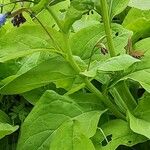
Mertensia virginica
Virginia Bluebell · Roanoke-bells · Virginia bluebells · Virginia cowslip · Bluebells
Description
Source: leafsnapMertensia virginica, commonly known as Virginia bluebells, is a perennial herbaceous plant native to eastern North America. Belonging to the Boraginaceae family, this plant typically reaches heights of 1 to 2 feet. It produces clusters of bell-shaped flowers that start off pink and gradually turn blue as they mature. The leaves are oval-shaped with a distinctive bluish-green hue. Virginia bluebells thrive in moist soil and partial shade, though they can also tolerate full sun in cooler climates. You can often find them growing in woodlands, along streams or rivers, and in meadows. This plant has been used for various purposes. Native Americans traditionally used it medicinally to treat respiratory ailments such as asthma and bronchitis. Virginia bluebells are also popular as ornamental plants due to their attractive flowers that bloom in the spring. In summary, Mertensia virginica is a beautiful native wildflower that enhances natural landscapes and offers medicinal benefits.
🌳 At first glance, Virginia bluebells might appear to be just another attractive spring flower with striking colors and a pleasant scent. Unusually, it prospers in cold weather and has earned the nickname "nature's ice cream" because the frozen sap from its roots is edible and was prized by Native Americans as a winter dessert. That sap also served as a flavoring in their cooking, giving dishes a distinct sweet yet spicy note. Additionally, its bright blue flowers attract many insects, indicating it may have use in organic pest deterrents.
🎭 Thankfulness, modesty, steadfastness, eternal love
Care Guide
💧 Water Every 7 days
Virginia bluebells flourish in moist, nutrient-rich soils and require consistent moisture for optimal growth. Regular weekly watering helps maintain their lush foliage and support their vibrant spring blooms. As a deciduous perennial, this plant needs more water during its active growing period in the spring, then conserves resources when it enters dormancy.
How should I water my Virginia bluebells?
When watering the Virginia bluebells, it's best to use filtered water at room temperature. Tap water may contain harmful particles that can negatively affect the plant. The water should be at room temperature or slightly warmer because the Virginia bluebells are accustomed to a warm environment, and cold water can be a shock to their system. Avoid overhead watering, as it can cause issues with the foliage. Instead, apply filtered room temperature water directly to the soil until it is completely soaked. This helps the plant by moistening the roots and allowing them to spread through the soil and collect necessary nutrients.
If I give my Virginia bluebells too much or too little water, what should I do?
Taking care of your Virginia bluebells involves finding the right balance of watering. While both overwatering and underwatering can harm your plants, overwatering is a more common issue. Too much water can cause wilting, yellowing, and potentially deadly diseases like root rot, mold, and mildew. On the other hand, underwatering is less likely to happen because Virginia bluebells can tolerate drought fairly well. However, when underwatering does occur, the leaves become brittle and brown. It is important to recognize the signs of overwatering early to prevent irreversible damage. If you do notice these signs, reduce your watering and check the soil for proper drainage. If the soil is not draining well, replace it with a loose, well-draining potting mix. On the other hand, if you see signs of underwatering, simply water more frequently until the signs disappear.
How frequently should I water my Virginia bluebells?
If your Virginia bluebells are in a pot, you can check if they need water by sticking your finger into the soil. If the top two to three inches are dry, it's time to water them. If you're growing them in the ground outside, you can use the same method to check the soil. If the top few inches are dry, you should water them. In the spring and early fall, you'll generally need to water about once a week. In very hot weather, you may need to water twice a week or more. However, mature and well-established Virginia bluebells can handle drought conditions well.
How much water do my Virginia bluebells need?
To properly water your Virginia bluebells, don't hold back on the amount of water you give them. Wait until the top two to three inches of soil are dry, then give the plant a good, deep watering. Make sure you provide enough water to saturate the soil entirely. You'll know you've added enough water when you see excess water flowing out of the drainage holes in the bottom of the pot. If you don't see any excess water, it means you haven't watered enough. However, be careful not to let water accumulate in the soil, as this can harm the plant. On the other hand, if you notice that water isn't draining well through the pot, it could indicate that the soil isn't draining properly, which is bad for the plant's health. If the plant is outside, one inch of rain per week should be sufficient.
How do I water my Virginia bluebells as they grow?
The water needs of Virginia bluebells can vary depending on their growth stages. When the plant is in its early years or has been recently transplanted, it will require more water than usual. During these stages, the plant focuses energy on developing new roots to support future growth. These new roots perform best with slightly more moisture. As the plant matures over a few seasons, it will need less water overall. Additionally, Virginia bluebells may require more water during the bloom period, as flower development requires a significant amount of moisture.
☀️ Light Partial sun
Virginia bluebells generally need a substantial amount of sunlight to grow optimally. Although they originated in wooded habitats, they can also tolerate considerably lower light levels. Their light requirements do not change notably through different stages of their lifecycle. Too little light can cause legginess, while excessive light may produce leaf bleaching.
What are the sunlight requirements for Virginia bluebells?
Virginia bluebells require a considerable amount of sunlight for ideal growth but can thrive in less light as they are native to forested habitats. These plants need between 3-6 hours of sunlight (partial sun) or even less than 3 hours (full shade) for healthy growth. Observing how sunlight moves through your garden and choosing appropriate spots are crucial for ensuring the plants' happiness. Insufficient sunlight may lead to legginess due to elongated stems, whereas too much sunlight can cause foliar bleaching, indicating damage to the plant's leaves from excessive light.
How can artificial lighting benefit Virginia bluebells indoors?
Indoor Virginia bluebells require adequate lighting, especially in conditions where natural sunlight is insufficient, such as in winter or less sunny spaces. Artificial lighting provides a viable solution, supporting optimal plant growth and development. LED lights are recommended due to their ability to offer specific wavelengths needed by the plants. The amount of artificial light required ranges based on plant type: 30-50W/sq ft for full sun, 20-30W/sq ft for partial sun, and 10-20W/sq ft for full shade plants. Proper distance (12-36 inches above the plant) and duration (8-12 hours per day) mimic natural sunlight conditions and promote healthier growth.
What are common symptoms of inadequate lighting in Virginia bluebells?
When Virginia bluebells experience inadequate lighting, several symptoms may manifest, including smaller new leaves, leggy or sparse growth, faster leaf drop, slower or halted growth, and lighter-colored or chlorotic leaves. Excessive sunlight exposure can lead to chlorosis, sunscald, leaf curling, wilting, and leaf scorching. These symptoms highlight the plant's difficulty in photosynthesis, structural integrity, and hydration maintenance under poor lighting conditions.
What solutions can help Virginia bluebells adapt to their lighting environment?
To help Virginia bluebells adapt to their lighting environment, gradually shifting them to increasingly sunnier spots each week is beneficial, aiming for 3-6 hours of direct sunlight daily for outdoor plants. For indoor plants, use artificial lighting if the plant is large or not easily movable, keeping a lamp on for at least 8 hours daily or investing in professional grow lights. Minimizing obstructions like overhanging branches can improve sunlight access. If necessary, transplanting to a location with better light and drainage is an option. It is important to allow the plant to adapt gradually to avoid sunburn, focusing on increasing light exposure for new, healthy growth while understanding parts of the plant affected by insufficient light may not recover.
🌡️ Temperature 0–35°C
Virginia bluebells grow best in temperatures from 32 to 95 ℉ (0 to 35 ℃) and are native to areas with moderate climates. In the hot summer months, offering partial shade is recommended to avoid temperature stress. During winter, they can withstand colder temperatures as long as the soil is well-drained to prevent root damage.
What are the ideal temperature conditions for Virginia bluebells?
Virginia bluebells, also known by its botanical name Mertensia virginica, thrives in a temperature range between 32°F to 95°F (0°C to 35°C). Native to moderate climate settings, it is imperative to protect these plants from temperature stress during the hotter summer months by providing partial shade. They possess significant cold resistance, making special frost protection measures unnecessary in most scenarios. However, in environments where winter temperatures plummet below -35°C, additional cold protection is advised, such as covering the plant with soil or straw. To safeguard against drought and water scarcity during the colder seasons, it's recommended to water the plants abundantly before the first freeze, ensuring the soil is moist as it freezes.
How should I care for Virginia bluebells in low temperatures?
Virginia bluebells handle cold exceptionally well, best thriving in temperatures above 0°C and should ideally be kept above -30°C during the winter. If temperatures dip below -35°C, you may not notice immediate damage during winter, but the spring may reveal a decrease in sprouting, or the plants may not sprout at all. To manage any issues that arise from extremely low temperatures, remove any parts of the plant that have failed to sprout in the spring.
What precautions should be taken for Virginia bluebells in high temperatures?
During the summer months, it's crucial to ensure Virginia bluebells are not exposed to temperatures above 35°C. Exposure to temperatures exceeding 38°C can cause the leaves to lighten, curl, become more susceptible to sunburn, and in severe cases, the plant might wilt and dry out. To mitigate these risks, trim away any sunburned or dried-up parts of the plant. Relocating the plant to shaded areas during the midday and afternoon sun or utilizing a shade cloth can provide necessary protection. Additionally, maintaining moist soil through morning and evening watering can help alleviate the effects of high temperature stress.
💨 Humidity
🪴 Soil 6-7
🌱 Fertilizer
One spring fertilization is generally enough for Virginia bluebells, though multiple applications can enhance growth. Apply fertilizer every one to one and a half months. Feeding improves the leaves' appearance and function, helping maintain uniform color and a healthy texture. It also promotes root development and nutrient uptake for long-term plant health.
Why should I put fertilizer on my Virginia bluebells?
The main structure of Virginia bluebells is made up of its leaves. Fertilization plays a crucial role in maintaining the appearance and function of these leaves. By properly fertilizing your Virginia bluebells, you can ensure that the leaves have consistent color and a healthy texture. Fertilization also benefits the plant below the soil surface by promoting the development of new roots and maintaining the existing root system. This not only keeps the plant healthy in the present, but also improves its ability to absorb essential nutrients from the soil in the long run.
When should I put fertilizer on my Virginia bluebells?
When you grow your Virginia bluebells outdoors each year, they will shoot out new growth in early spring. This is when you should start fertilizing them. Usually, one application of fertilizer in the spring is enough for the bluebells to thrive. But if you want to maximize their growth, you can fertilize them multiple times throughout the spring and early summer. If you decide to do this, you can feed them every month to a month and a half.
When is the best time to not fertilize my Virginia bluebells?
During the late fall and winter, your Virginia bluebells will be dormant and won't grow. It's best to avoid fertilizing them during this time. In the spring and summer, if you choose to fertilize, gradually reduce the amount as summer approaches since the growth rate of the bluebells slows down. It's important not to fertilize your bluebells during extremely hot weather or when the soil is very dry. Fertilizing in these conditions can stress the bluebells and cause them to die earlier.
What kind of fertilizer should I use for my Virginia bluebells?
Choosing the best fertilizer for a Virginia bluebells is straightforward. These plants thrive on a general-purpose garden fertilizer with equal amounts of nitrogen, phosphorus, and potassium, like a 10-10-10 ratio. Avoid fertilizers high in nitrogen if unsure. Granular fertilizers that are slow-release are the most effective for Virginia bluebells and easy to apply. Additionally, feeding them with organic soil amendments like compost can be helpful.
How do I give my Virginia bluebells plant food?
To ensure the optimal growth of your Virginia bluebells, start by waiting until early spring when you spot the tiny leaves emerging from the soil. At this point, apply a granular slow-release fertilizer with a balanced formula to the soil around the base of the plant. If desired, you can repeat this process later in the season. When reapplying fertilizer, remember to focus on the soil at the base of the plant rather than directly on the plant itself. Sometimes, you may need to move leaves aside to access the soil above the roots. It's also a good practice to water your Virginia bluebells before and after feeding them.
🪴 Pot & Repot 2-3 years
When repotting Virginia bluebells, pick a pot 1–2 inches (2.5–5.1 cm) larger with adequate drainage. Use a well-draining potting mix. Repot in spring or fall, making sure the root ball is slightly lower than the rim of the flower pot. Water thoroughly after repotting and place in a warm spot with indirect sunlight.
✂️ Pruning
Virginia bluebells are known for their stunning bell-shaped blue flowers. To help them thrive, it's important to prune them strategically in the spring, right after they have finished flowering. Begin by removing any damaged stems to encourage new growth and improve air circulation. Be careful not to prune too heavily, as this can stress the plants. By following these practices, you'll enhance the health of your Virginia bluebells and ensure a vibrant display in the next season.
🌿 Propagating
🐛 Diseases & pets
☠️ Toxicity
Virginia Bluebells generally are not considered toxic. However, if consumed in large quantities, the plant can cause vomiting, diarrhea, and lethargy. Severe poisoning is rare but it’s still best to refrain from eating these flowers, as with most non-toxic plants.
Characteristics
- Plant Type
- Herb
- Life Cycle
- Perennial
- Genus
- Mertensia
- Family
- Boraginaceae
- Hardiness Zone
- 3-9
- Mature Height
- 46 cm to 61 cm
- Mature Spread
- 30 cm to 46 cm
- Leaf Color
- Green, Blue, Gray
- Leaf Type
- Deciduous
- Flower Color
- Pink
- Flower Size
- 2.54 cm to 7.62 cm
- Bloom Time
- Spring
- Planting Time
- Summer
- Harvest Time
- Late spring, Early summer, Mid summer
- Native Area
- Eastern North America