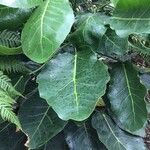
Meryta sinclairii
Puka · Pukanui
Description
Source: leafsnapMeryta sinclairii, commonly known as the Puka tree, is a large evergreen tree native to New Zealand. It belongs to the Araliaceae family and can reach heights of up to 20 meters, with a trunk diameter of up to 1 meter. The tree features large, glossy leaves with a leathery texture, measuring up to 60 cm in length and width. In spring, the Puka tree produces small greenish-white flowers, which are followed by small black berries. These berries are edible, though they are not commonly consumed. The Puka tree is highly valued for its ornamental qualities, thanks to its attractive foliage and unique growth habit. It is often used as an accent plant in gardens or as a specimen plant for landscaping purposes. Additionally, the wood of this species is durable and has been used for carving. Meryta sinclairii prefers well-drained soil and partial shade but can also tolerate full sun exposure once established. It is resistant to salt spray, making it suitable for coastal gardens. Overall, Meryta sinclairii is an impressive evergreen species that adds beauty and interest wherever it grows. It also offers practical uses, such as wood for carving and edible berries, making it a valuable addition to gardens and landscapes.
Care Guide
💧 Water Every 7 days
The Puka, native to New Zealand's coastal forests, thrives in environments with high humidity and consistent moisture. While it has moderate drought tolerance, it is best to water it every two weeks. Usually grown outdoors, the Puka flourishes when the soil moisture mimics the rainfall patterns of its natural habitat.
☀️ Light Full sun
Puka does best in locations that receive plentiful sunlight throughout the day. It can also tolerate slightly lower light levels, though that may impair its healthy growth. Both excessive and insufficient light exposure can be harmful. Its native habitat is characterized by very sunny conditions.
What are the sunlight requirements for Puka plants?
Puka plants thrive best in locations with abundant sunlight throughout the day, typically requiring more than 6 hours of direct sunlight to be considered in full sun conditions. They can also tolerate partial sun, which is about 3-6 hours of sunlight per day. It's important to watch how sunlight moves through your garden, to select spots that provide the perfect balance for your Puka plants, thereby ensuring their happiness.
How does artificial lighting benefit indoor Puka plants?
When natural sunlight is insufficient, especially during winter or in less sunny spaces, artificial lighting serves as a vital solution for indoor Puka plants, promoting faster and healthier growth. LED lights are preferred for indoor plant lighting since they can be tailored to provide specific wavelengths of light needed by plants. Full sun plants require 30-50W/sq ft of artificial light, partial sun plants 20-30W/sq ft, and full shade plants 10-20W/sq ft. The light source should be placed 12-36 inches above the plant, mimicking natural sunlight conditions, and plants most often need 8-12 hours of light per day.
What are the symptoms of insufficient light in Puka plants?
Puka plants exhibit multiple symptoms when exposed to insufficient light, including smaller new leaves, leggy or sparse growth, faster leaf drop, halted growth or no new growth, paler or irregularly colored new leaves, and chlorosis or the yellowing of leaves. These symptoms indicate the plant's struggle with inadequate sunlight affecting its growth and overall health.
What are the symptoms of excessive sunlight in Puka plants?
Symptoms of excessive sunlight exposure in Puka plants include sunscald, which appears as pale, bleached, or necrotic areas on the plant, leaf curling as a defense mechanism to reduce surface area exposed to sunlight, wilting due to increased water loss, and leaf scorching characterized by brown, dry, and crispy leaf edges. These conditions negatively impact the plant's ability to photosynthesize and maintain overall health.
How can you care for Puka plants with light issues?
To care for Puka plants experiencing light-related issues, gradually move them to sunnier locations to receive at least 6 hours of direct sunlight daily. For indoor plants, use south-facing windows or professional grow lights for adequate exposure. Observe parts of the garden blocking sunlight, pruning as necessary, or transplant to sunnier spots. Remove or reduce obstructions like trees or consider transplanting smaller plants during dormant periods to locations with better sunlight and drainage. Note that parts of the plant affected by insufficient sunlight may not recover, but new growth will be healthy.
🌡️ Temperature 20–37.8°C
Puka is best kept in a habitat where temperatures remain between 68 and 100 °F (20 and 38 ℃). Native to milder climates, puka prefers warmer surroundings. In colder areas, seasonal temperature adjustments might be required to reproduce its native tropical conditions.
What is the ideal temperature range for a Puka plant?
The ideal temperature range for a Puka plant (Meryta sinclairii) is between 68 to 100°F (20 to 38°C). Originating from milder climates, puka plants favor warmer environments. To thrive, they may require seasonal temperature adjustments in colder regions to mimic their native tropical conditions. Especially during winter, it's vital to maintain temperatures above 20°C, and exposure to temperatures nearing 0°C can be harmful to the plant. In regions experiencing colder autumns, it is advised to bring outdoor-grown puka plants indoors and place them near a bright window, while also ensuring they are not too close to heaters to avoid damage.
How should you care for a Puka plant in low temperatures?
Puka plants prefer warm conditions and do not tolerate low temperatures well. They thrive best when the temperature is consistently above 20°C and should always be kept above 0°C during winter months. Exposure to temperatures below -5°C may cause the plant's leaves to lighten in color, and following frost damage, leaves can turn brown or black with visible signs of wilting and drooping. To care for a puka plant in low temperatures, immediately trim off any frost-damaged parts and move the plant to a warm, indoor environment. It's beneficial to place the plant near a south-facing window to ensure it receives ample sunlight while avoiding direct placement near heaters or air conditioning vents, which can cause excessive dryness.
What steps should be taken if a Puka plant experiences high temperatures?
During the summer months, it's important to keep the puka plant's environment below 38°C to avoid stress and damage. If temperatures exceed 43°C, the plant's leaves may lighten, indicating stress and increasing the risk of sunburn. In such conditions, it's crucial to trim away any sunburned or dried-up parts of the plant. Relocating the plant to a spot that provides shade during the midday and afternoon sun can also prevent further damage. Ensuring the soil remains moist through watering in the morning and evening can help the plant cope with high temperatures.
💨 Humidity
🪴 Soil 6-7
🌱 Fertilizer
Early spring, when the Puka breaks dormancy, is the best time to apply fertilizer. This encourages overall growth and flower development. Fertilization improves the foliage, stems, and branches and promotes flowers that are larger, more vibrant, and longer-lasting. It assists in moving nutrients from the roots to the flowers and enhances the plant's health and resistance to disease.
🪴 Pot & Repot 2-3 years
Puka plants should be repotted every 2 to 3 years, preferably in the spring. Use a large pot to accommodate their substantial roots and ensure proper balance. After repotting, place the plant in bright, indirect light and keep the soil consistently moist to promote healthy growth and ensure a smooth transition.
✂️ Pruning
Puka benefits greatly from pruning done from early to late winter. This process involves removing dead branches to improve air circulation, which not only enhances the plant's appearance but also boosts its growth and helps prevent disease. Regular seasonal pruning is essential to maintain optimal vitality, encouraging vigorous growth in spring.
🌿 Propagating
🐛 Diseases & pets
☠️ Toxicity
Characteristics
- Plant Type
- Tree
- Life Cycle
- Perennial
- Genus
- Meryta
- Family
- Araliaceae
- Hardiness Zone
- 9-11
- Mature Height
- 7.92 m
- Mature Spread
- 37 cm to 49 cm
- Leaf Color
- Dark Green
- Leaf Type
- Evergreen
- Flower Color
- White
- Flower Size
- 0.76 cm to 1.02 cm
- Bloom Time
- Late summer, Early fall, Mid fall
- Planting Time
- Spring, Summer, Autumn
- Harvest Time
- Late fall, Early winter, Mid winter
- Native Area
- New Zealand