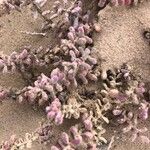
Mesembryanthemum nodiflorum
Slender iceplant · Slender-Leaf Iceplant · Slenderleaf iceplant · Knob-flowered fig marigold · Slender-leaved ice plant
Description
Source: leafsnapMesembryanthemum nodiflorum, commonly known as the trailing ice plant, is a low-growing succulent belonging to the Aizoaceae family. Native to South Africa, it thrives in coastal regions and rocky slopes. This plant features fleshy green, triangular leaves that can grow up to 2 cm in length. The leaves are covered in small hairs, giving them a soft, velvety texture. The trailing ice plant blooms with small pink or white flowers, each having five petals. These flowers appear from spring through summer, opening during the day and closing at night or on cloudy days. As a hardy and drought-tolerant succulent, the trailing ice plant is an excellent choice for xeriscaping gardens or areas with limited water availability. It prefers well-draining soil and full sun exposure but can also tolerate partial shade. In traditional African medicine, the trailing ice plant has several uses, including treating stomach ailments, skin infections, and respiratory problems. Overall, Mesembryanthemum nodiflorum is an attractive succulent with distinct foliage that requires minimal care, making it a beautiful addition to any garden setting.
🌳 The slender-leaved ice plant has a particular ecological importance because it can indicate the presence of certain metals in the soil. Researchers have noted that this plant tends to occupy sites where metals such as copper are present, pointing to its possible application in biogeographical prospecting or phytomining research. This rare capability may promote advances in ecological monitoring and in the field of bioindication.
🎭 Inactivity, cold-hearted or spurned
Care Guide
💧 Water Every 7 days
The slender-leaved ice plant is well-suited to dry environments, thriving with minimal moisture and exhibiting strong drought tolerance. It prefers well-draining soil and should be watered roughly every three weeks to avoid root rot. Its succulent leaves store water efficiently, aiding its survival in arid conditions.
What should I do if I give too much or too little water to my Slender leaved ice plant?
Slender leaved ice plants and other succulents are able to go for long periods without water, so it's rare to see them suffering from underwatering. However, if you happen to forget about your plant and neglect to water it for a month or more, you'll likely find your slender leaved ice plant looking thirsty or damaged from lack of watering. It's easy to identify an underwatered slender leaved ice plant as it will appear lackluster and wrinkled, with some plants completely dried up, turned brown, crispy, or even dropping off. The soil will also be completely dried out. If your plant is underwatered, give it plenty of water by submerging the pot in water for 5-10 minutes until you feel moisture on the surface of the soil. Overwatering is dangerous for slender leaved ice plants and can be fatal if not addressed. Excessive moisture over time leads to root rot, which prevents roots from absorbing nutrients and water. Root rot occurs when wet conditions allow fungi and bacteria to thrive and attack the roots. If you notice symptoms of overwatering, such as yellow, swollen, or translucent organs, it's important to adjust the growing conditions and water frequency to provide better air ventilation. Overwatered plants may turn brown or black and easily fall off. Check the soil to confirm overwatering as the cause, as other issues may mimic similar symptoms. Saving an overwatered plant can be challenging, but catching it early is key. If roots are rotten, the entire plant may die. To determine if your plant is affected, carefully remove it from its pot and check the roots and soil. Remove wet soil, rinse the roots in room-temperature water, and inspect their health. Dark brown or black, soft, mushy, or slimy roots indicate root rot. If the majority of roots are affected, it may be impossible to save the plant. In such cases, remove healthy stems for propagation. However, if only a portion of the roots are rotten, there is a chance to rescue the plant. Use sterilized cutting tools to remove unhealthy roots, dip the remaining firm, pale ones into fungicide, and repot the plant in fresh, well-draining soil. While this method does not always work, in most cases the plant will recover and start new growth in the next growing season.
How frequently should I water my Slender leaved ice plant?
Determining the watering frequency for Slender leaved ice plant does not have a fixed rule. The easiest way is to check the soil and only water when it is completely dry. To do this, you can either insert your finger into the pot or use a moisture meter to check the soil beneath the surface. If you use a deep pot, a stick or chopstick can be used for this purpose. If the soil feels slightly moist, it is best to wait a few days and check again. Generally, most people will need to water Slender leaved ice plant every two weeks during summer and once a month in winter. However, there are various factors that can influence the watering frequency. Below is a list of considerations that can assist you in determining how often to water.
What things should I think about when I water my Slender leaved ice plant?
To properly water your Slender leaved ice plant, there are a few environmental factors you need to consider. These include the size of the container, the type of soil, the temperature, and the humidity. The size of the container and the type of soil you use will determine how often and how much water you should use. Make sure the container has plenty of drainage holes so any excess water can escape. Smaller containers have less room for soil, so they won't hold as much moisture and will need to be watered more frequently. On the other hand, larger pots will stay wet for longer and require less frequent watering. It's important not to use an oversized pot, as this can lead to overwatering. When repotting, choose a container that is just one size larger than the current one. A shallow container is better than a deep one, as Slender leaved ice plants have shallow root systems. During the winter, you'll need to water the plant less often since its growth slows down and it doesn't use as much energy or water. The cooler winter air also reduces water evaporation, so the soil stays wet for a longer period of time compared to the summer. The general climate of your location also affects watering frequency. If you live in a humid and rainy area, you won't need to water as frequently as you would in a dry and arid climate. Keep in mind that even within the same geographic location, conditions can vary with the season and the use of indoor heating and air conditioning. If you have planted the Slender leaved ice plant in the ground, it won't typically need extra water once its root system is established. It will receive enough water from precipitation and dew. However, during long dry periods, you may need to occasionally provide supplemental watering. If you're growing the plant in a container, you can move it outside in the spring and summer but bring it back indoors when temperatures start to drop. Keep in mind that potted plants kept outside usually require more water due to increased sun exposure, even if they are on a shaded porch.
How should I water Slender leaved ice plant?
To properly water Slender leaved ice plant, begin by thoroughly soaking it and allowing it to dry out before watering again. Since this plant can tolerate some drought, it's best to let it become quite dry before watering. It's always better to provide too little water than too much. When watering, ensure that the entire pot's soil is soaked by going around the whole rim of the planter. Avoid watering in just one spot. The amount of water needed depends on the container size and soil absorption. Water the plant until it drains from the drainage holes, then let the drained water sit in the saucer for about 20-30 minutes to be absorbed into dry pockets of soil. Discard excess water remaining in the saucer to prevent waterlogged soil. Bottom-watering is an excellent method for this plant as it ensures thorough soil moisture. Place the pot in a saucer of water, allowing the soil to absorb moisture through the drainage holes. When the top layer is moist, that indicates enough water has been absorbed. Although bottom-watering takes longer than top-watering, it provides an even distribution of water throughout the pot. Slender leaved ice plant originates from relatively dry habitats with infrequent rain, where the soil gets thoroughly moistened when it does rain. To mimic this, bottom-water your plant when the soil is completely dry. For Slender leaved ice plant, deep soil bathing is preferable to frequent light watering.
☀️ Light Full sun
Slender-leaved ice plant performs best when exposed to abundant sunlight every day. Its vigor and overall health depend on this substantial sun exposure. It can, however, tolerate situations with somewhat reduced but still ample light. Excessive sun can stress the plant and limit its growth, while insufficient light may cause it to grow weakly or become stunted.
What are the sunlight requirements for a Slender leaved ice plant?
The Slender leaved ice plant, or Mesembryanthemum nodiflorum, thrives in conditions where it receives abundant sunlight on a daily basis. It needs full sun, which is above 6 hours of direct sunlight, to maintain its vigor and health. However, it can also adapt to partial sun, about 3-6 hours of sunlight. It's important to observe how sunlight moves through your garden to choose the optimal spots that offer the right balance of light and shade, ensuring the plant's happiness. Keep in mind that both oversaturation and inadequate light can affect the plant's growth negatively.
How does artificial lighting support indoor Slender leaved ice plants?
Indoor Slender leaved ice plants require adequate lighting to ensure optimal growth, especially when natural sunlight is insufficient. Artificial lighting offers a vital solution to promote faster, healthier growth. LED lights are a popular choice, providing specific wavelengths needed by the plants. Full sun plants require 30-50W/sq ft of artificial light, partial sun plants 20-30W/sq ft, and full shade plants 10-20W/sq ft. The light source should be placed 12-36 inches above the plant, mimicking natural sunlight, and most plants need 8-12 hours of light per day.
What are the symptoms of inadequate lighting in Slender leaved ice plants?
Slender leaved ice plants may exhibit several symptoms when exposed to suboptimal lighting conditions. These include smaller new leaves compared to mature ones, leggy or sparse growth, faster leaf drop, slower or no new growth, lighter-colored new leaves, chlorosis or yellowing of leaves, sunscald indicated by pale or necrotic areas on plant tissue, leaf curling as a defense mechanism against extreme sunlight, wilting due to increased water loss, and leaf scorching characterized by brown, crispy edges or patches on leaves due to excessive sunlight.
What solutions can help Slender leaved ice plants recover from light deficiency?
To aid in the recovery of Slender leaved ice plants from light deficiency, gradually moving the plants to sunnier locations each week is advised until they receive at least 6 hours of direct sunlight daily. For indoor plants, using a south-facing window or artificial lighting such as desk or ceiling lamps for at least 8 hours daily can significantly improve light exposure. Outdoor plants should be moved gradually to avoid sunburn. While parts of the plant affected by insufficient sunlight may not recover, new growth will be healthy with increased light exposure. Reducing obstructions and considering transplanting for smaller plants are additional steps for promoting adequate sunlight exposure.
🌡️ Temperature 20–41.1°C
The slender-leaved ice plant is native to temperate climates where temperatures range from 68 to 106 °F (20 to 41 ℃). It particularly thrives in warmth, but slight seasonal temperature changes should be anticipated.
What is the ideal temperature range for Slender leaved ice plant?
The Slender leaved ice plant, or Mesembryanthemum nodiflorum, thrives in temperate climates with temperatures ranging from 68 to 106 °F (20 to 41 °C). This plant enjoys warmth and requires slight temperature changes with the seasons. During winter, the plant enters a dormant state and should be kept indoors if temperatures drop below 59 °F (15 °C). It is crucial to provide the plant with ample sunlight, either naturally near a south-facing window or through supplemental lighting, especially when indoor temperatures fall below 68°F (20°C). Outdoor plants require halted watering in cooler conditions to prevent root rot, and additional insulation may be beneficial.
How should I care for a Slender leaved ice plant during low temperatures?
During low temperatures, it's essential to keep the Slender leaved ice plant above 59 °F (15 °C) to avoid weakening, wilting, and susceptibility to root rot. If the plant suffers mild frost damage, trim off the affected areas and check the roots for rot. If root rot has occurred, cut off the rotted roots and propagate the plant using cuttings. Then, move the plant to a warm indoor location with plenty of sunlight. Supplemental lighting can be used if natural light is not sufficient.
What should I do if my Slender leaved ice plant experiences high temperatures?
During periods of high temperatures, especially above 113°F (45°C), the Slender leaved ice plant may stop growing, lose water, wilt, and become prone to sunburn. To manage this, remove any sunburned or rotten parts of the plant. Protect the plant from direct afternoon sunlight until it recovers and resumes growth. If the plant has experienced root rot, cease watering until new roots grow.
💨 Humidity
🪴 Soil 6-7
🌱 Fertilizer
For the Slender leaved ice plant, light doses of fertilizer once or twice a year during the growing season are enough. Do not fertilize in winter or in summer when the plant is dormant. Use less fertilizer for plants that have been repotted and wait a couple of months after repotting before feeding. Fertilizing helps maintain healthy growth and promotes flowering.
Why should I put fertilizer on my Slender leaved ice plant?
When you fertilize Slender leaved ice plant, it adds nutrients to the growing medium. While it does store water and nutrients, applying plant food during the growing season helps promote healthy growth. Fertilizing also encourages mature specimens to produce blooms in the growing season.
When should I put fertilizer on my Slender leaved ice plant?
Slender leaved ice plant requires less fertilizer compared to other plants, needing only a light dose during the growing season. Fertilization should occur 1-2 times a year, specifically in spring and autumn, while avoiding winter and summer when the plant is dormant. Take caution when fertilizing repotted plants, reducing the amount of fertilizer used. Additionally, it is advisable to wait a few months after repotting before applying any fertilizer.
When is the best time to not add fertilizer to my Slender leaved ice plant?
The Slender leaved ice plant, like other plants, has a dormancy period when it doesn't grow. During the summer and winter, it's advisable to stop applying fertilizer. This also applies to the first few months after repotting in the spring.
What kind of fertilizer does my Slender leaved ice plant require?
To ensure proper fertilization of Slender leaved ice plant, it is recommended to use a liquid plant food specifically designed for succulents and cacti. When applying the fertilizer, make sure to dilute it with water to half-strength. It is important to avoid the fertilizer accumulating in the soil. To apply, target the base of the plant and thoroughly water it, allowing any excess moisture to drain from the container or seep into the ground.
How can I make my Slender leaved ice plant grow better?
When fertilizing Slender leaved ice plant, liquid plant food is the easier option, but you can also use granules. Make sure to follow the directions on the packaging, and dilute liquid fertilizers to half-strength. Regardless of whether you're using granules or liquid plant food, always apply it to the soil. Cover the granules with a thin layer of soil and water, no matter the type of plant food you use.
🪴 Pot & Repot Every 2 years
The slender-leaved ice plant benefits from being repotted every two years, ideally in early spring. Use a slightly larger pot that offers good drainage. After repotting, water the plant sparingly and ensure it receives bright, indirect light. Be sure to use well-draining soil to protect the plant's sensitive roots.
✂️ Pruning
To maintain its shape, prune the slender-leaved ice plant in the spring and autumn by removing any unnecessary or crowded branches. Use appropriate tools such as knives and scissors for this task. For propagation, cut strong stems with 5-6 leaves, apply sulfur powder to the cut ends, and plant them after they have healed. Lightly moisten the soil during this process to assist the cuttings in taking root.
🌿 Propagating
🐛 Diseases & pets
☠️ Toxicity
Characteristics
- Plant Type
- Herb
- Life Cycle
- Annual, Perennial
- Genus
- Mesembryanthemum
- Family
- Aizoaceae
- Hardiness Zone
- 13
- Mature Height
- 15 cm to 20 cm
- Mature Spread
- 91 cm
- Leaf Color
- Green, Blue, Red
- Leaf Type
- Evergreen
- Flower Color
- White, Yellow
- Flower Size
- 0.25 cm to 0.51 cm
- Bloom Time
- Early spring, Mid spring, Fall, Winter
- Planting Time
- Spring, Autumn, Winter
- Harvest Time
- Spring, Mid fall, Late fall, Winter
- Native Area
- Saudi Arabia, Libya, Egypt, Turkey, Tunisia, United Arab Emirates, Namibia, South Africa, Mauritania, Cyprus, Pakistan, Greece, Croatia, Morocco, Lebanon, Iraq, Syria, Italy, Spain, Israel, France, Oman, Iran, Kuwait, Algeria, Qatar, Portugal