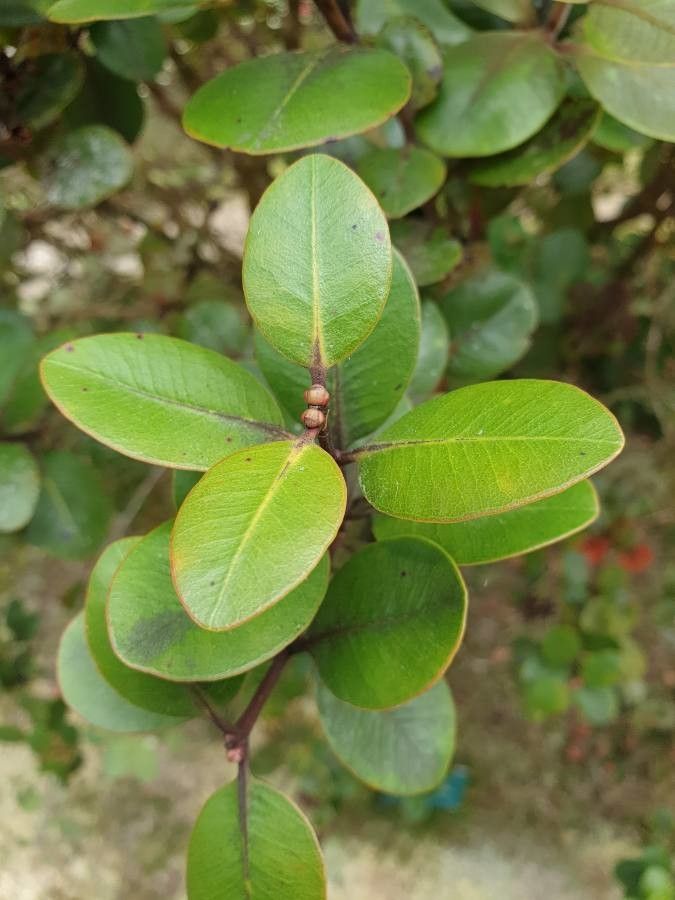
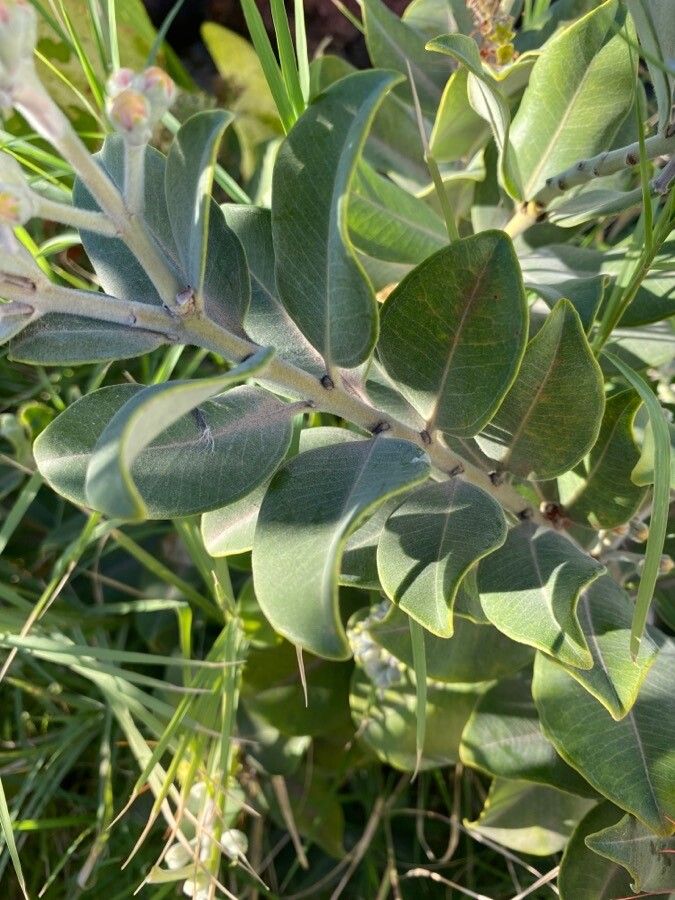
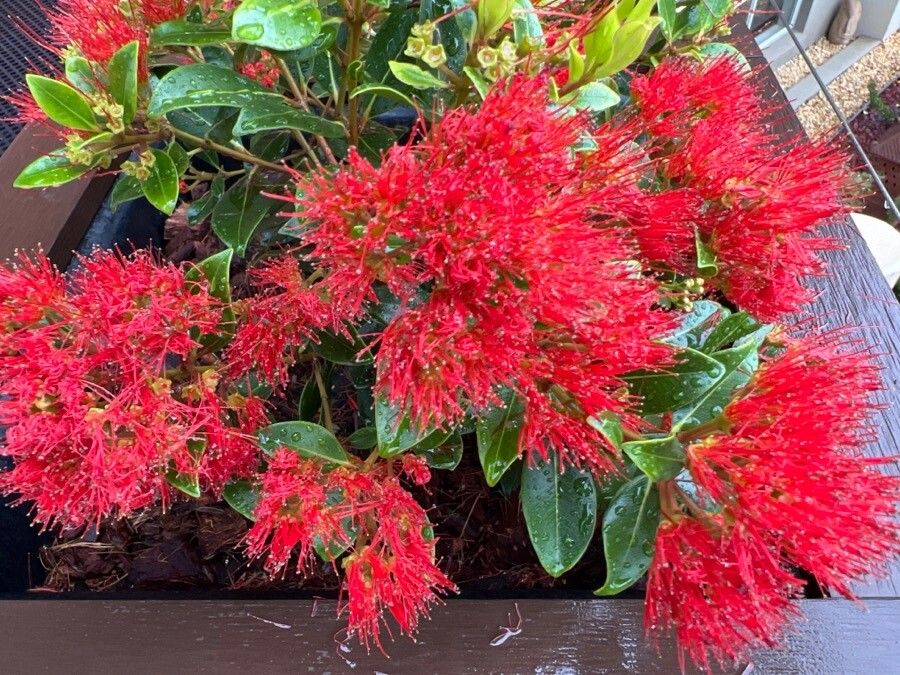
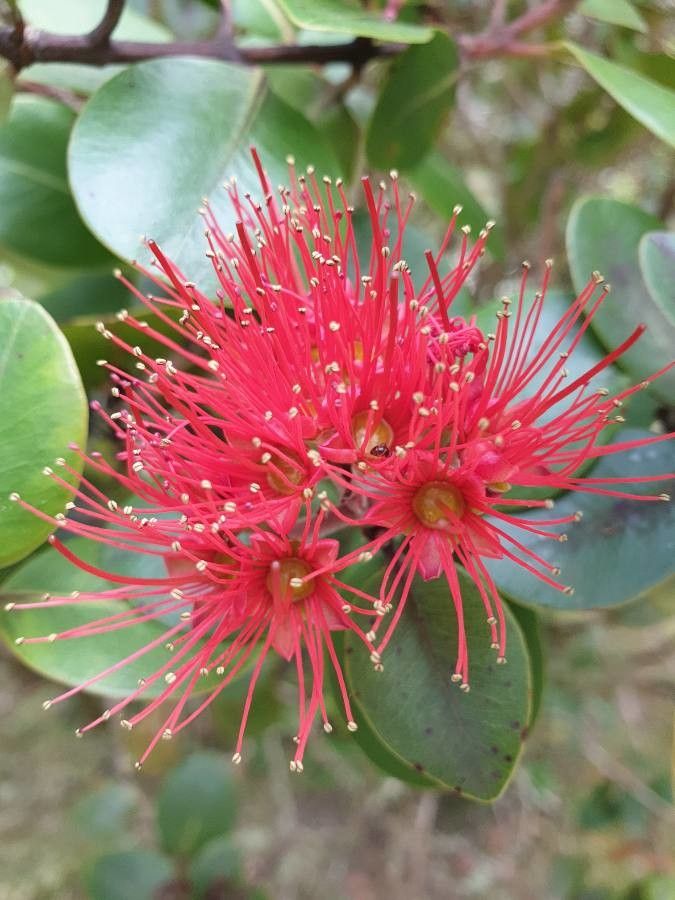
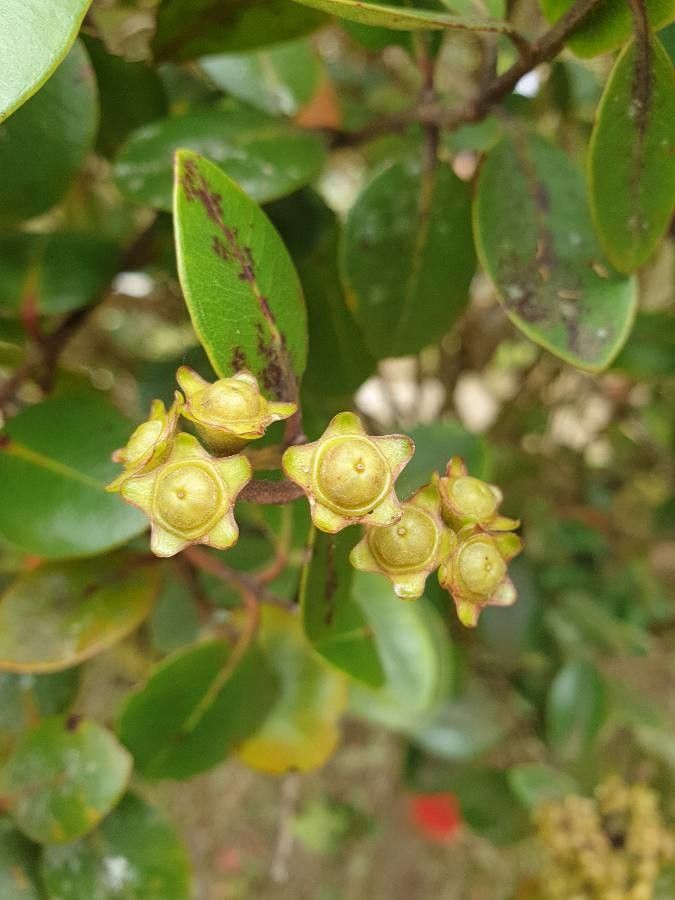
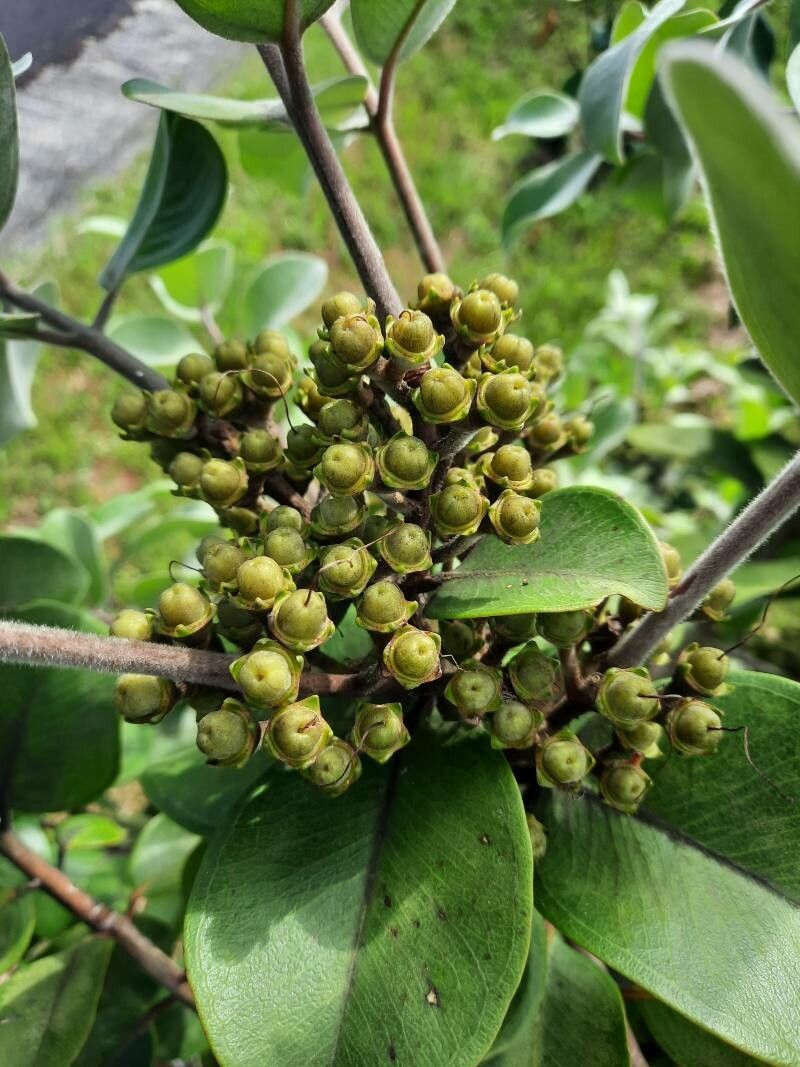
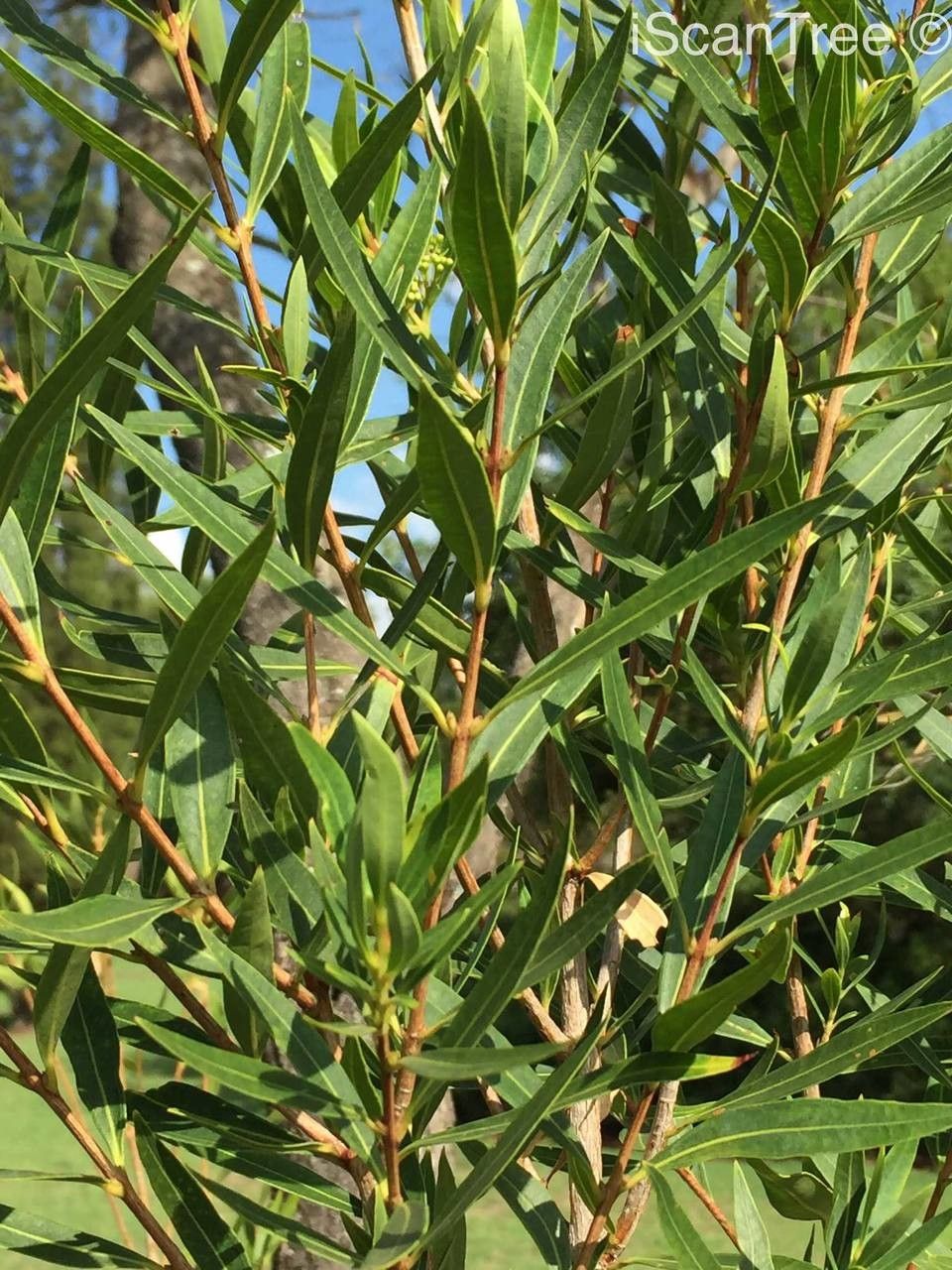
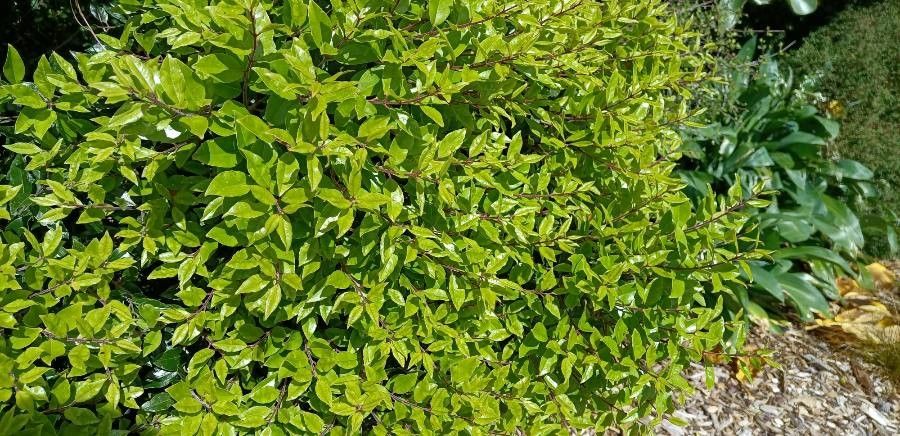
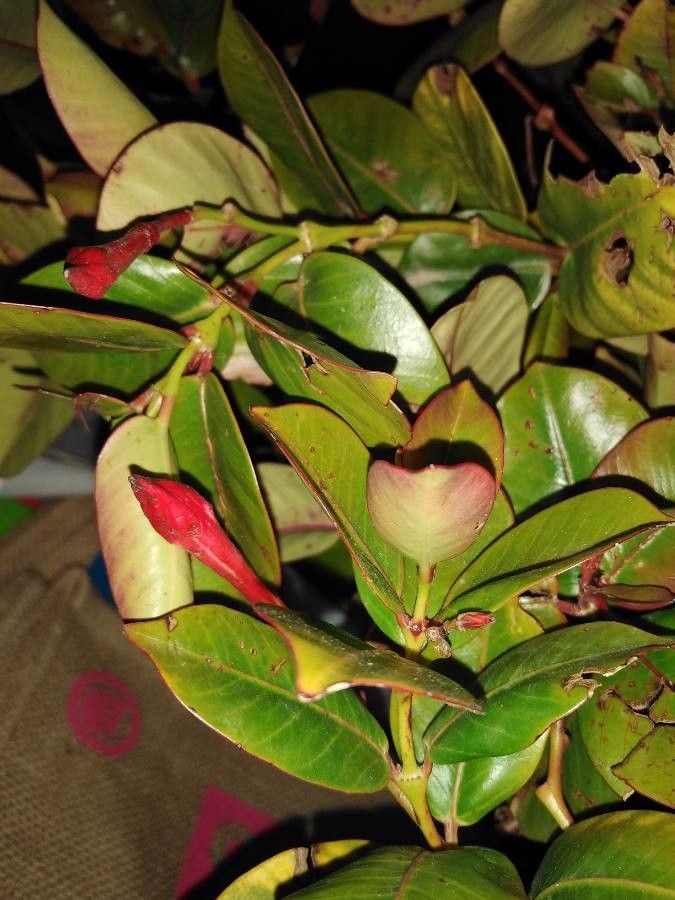
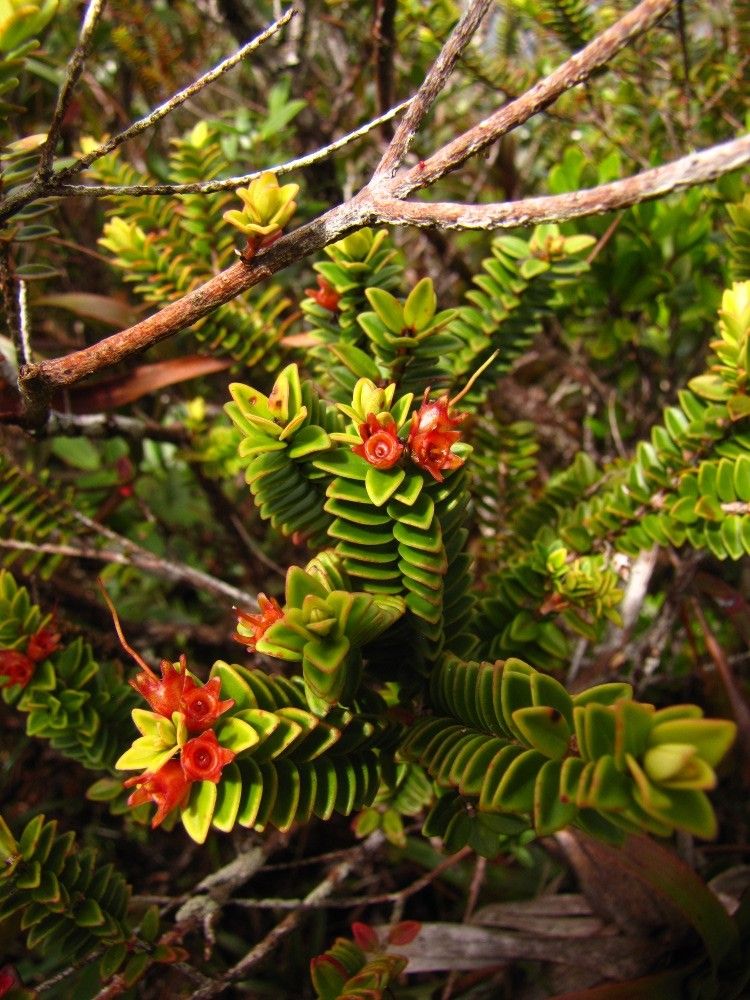
Metrosideros collina, commonly known as Hill's Metrosideros, is a flowering plant species belonging to the myrtle family, Myrtaceae. It is native to New Zealand and thrives in a variety of habitats, including forests, shrublands, and rocky areas. The plant can reach a height of up to 10 meters, with a trunk diameter of up to 50 centimeters. Its small, oval-shaped leaves are glossy green, and it produces bright red or pink flower clusters that bloom from late spring through summer.
Metrosideros collina plays a crucial role in ecological restoration projects due to its resilience in harsh environments such as volcanic soils and coastal areas where other plants may struggle. Additionally, it provides essential habitat and nectar for native birds like the tui and bellbird.
In traditional Maori medicine, various parts of the plant were utilized for their medicinal properties, including treating wounds, stomach ailments, and respiratory problems.
Overall, Metrosideros collina is an ecologically and culturally significant species in New Zealand's natural landscape.
Polynesian metrosideros is highly resistant to disease and typically is not susceptible to illnesses. Regarding care, the plant is fairly low-maintenance. When grown outdoors it needs only minimal watering, and larger specimens usually do not require pruning. Smaller plants, however, should be pruned after they finish blooming. Polynesian metrosiderost is suitable for anyone with an outdoor area, such as a garden or deck, and does not demand much gardening experience.
How to keep Metrosideros Collina.
Light
Polynesian metrosideros favor areas with abundant sunlight, though they can also grow in light shade. They come from habitats with strong sun exposure. Insufficient light can hinder growth, while excessive exposure can cause leaf scorching.
Water
The Polynesian metrosideros is a plant native to volcanic slopes and is known for its ability to tolerate drought conditions. It thrives with infrequent watering, ideally every two weeks. As an evergreen plant, it requires careful management of soil moisture: providing enough water to support its growth while avoiding overwatering to prevent root rot. This makes it a suitable choice for outdoor landscaping in environments with similar conditions.
Temperature
Polynesian metrosideros is native to climates where temperatures commonly range from 68 to 106 °F (20 to 41 ℃). It grows best within those temperature limits. In cooler regions, seasonal adjustments to temperature may be necessary to ensure optimal growth.
Fertilizer
The best time to feed a Polynesian metrosideros is in early spring when it breaks dormancy. This encourages overall growth and the development of flowers. Fertilizing improves the foliage, stems, and branches, and encourages large, vibrant, long-lasting blooms. It also helps transport nutrients from the roots to the flowers and enhances the plant’s health and resistance to disease.
Pruning
Polynesian Metrosideros benefits from pruning in the early to mid-winter months. Focus on removing dead branches and areas that are too crowded to improve airflow and sunlight exposure. Use clean, sharp tools to make precise cuts. Regular pruning helps maintain the plant's shape, supports healthy growth and flowering, and prevents disease.
Botanical profile.
- Plant Type
- Tree, Shrub
- Life Cycle
- Perennial
- Genus
- Metrosideros
- Family
- Myrtaceae
- Hardiness Zone
- 10-13
- Mature Height
- 7.62 m
- Mature Spread
- 3.05 m
- Leaf Color
- Dark Green, Forest Green
- Leaf Type
- Evergreen
- Flower Color
- Red
- Flower Size
- 2.03 cm to 3.05 cm
- Bloom Time
- Summer, Early fall, Mid fall
- Planting Time
- Spring, Summer, Autumn
- Harvest Time
- Fall, Early winter, Mid winter
- Native Area
- Vanuatu, Fiji
Other names.
Reader questions.
What are the sunlight requirements for Polynesian metrosideros?
Polynesian metrosideros requires a significant amount of sunlight to thrive, ideally being placed in areas that receive substantial direct sunlight. The plant is adaptable and can grow in mild shade, but originates from environments with strong sun exposure. Insufficient light can impede growth, and too much direct light may cause leaf scorching. The general guideline is to provide full sun, which is above 6 hours of sunlight per day, or partial sun, about 3-6 hours of sunlight per day. Observing how sunlight moves through your garden and choosing spots with the right balance are crucial for the plant's health.
What is the ideal temperature range for growing Polynesian metrosideros?
The Polynesian metrosideros is indigenous to climates where temperatures typically range between 68 to 106°F (20 to 41°C). This plant flourishes best within these temperature parameters. Because it is extremely heat-loving, Polynesian metrosideros requires seasonal temperature adjustments in chillier climates to ensure optimal growth. During the colder months, especially in autumn, it is recommended to bring outdoor-grown Polynesian metrosideros indoors, placing it near a bright window while ensuring it is not too close to heaters. To promote growth, maintaining temperatures above 20°C during winter is beneficial, and it is crucial to keep the plant away from temperatures approaching 5°C, as these are detrimental to its health.
How does insufficient or excessive sunlight affect Polynesian metrosideros?
Insufficient sunlight can cause a variety of symptoms in Polynesian metrosideros, including smaller new leaves, leggy or sparse growth, faster leaf drop, slower or stopped new growth, paler new leaves, chlorosis, and potential sunscald. Conversely, excessive sunlight can lead to symptoms like leaf curling, wilting, leaf scorching, and reduced overall plant health. Both conditions indicate a need for adjustment in the plant's exposure to light to promote healthier growth and development.
How does low temperature affect Polynesian metrosideros and what should be done?
Low temperature is not tolerated well by Polynesian metrosideros, which thrives best when temperatures are kept above 20°C. During winter, it's important to ensure that temperatures remain above 5°C since exposure to temperatures below 1°C can result in the leaves lightening in color. After frost damage, the leaves gradually turn brown or black, and the plant may show symptoms of wilting and drooping. To combat frost damage, trim off the damaged parts and move the plant indoors to a warm environment for protection. It's beneficial to place the plant near a south-facing window for ample sunlight while avoiding proximity to heaters or air conditioners that can cause excessive dryness.
What artificial lighting is recommended for indoor Polynesian metrosideros?
For indoor Polynesian metrosideros, especially in conditions where natural sunlight is inadequate, artificial lighting can be a vital solution. LED lights are recommended due to their ability to be customized to provide specific wavelengths needed by the plants. Full sun plants require 30-50W/sq ft, partial sun plants need 20-30W/sq ft, and full shade plants benefit from 10-20W/sq ft of artificial light. The light source should be placed 12-36 inches above the plant to mimic natural sunlight conditions and should be kept on for 8-12 hours per day to suit the plant’s needs.
What should be done if the Polynesian metrosideros is exposed to high temperatures?
During the summer, it's crucial to ensure that Polynesian metrosideros is kept below 41°C. Exposure to temperatures exceeding 45°C can lead to lightening of the leaves and increased susceptibility to sunburn. In such cases, trim away the sunburned and dried-up parts of the plant and move it to a location that provides shade during the intense midday and afternoon sun. To help the soil retain moisture and support the plant's health, water the plant in the morning and evening.
How can I address symptoms of poor lighting in Polynesian metrosideros?
To address symptoms of poor lighting in Polynesian metrosideros, consider gradually moving the plant to a sunnier location, ensuring it receives at least 6 hours of direct sunlight daily. For indoor plants, utilize south-facing windows and keep curtains open during the day or supplement with artificial light, using desk or ceiling lamps for at least 8 hours daily, or opt for professional plant grow lights. For outdoor plants, the adjustment to sunnier spots should be gradual to avoid sunburn. If sunlight is blocked by environmental obstructions, consider pruning or transplanting to areas with better light exposure. Note that parts of the plant damaged by insufficient light may not recover, but new growth will be healthy following improved light conditions.