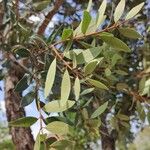
Metrosideros robusta
Northern rata · Rata iron tree
Description
Source: leafsnapMetrosideros robusta, commonly known as the New Zealand Christmas tree or pohutukawa, is a species of flowering tree in the myrtle family native to New Zealand. It thrives along the coasts of both the North and South Islands. This tree can grow up to 20 meters tall with a trunk diameter reaching up to 2 meters. The leaves are dark green, leathery, and glossy, while its bright red or crimson flowers bloom from November through January. The pohutukawa holds significant cultural importance for the Māori people, symbolizing strength, resilience, and beauty. Ecologically, it provides essential habitat for native birds such as the tui (Prosthemadera novaeseelandiae) and bellbirds (Anthornis melanura). The plant prefers well-drained soil in full sun but can tolerate some shade. It is also resistant to salt spray, making it an ideal choice for coastal gardens and landscapes. In recent years, Metrosideros robusta has been threatened by habitat loss due to urbanization in coastal areas where it naturally grows. Conservation efforts are underway to protect this iconic species from further decline through planting programs aimed at restoring its natural habitats. Overall, Metrosideros robusta is not only a vital cultural symbol but also plays an essential ecological role. It is one of New Zealand's most treasured plants, deserving protection so future generations can fully appreciate its beauty and benefits.
Care Guide
💧 Water Every 7 days
Northern rata thrives in moist environments and requires consistent hydration, typically needing to be watered every two weeks. While it can endure short dry periods, its growth cycles are synchronized with the seasonal rainfall typical of temperate climates, highlighting its adaptation to these conditions.
☀️ Light Full sun
Northern rata grows best with plentiful sunlight but can tolerate less intense rays. Native to habitats similar to open forests, it succeeds in places that reproduce those conditions. Too much or too little sunlight can damage its growth, often causing stunted development or wilted leaves.
What are the sunlight requirements for growing Northern rata?
Northern rata requires full sun, which means it thrives under more than 6 hours of sunlight daily, though it can tolerate partial sun conditions of about 3-6 hours of sunlight as well. It is essential to observe how sunlight moves through your garden to select spots that offer an ideal balance of light and shade, ensuring the plant's well-being. Northern rata is accustomed to environments with abundant sunlight similar to open forests, and mimicking these conditions helps it to flourish. Either excessive or insufficient sunlight can adversely affect its growth, potentially causing stunted development or wilted leaves.
How can artificial lighting be used for indoor Northern rata plants?
When natural sunlight is insufficient for indoor Northern rata plants, especially in winter or less sunny spaces, artificial lighting can be a crucial alternative. It's recommended to choose the right type of artificial light, with LED lights being a popular choice as they can provide specific wavelengths needed by the plants. Full sun plants require 30-50W per square foot, partial sun plants need 20-30W per square foot, and full shade plants should have 10-20W per square foot of artificial light. The light source should be placed 12-36 inches above the plant to mimic natural sunlight conditions and the plants typically need 8-12 hours of light per day.
What are some symptoms of inadequate lighting for Northern rata?
Symptoms of lack of sufficient light in Northern rata include new leaves growing smaller than previous ones, leggy or sparse growth, faster leaf drop, delayed, or completely halted growth. Additionally, new leaves might show lighter colors or irregular patterns, indicating insufficient chlorophyll and nutrient intake. Too much light can cause chlorosis, where leaves turn yellow due to chlorophyll breakdown, sunscald causing pale or necrotic patches, leaf curling as a defense mechanism against sunlight, wilting from excessive water loss, and leaf scorching marked by brown, dry edges on leaves.
What solutions can improve lighting conditions for Northern rata?
To combat insufficient light for Northern rata, gradually moving the plant to a sunnier location each week until it receives at least 6 hours of direct sunlight daily is helpful, especially using a south-facing window for indoor plants. For plants that are large or hard to move, consider using artificial light, such as a desk or ceiling lamp for at least 8 hours daily or professional grow lights. For outdoor plants, it's crucial to avoid sudden changes in light intensity to prevent sunburn. Minimize obstructions by pruning blocking trees and consider transplanting smaller plants during their dormant period to a location with ample sunlight and good drainage.
🌡️ Temperature 15–37.8°C
Northern rata is native to areas where temperatures range from 59 to 100 °F (15 to 38 °C). This temperate woody plant thrives in those conditions, and it is recommended to maintain that temperature range throughout all seasons.
What is the native environment temperature range for Northern rata?
Northern rata is native to environments with temperatures ranging from 59 to 100 °F (15 to 38 °C). This temperate woody plant thrives within this temperature bracket, and maintaining this range throughout the year is advisable. Northern rata exhibits some degree of cold tolerance and typically does not require special cold protection measures if the temperature remains above -5°C. However, if temperatures are forecasted to fall below -5°C, temporary cold protection measures should be implemented, such as wrapping the plant in plastic film, fabric, or other materials, with the protective covering removed once temperatures rise again.
How does Northern rata react to low temperatures, and what are the recommended solutions?
Northern rata has a moderate tolerance to low temperatures, thriving best when temperatures remain above 15°C. It should be kept above -5°C during winter times. When temperatures dip below -10°C, Northern rata's leaves may start to droop, and in mild cases, they might recover. However, in severe cases, the leaves will wilt and eventually fall off. To manage frost damage, it's recommended to trim off the frost-damaged parts. To protect the plant from future low temperature events, wrap it with non-woven fabric or cloth and construct a wind barrier to shield it from cold winds.
How does Northern rata react to high temperatures, and what are the recommended solutions?
During summer, it is ideal to keep Northern rata's temperature below 38°C. Exposing the plant to temperatures above 43°C can result in lighter leaf colors, dry and withered leaf tips, curled leaves, and increased susceptibility to sunburn. The recommended solutions for high-temperature stress include trimming away sunburned and dried-up parts. To further protect the plant, move it to a shaded location, particularly away from the midday and afternoon sun, or use a shade cloth. To keep the soil moist, water the plant in the morning and evening.
💨 Humidity
🪴 Soil 6-7
🌱 Fertilizer
Timing is essential for fertilizing Northern rata. Apply fertilizer in early spring and continue once a month until early summer. The fertilizer encourages attractive blooms and provides energy during both dormant periods and active growth.
🪴 Pot & Repot
✂️ Pruning
Northern rata is known for its dense, evergreen foliage and striking red flowers. To encourage healthy growth and remove dead branches, it is important to prune the plant from early to late winter. This not only helps shape the plant but also enhances airflow, encourages blooming, and reduces the risk of disease. Be sure to use clean, sharp tools when pruning to minimize stress on the plant.
🌿 Propagating
🐛 Diseases & pets
☠️ Toxicity
Characteristics
- Plant Type
- Tree
- Life Cycle
- Perennial
- Genus
- Metrosideros
- Family
- Myrtaceae
- Hardiness Zone
- 8-11
- Mature Height
- 24.38 m
- Mature Spread
- 10 cm to 20 cm
- Leaf Color
- Dark Green
- Leaf Type
- Evergreen
- Flower Color
- Red
- Flower Size
- 2.54 cm
- Bloom Time
- Mid winter, Late winter, Early spring
- Planting Time
- Spring, Summer
- Harvest Time
- Mid spring, Late spring, Early summer
- Native Area
- New Zealand