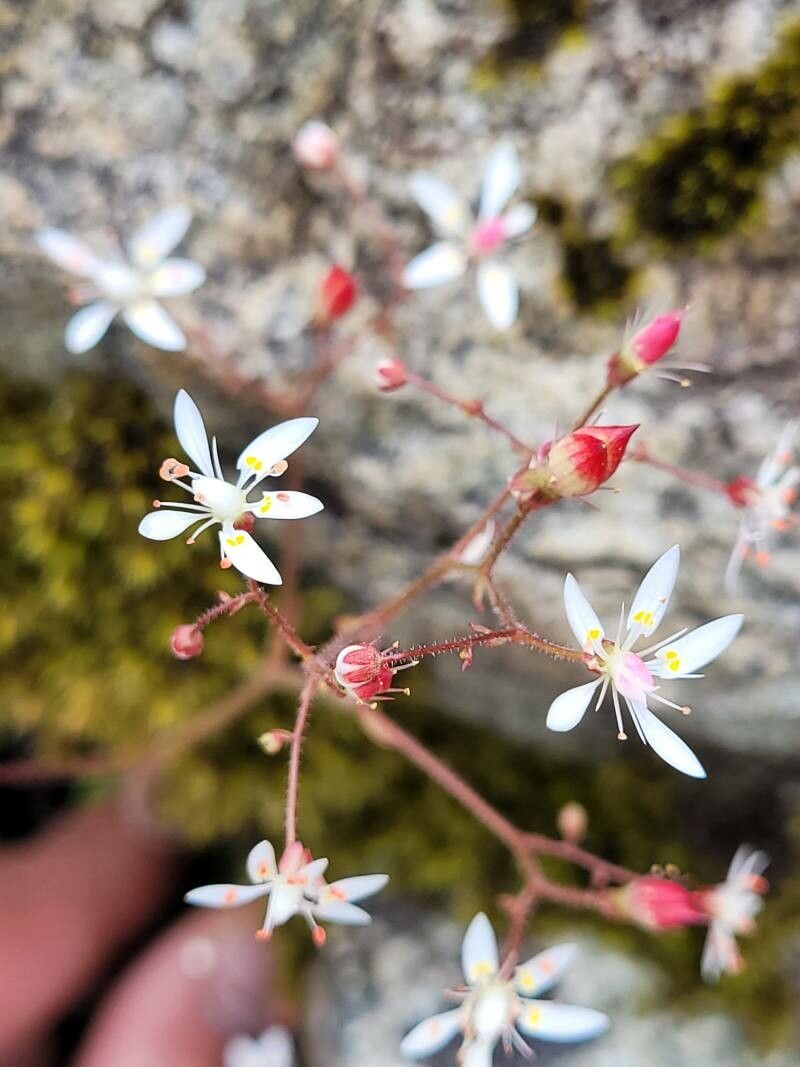
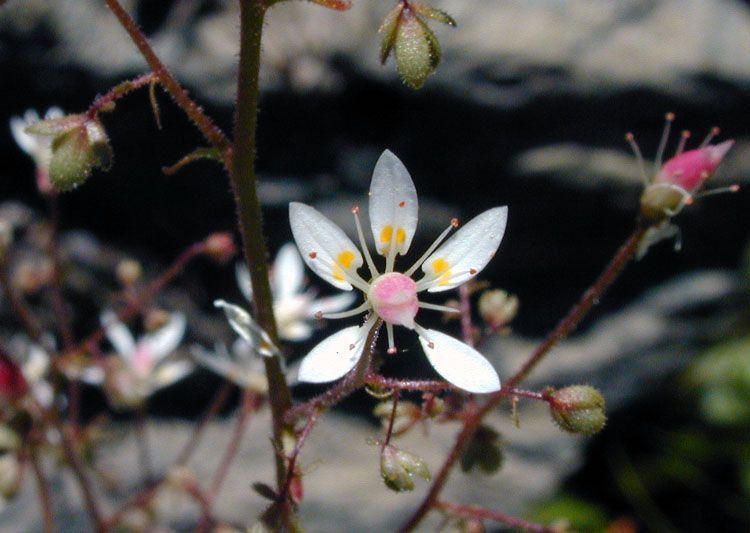
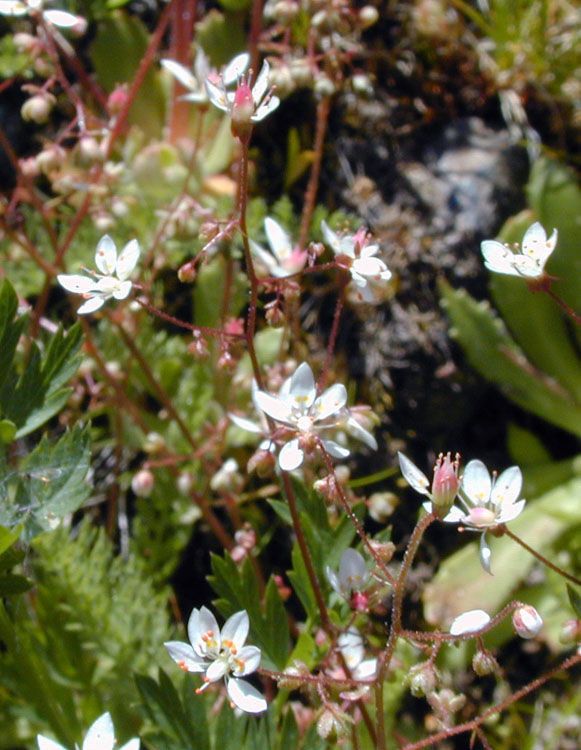
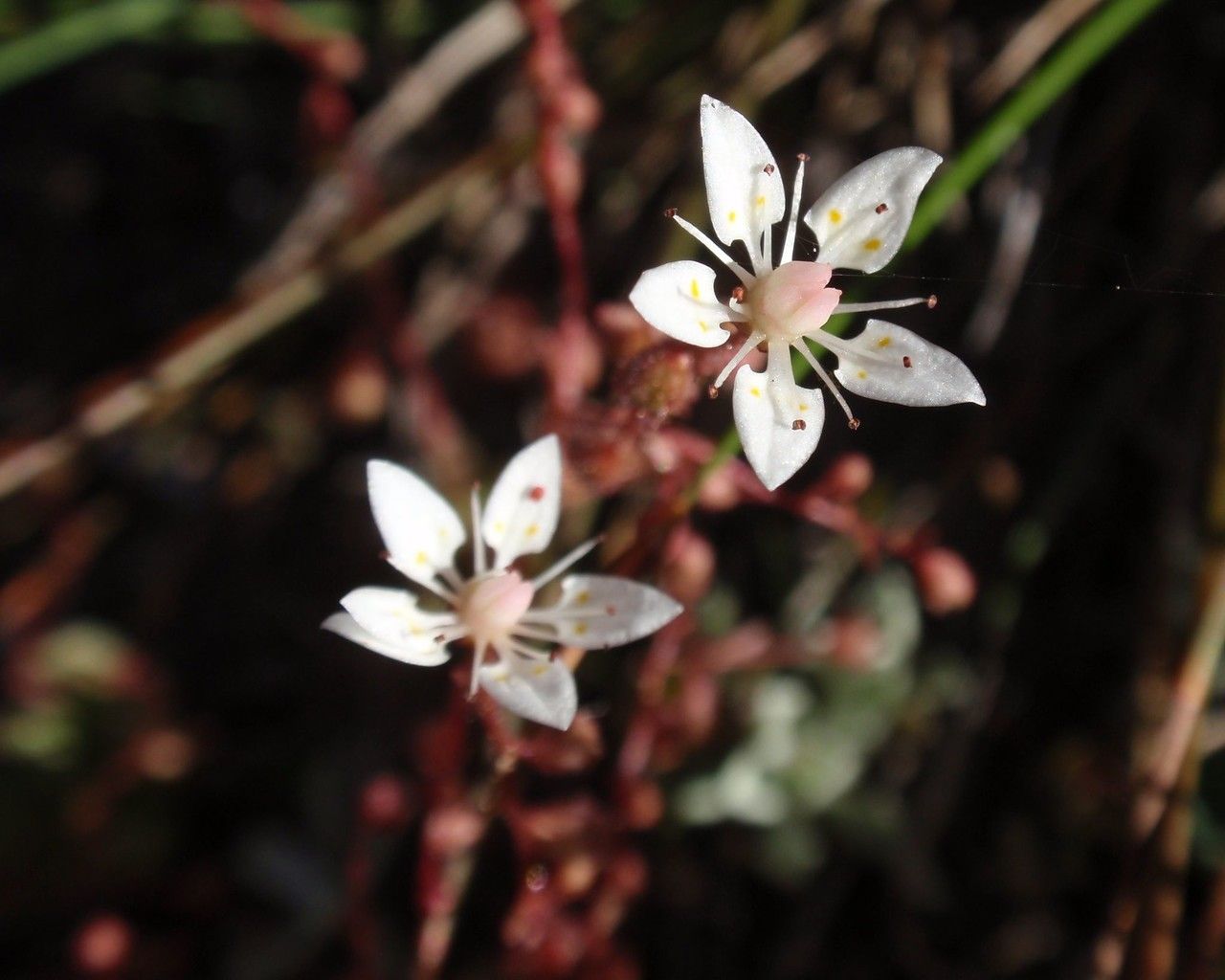
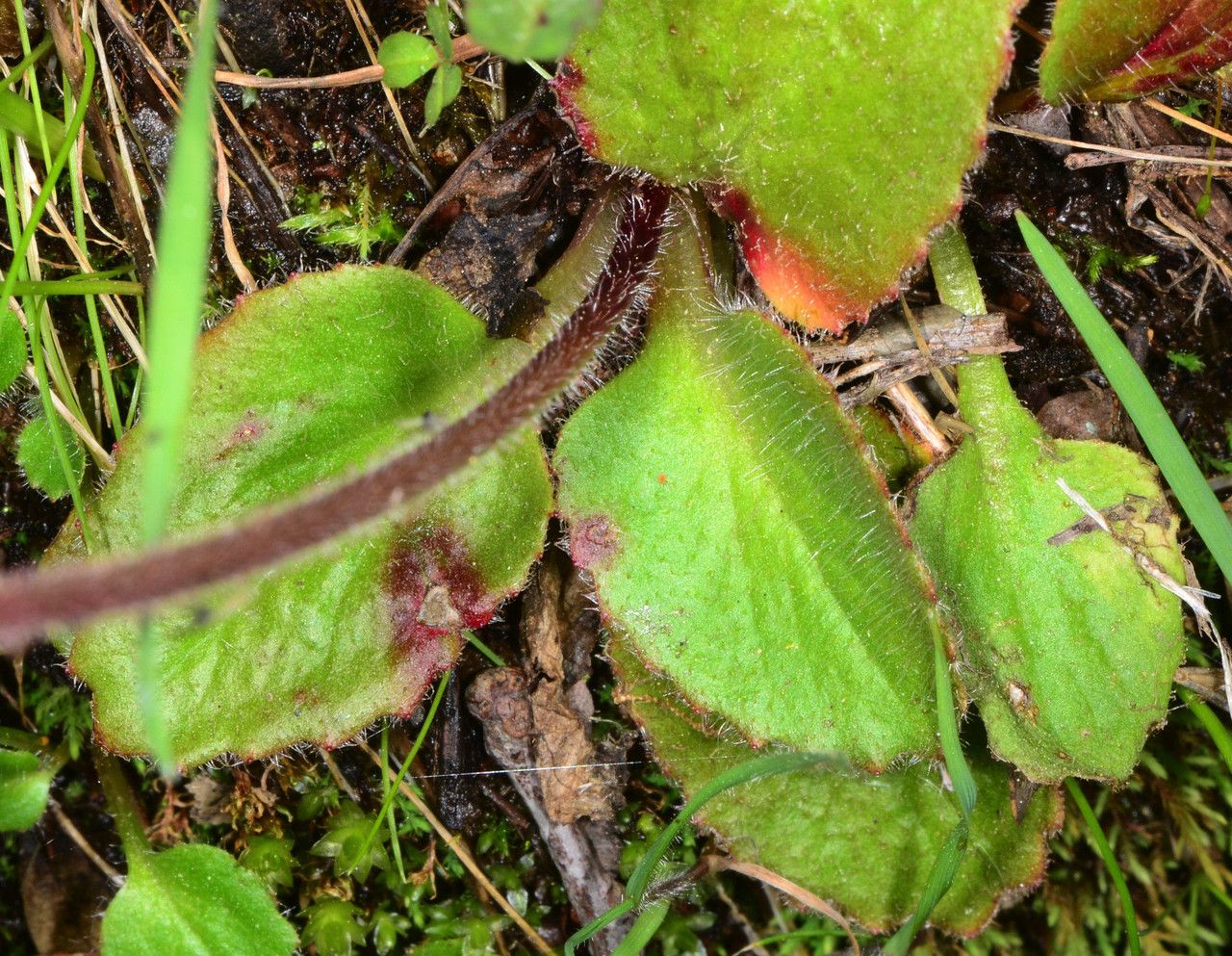
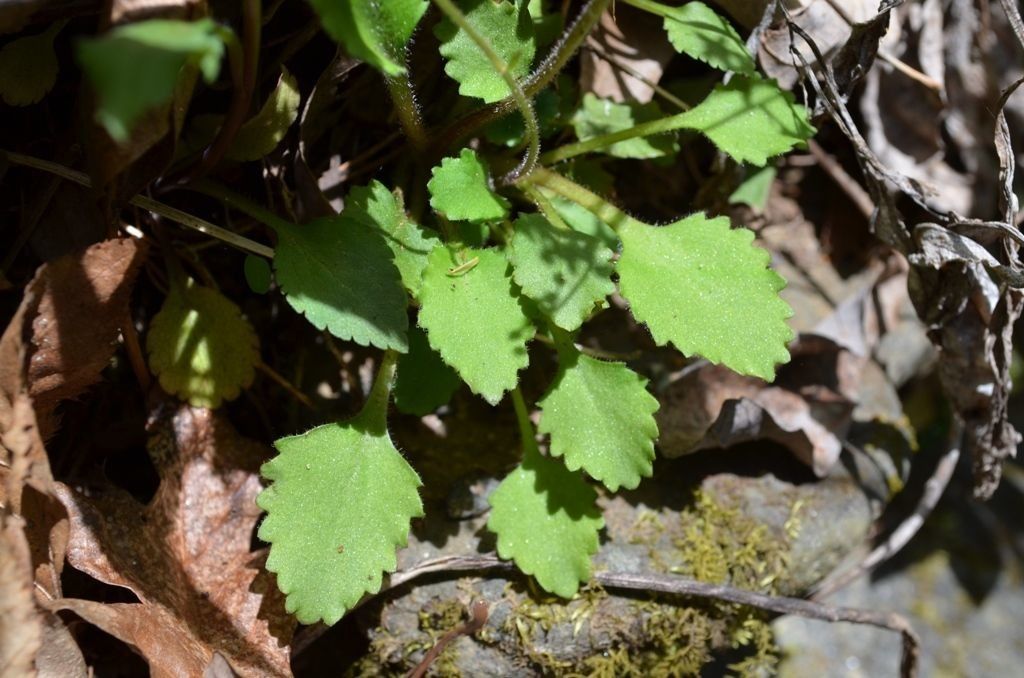
Micranthes ferruginea is a species of flowering plant known by the common names russethair saxifrage and rusty saxifrage. It is native to western North America from Alaska and northwestern Canada to northern California to Wyoming, where it can be found in moist, rocky habitat in mountainous areas. It is a perennial herb growing from a caudex and rhizome system and producing a basal rosette of leaves. Each leaf is up to 6 centimeters long, thick and fleshy with large teeth along the edges. The inflorescence arises on a slender, hairy peduncle up to 40 centimeters tall. Thin branches bear flowers and reproductive bulbils. Each flower has spade-shaped white petals, the upper ones dotted with gold.
Rusty-hair saxifrage is fairly resistant to disease and typically does not suffer from illnesses. Still, it can be vulnerable to pests and diseases present in its environment. Such infections tend to be mild. Regarding upkeep, this plant needs a moderate level of care. Regular pruning is necessary to preserve an attractive appearance and healthy growth. Applying fertilizer can also encourage better flowering. Rusty-hair saxifrage is appropriate for people who have outdoor areas like a garden or patio and does not demand extensive gardening experience. It may need additional attention if cultivated indoors.
How to keep Micranthes Ferruginea.
Light
Rusty-hair saxifrage occurs naturally in habitats like forest understories or rocky sites, where it is subject to natural shade. It prefers partial sun but can tolerate full sun or complete shade, demonstrating its versatile and hardy nature.
Water
The rusty-hair saxifrage thrives best in well-drained, damp environments with consistent moisture. Water it weekly to keep the soil moist, as it has a moderate tolerance for drought. This plant flourishes in temperate climates and benefits from rainfall during its active growing season.
Fertilizer
For Rusty-hair saxifrage, the best time to fertilize is in early spring, when the flowers are forming. The proper fertilizer promotes better blooms and helps Rusty-hair saxifrage produce attractive flowers. Fertilizing in early spring ensures excellent flowering during the season and supplies energy for dormant growth phases.
Pruning
The Rusty-hair Saxifrage is known for its rust-colored, hairy stems and clusters of white flowers. To enhance both growth and appearance, it's best to prune this plant from early to late spring. Be careful not to trim too much, as this can hinder its flowering. Regular pruning helps prevent overcrowding and disease. For more detailed care instructions, be sure to consult local guides.
Botanical profile.
- Plant Type
- Herb
- Life Cycle
- Perennial
- Genus
- Micranthes
- Family
- Saxifragaceae
- Hardiness Zone
- 4-8
- Mature Height
- 15 cm to 52 cm
- Mature Spread
- 5 cm to 15 cm
- Leaf Color
- Dark Green
- Leaf Type
- Semi-evergreen
- Flower Color
- White
- Flower Size
- 1.27 cm
- Bloom Time
- Late spring, Early summer
- Planting Time
- Spring, Autumn
- Harvest Time
- Mid summer, Late summer
Other names.