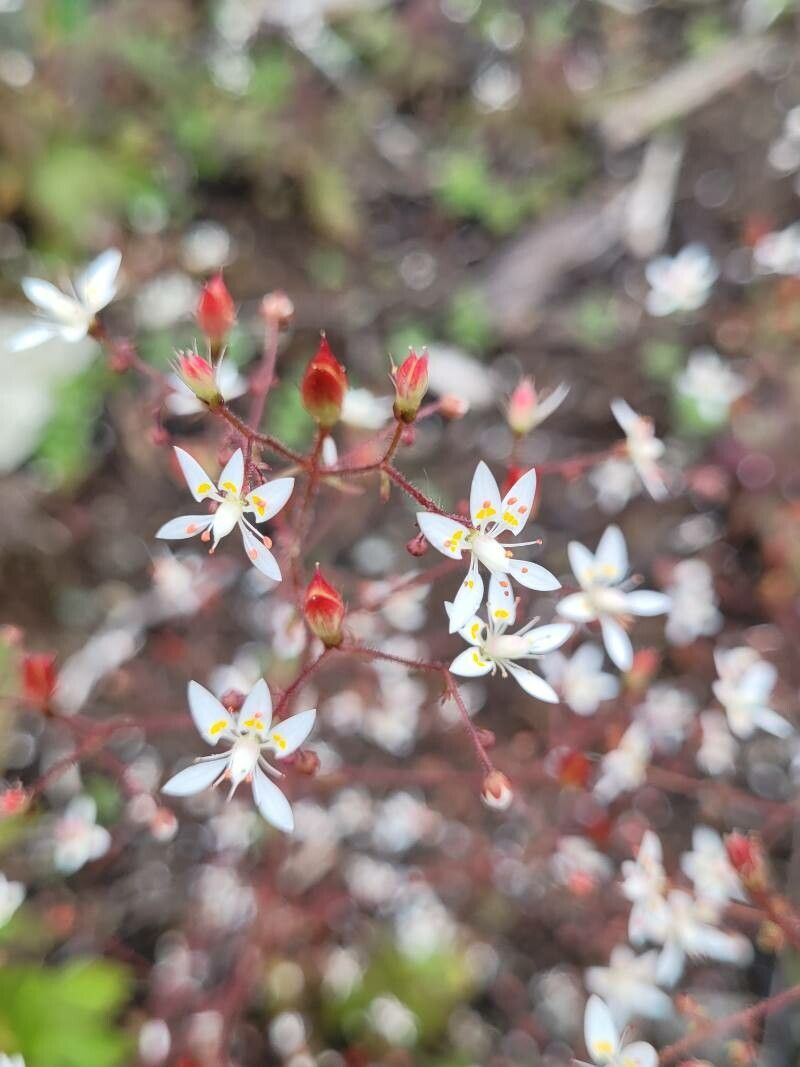
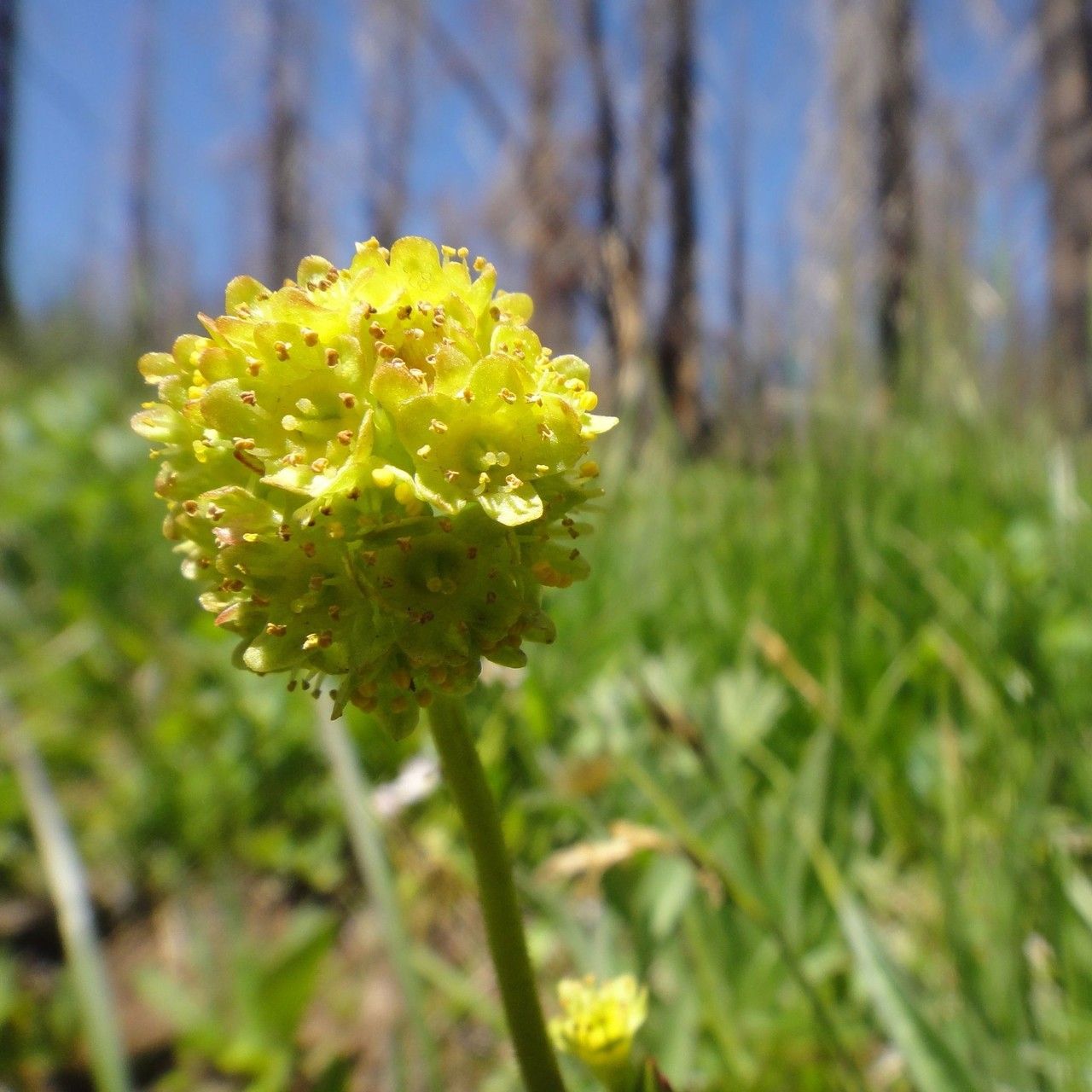
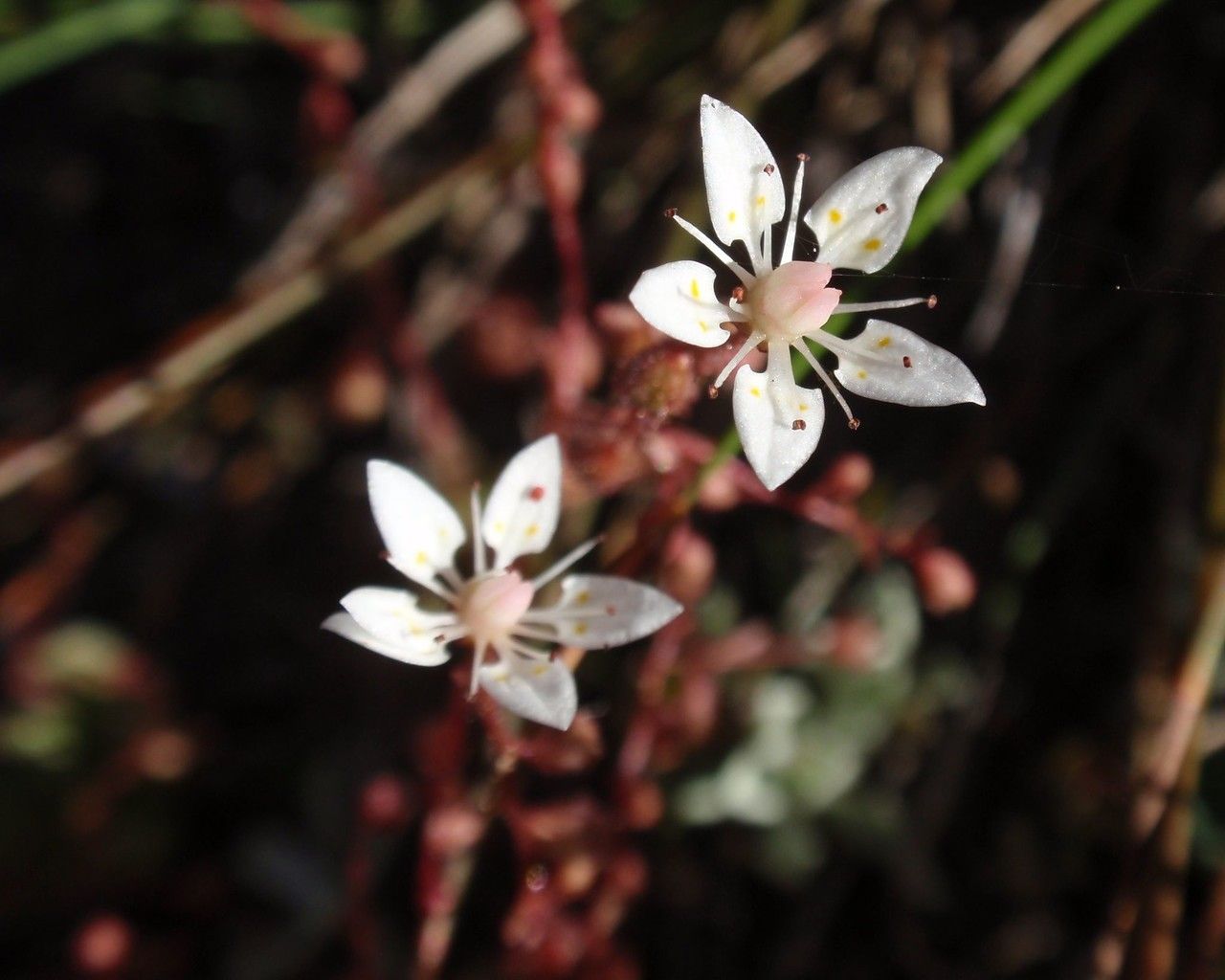
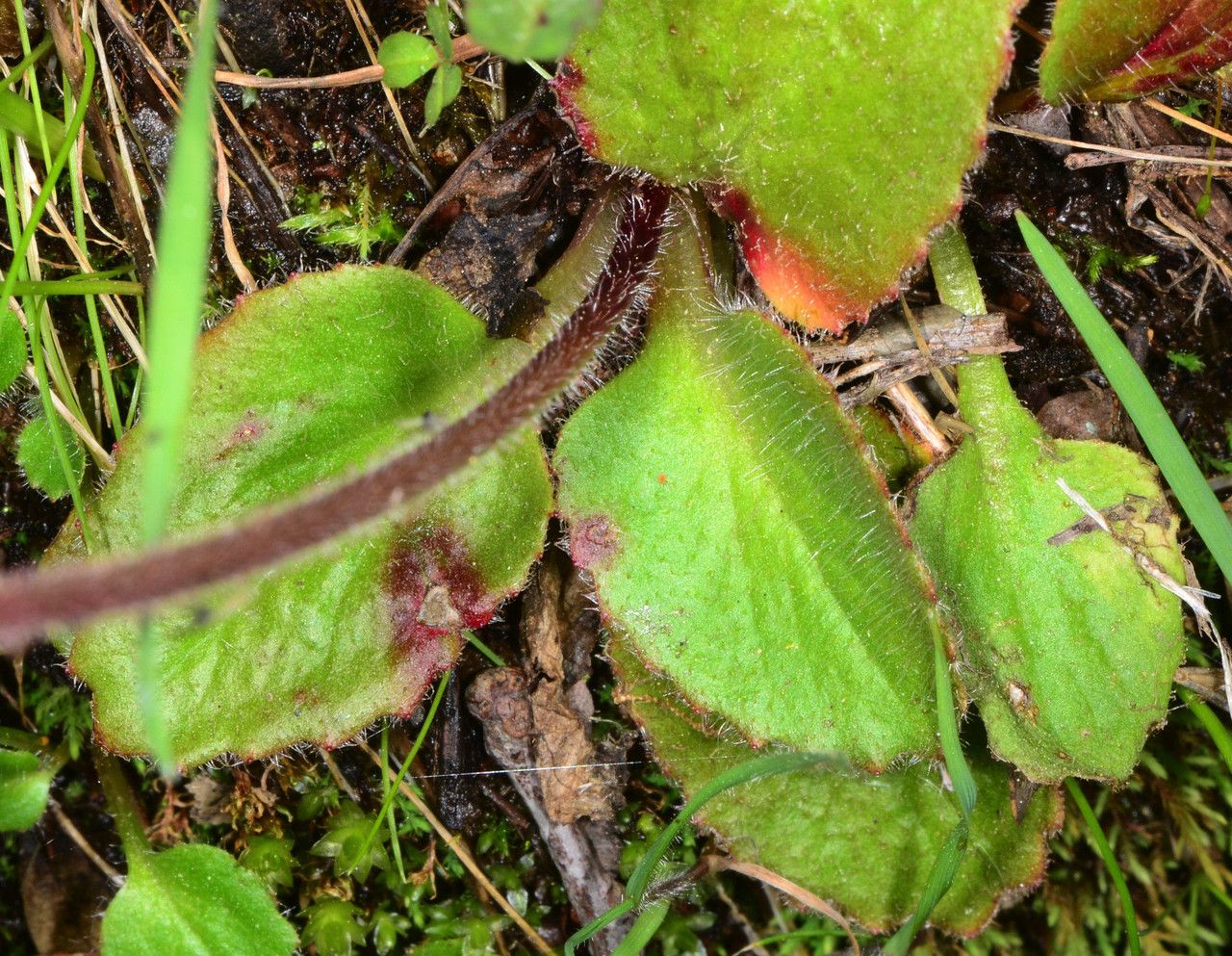
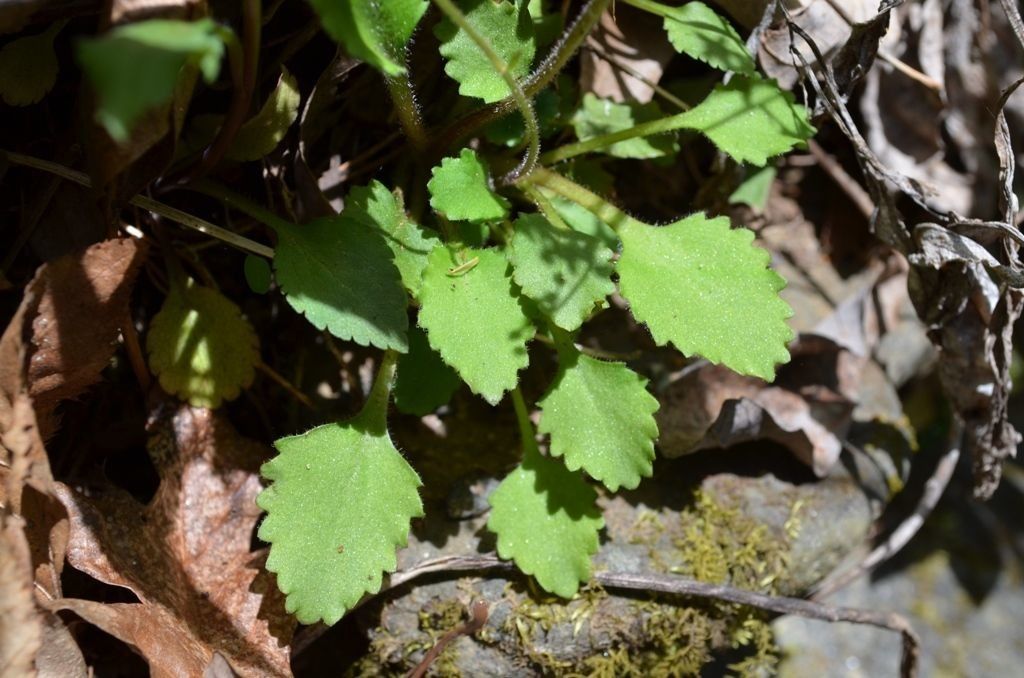
Micranthes petiolaris, commonly known as cliff saxifrage, is a species of flowering plant in the saxifrage family. It is native to the Southern Appalachian Mountains where it is found on exposed boulders and rocky seeps, often at high elevation. It is a perennial that produces small white flowers with yellow spots in the summer. Recent genetic studies have shown is more closely related to arctic species of Micranthes than to the other species of the Southern Appalachians. This indicates that it did not evolve within the other southern Micranthes, but migrated to the southern Appalachians from the north, possibly during glacial periods.
Michaux's saxifrage has good resistance to disease and is generally not prone to illness. However, it can be affected by pests and diseases present nearby. These infections are typically not severe. In terms of care, the plant requires moderate maintenance. It should be pruned regularly to maintain a neat appearance and healthy growth. Fertilizing can also help encourage flowering. Michaux's saxifrage is suitable for anyone with outdoor space, such as a garden or patio, and does not require extensive care experience. It may need more attention when grown indoors.
How to keep Micranthes Petiolaris.
Light
The michaux's saxifrage thrives in abundant sunlight, which encourages vigorous growth. Although the plant can tolerate some shade, uninterrupted sun is preferred, especially during flowering. However, too much sun can stress it, while too little light may limit growth and bloom. It comes from habitats characterized by plentiful sun.
Water
Michaux's saxifrage flourishes in moist, well-drained conditions, and requires regular watering to maintain proper hydration while avoiding waterlogging. To meet its natural moisture needs, water the plant weekly. As it is an outdoor plant native to rocky areas, michaux's saxifrage benefits from rainwater, which provides essential minerals and a balanced pH for optimal growth.
Temperature
Michaux's saxifrage can adapt to a wide range of temperature conditions, but its distribution may still be constrained by different combinations of water and heat conditions. It does best in warm summer climates with adequate rainfall or watering. Prolonged stretches of cloudy, rainy weather, as well as sustained high temperatures, can increase the likelihood of Michaux's saxifrage dying. In winter, protecting the plant from cold can improve its survival rate.
Fertilizer
The best time to fertilize Michaux's saxifrage is in early spring, as it comes out of dormancy and begins active growth. Fertilizing supplies essential nutrients needed for healthy development. While Michaux's saxifrage has fairly low fertilizer requirements, applying fertilizer annually can improve its chances of survival and encourage better, longer-lasting flowers.
Pruning
Michaux's saxifrage is a perennial plant recognizable by its rosettes and clusters of flowers. To promote healthy growth and abundant flowering, it is best to prune the plant from early to late spring. This includes removing any dead leaves and overly long stems to maintain its shape and improve its appearance. Such care encourages a robust recovery during its active growing season.
Botanical profile.
- Plant Type
- Herb
- Life Cycle
- Perennial
- Genus
- Micranthes
- Family
- Saxifragaceae
- Hardiness Zone
- 4-8
- Mature Height
- 15 cm to 46 cm
- Mature Spread
- 15 cm to 25 cm
- Leaf Color
- Green, Red
- Leaf Type
- Evergreen
- Flower Color
- White
- Flower Size
- 2.54 cm
- Bloom Time
- Mid spring, Late spring
- Planting Time
- Spring, Autumn
- Harvest Time
- Early summer, Mid summer
Other names.
Reader questions.
What are the sunlight requirements for Michaux's saxifrage?
Michaux's saxifrage thrives in environments that offer full sun, requiring more than 6 hours of sunlight daily for optimal growth, although it can also sustain partial sun, getting around 3-6 hours of sunlight. It's vital to observe the movement of sunlight through your garden to find the ideal balance for your plants, providing enough light without causing stress from overexposure. This balance is essential for the health and happiness of your plants.
How does sunlight affect Michaux's saxifrage's growth?
Sunlight significantly influences the growth and flowering of Michaux's saxifrage. This plant flourishes with extensive sun exposure, which is crucial for its vigorous growth and bloom. While it can tolerate some shade, too much can hamper its growth and flowering capabilities. Originating from sunny environments, Michaux's saxifrage shows optimal performance in similar conditions, though both excessive sunlight and insufficient light can be harmful, leading to stress or hindered growth respectively.
Can artificial lighting support Michaux's saxifrage indoors?
Yes, artificial lighting can effectively support Michaux's saxifrage indoors, especially when natural sunlight is inadequate. LED lights are recommended for their ability to provide specific wavelengths needed by plants. For full sun plants, 30-50W/sq ft is suitable, partial sun plants require 20-30W/sq ft, and full shade plants need 10-20W/sq ft. The artificial light source should be placed 12-36 inches above the plant, mimicking natural sunlight for 8-12 hours per day to promote healthy growth.
What are the symptoms of insufficient sunlight in Michaux's saxifrage?
Symptoms of insufficient sunlight in Michaux's saxifrage include smaller new leaves, leggy or sparse growth, faster leaf drop, delayed or halted growth, paler leaves indicating a lack of chlorophyll, and chlorosis, where leaves turn yellow. Conversely, excessive sunlight can cause symptoms like sunscald, leaf curling, wilting, and leaf scorching, indicating damage from overexposure.
How can I address insufficient or excessive sunlight exposure for Michaux's saxifrage?
To address insufficient sunlight, gradually move plants to sunnier locations to receive at least 6 hours of direct sunlight daily, utilizing south-facing windows and considering artificial lighting solutions if necessary. For outdoor plants, it's crucial to adapt them gradually to avoid sunburn. Removing obstructions and considering transplanting can improve sunlight access. For damage from excessive sunlight, new growth after increasing light exposure will be healthy, though parts of the plant that were affected may not recover fully.